Sodium Hydroxide → HCID 22940115, compound
Reaction equation

[Cl:1][C:2]1[N:7]=[N:6][C:5]([O:8][C:9]2[C:14]([CH3:15])=[CH:13][CH:12]=[CH:11][C:10]=2[CH:16]2[CH2:18][CH2:17]2)=[C:4]([OH:19])[CH:3]=1.[OH-].[Na+]>[Cl-].C([N+](CCCC)(CCCC)CCCC)CCC.C(O)C>[Cl:1][C:2]1[N:7]=[N:6][C:5]([O:8][C:9]2[C:14]([CH3:15])=[CH:13][CH:12]=[CH:11][C:10]=2[CH:16]2[CH2:18][CH2:17]2)=[C:4]([O-:19])[CH:3]=1.[CH2:9]([N+:6]([CH2:5][CH2:4][CH2:3][CH3:2])([CH2:5][CH2:4][CH2:3][CH3:2])[CH2:14][CH2:13][CH2:12][CH3:11])[CH2:10][CH2:16][CH3:17]Participants
5
Reactant 2


Product 1

Reagents, catalysts & solvents 2

Procedure
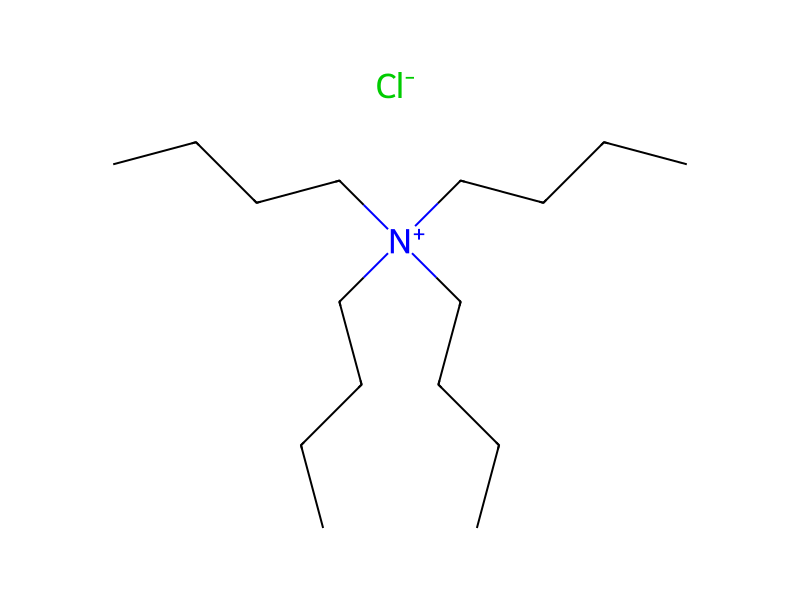
To an ethanol (2 mL) solution containing 105 mg (0.379 mmol) of 6-chloro-3-(2-cyclopropyl-6-methylphenoxy)-4-pyridazinol were added 0.19 mL (0.38 mmol) of 2 mol/L aqueous sodium hydroxide solution, then, 106 mg (0.381 mmol) of tetrabutylammonium chloride, and the resulting mixture was stirred at 60° C. for 5 hours. The reaction mixture was allowed to stand at room temperature overnight, and the solid was removed by filtration. The filtrate was concentrated to obtain N,N,N-tributyl-1-butanaminium 6-chloro-3-(2-cyclopropyl-6-methylphenoxy)-4-pyridazinolate (Compound No. 3798).
Workup
- customthe solid was removed by filtration
- concentrationThe filtrate was concentrated
Sources & evidence
- ORD record
- ord-51997fcdc7bf4bc9807a6fe169614aef
- Source dataset
- uspto-grants-2009_10
- Patent number
- US07608563B2
Reaction notes
Loading…