Lithium Bromide → 1-Bromo-3-(4-octylphenoxy)propan-2-ol
Reaction equation
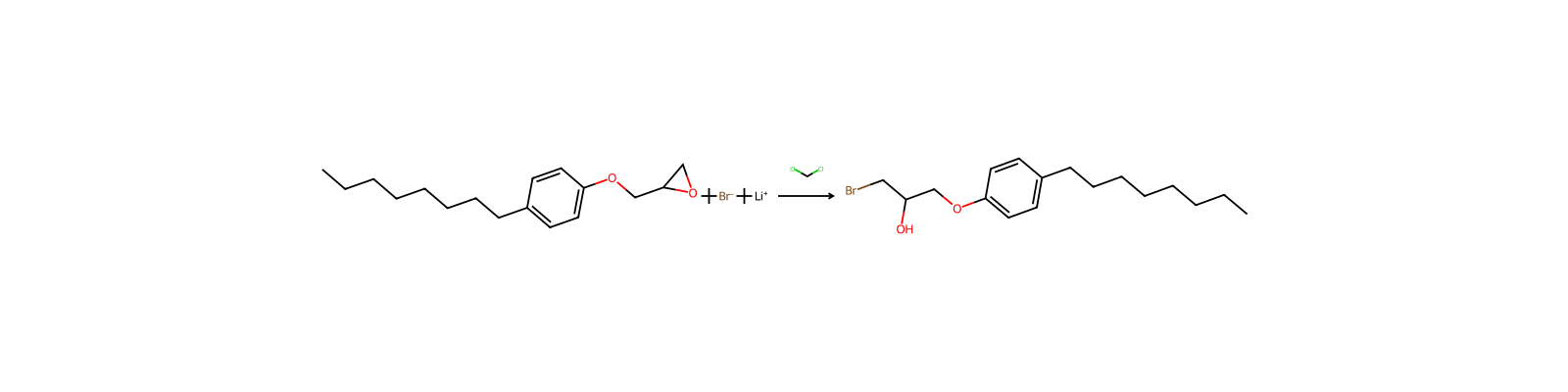
[CH2:1]([C:9]1[CH:19]=[CH:18][C:12]([O:13][CH2:14][CH:15]2[CH2:17][O:16]2)=[CH:11][CH:10]=1)[CH2:2][CH2:3][CH2:4][CH2:5][CH2:6][CH2:7][CH3:8].[Br-:20].[Li+]>ClCCl>[Br:20][CH2:17][CH:15]([OH:16])[CH2:14][O:13][C:12]1[CH:18]=[CH:19][C:9]([CH2:1][CH2:2][CH2:3][CH2:4][CH2:5][CH2:6][CH2:7][CH3:8])=[CH:10][CH:11]=1Participants
4
Reactant 2
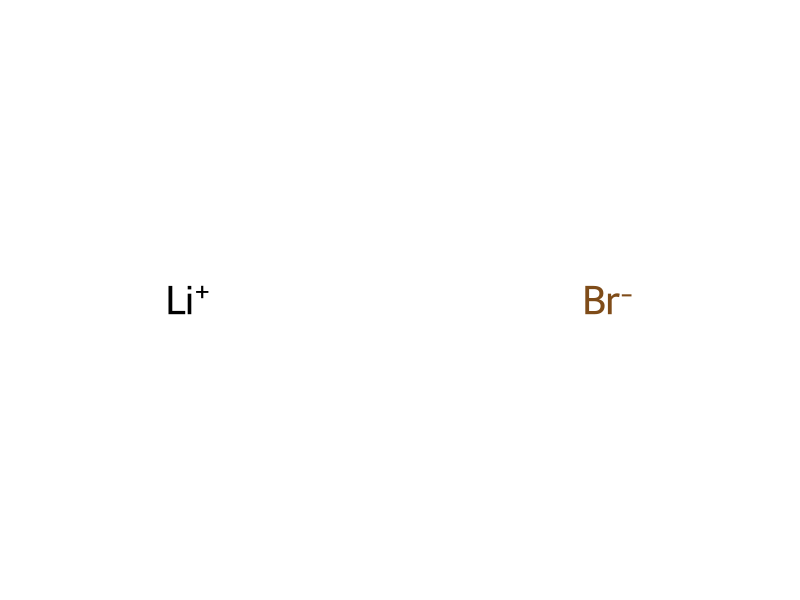

Product 1

Reagents, catalysts & solvents 1

Procedure
1.17 g (4.46 mmol) 2-(4-octyl-phenoxymethyl)oxirane are dissolved in 10 ml absolute dichloromethane and mixed with 1.34 g (22.3 mmol) silica gel and with 1.16 g (13.4 mmol) lithium bromide. The suspension is concentrated almost to dryness on the rotary evaporator and allowed to stand at room temperature for 3 hours. The reaction batch is mixed with dichloromethane, filtrated on cotton wool and concentrated on the rotary evaporator. Taking up the suspension in diethyl ether, washing with water, drying on sodium sulfate, filtration and reconcentration on the rotary evaporator yield the product as a yellowish oil.
Workup
- concentrationThe suspension is concentrated almost to dryness on the rotary evaporator
- additionThe reaction batch is mixed with dichloromethane
- filtrationfiltrated on cotton wool
- concentrationconcentrated on the rotary evaporator
- washwashing with water
- customdrying on sodium sulfate, filtration and reconcentration on the rotary evaporator
Sources & evidence
- ORD record
- ord-fae531810d3b4b33b125ae8da3994c67
- Source dataset
- uspto-grants-2009_10
- Patent number
- US07608633B2
Reaction notes
Loading…