Phosphoric Acid → Dicyclohexylamine
Reaction equation

P(=O)(O)(O)O.C([N:10]([CH2:15][CH2:16][CH2:17][CH3:18])[CH2:11][CH2:12][CH2:13][CH3:14])CCC.[C:19](#N)[CH3:20].F[C@@H:23]1[C@@H](COC(=O)C2C=CC(C3C=CC=CC=3)=CC=2)OC(Cl)[CH2:24]1>O>[CH:15]1([NH:10][CH:11]2[CH2:12][CH2:13][CH2:14][CH2:20][CH2:19]2)[CH2:16][CH2:17][CH2:18][CH2:24][CH2:23]1Participants
Reactant 4




Product 1
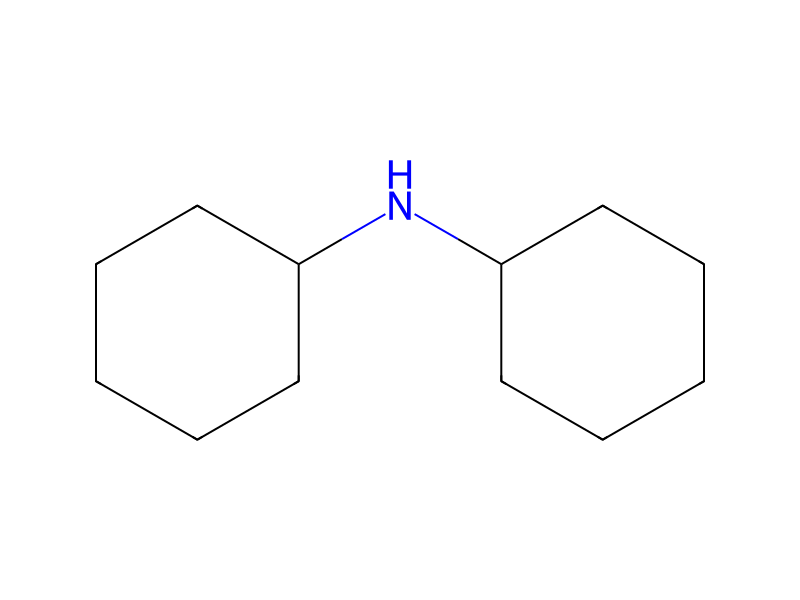
Reagents, catalysts & solvents 1

Procedure
Seventy mg of molecular sieves 4A was added to a stirred mixture of 62 mg of orthophosphoric acid, 52 μL of tri-n-butylamine and 0.7 mL of acetonitrile at room temperature, and the mixture was stirred in an ice-bath. To the mixture was added 70 mg of 2,3-dideoxy-3-fluoro-5-O-(4-phenylbenzoyl)-D-erythropentofuranosyl chloride, and the mixture was reacted at the same temperature for 1 day. Then, to the mixture were added 156 μL of tri-n-butylamine and then deionized water. The mixture was extracted with toluene three times. To the organic layer was added 48 μL of cyclohexylamine and the mixture was stirred for 30 min. The mixture was concentrated in vacuo, and acetone was added to form a precipitate, which was collected by filtration. The residue was washed with chloroform and dried in vacuo at room temperature to give a dicyclohexylamine of compound (29) as a white solid.
Workup
- customthe mixture was reacted at the same temperature for 1 day
- extractionThe mixture was extracted with toluene three times
- additionTo the organic layer was added 48 μL of cyclohexylamine
- stirringthe mixture was stirred for 30 min
- concentrationThe mixture was concentrated in vacuo, and acetone
- additionwas added
- customto form a precipitate, which
- filtrationwas collected by filtration
- washThe residue was washed with chloroform
- customdried in vacuo at room temperature
Sources & evidence
- ORD record
- ord-eed387e719a94623b05dae5c966deb6b
- Source dataset
- uspto-grants-2006_05
- Patent number
- US07038039B2
Reaction notes
Loading…