Phosphorus oxybromide → 3-(2,4-Dichlorophenyl)-2,5-dimethylpyrazine
Reaction equation

P(Br)(Br)([Br:3])=O.[Cl:6][C:7]1[CH:12]=[C:11]([Cl:13])[CH:10]=[CH:9][C:8]=1[C:14]1[C:15]([CH3:22])=[N+:16]([O-])[CH:17]=[C:18]([CH3:20])[N:19]=1.CN(C1C2C(N(C)C)=CC=CC=2C=CC=1)C>C(Cl)Cl>[Br:3][C:17]1[C:18]([CH3:20])=[N:19][C:14]([C:8]2[CH:9]=[CH:10][C:11]([Cl:13])=[CH:12][C:7]=2[Cl:6])=[C:15]([CH3:22])[N:16]=1.[Cl:6][C:7]1[CH:12]=[C:11]([Cl:13])[CH:10]=[CH:9][C:8]=1[C:14]1[C:15]([CH3:22])=[N:16][CH:17]=[C:18]([CH3:20])[N:19]=1Participants
6
Reactant 3
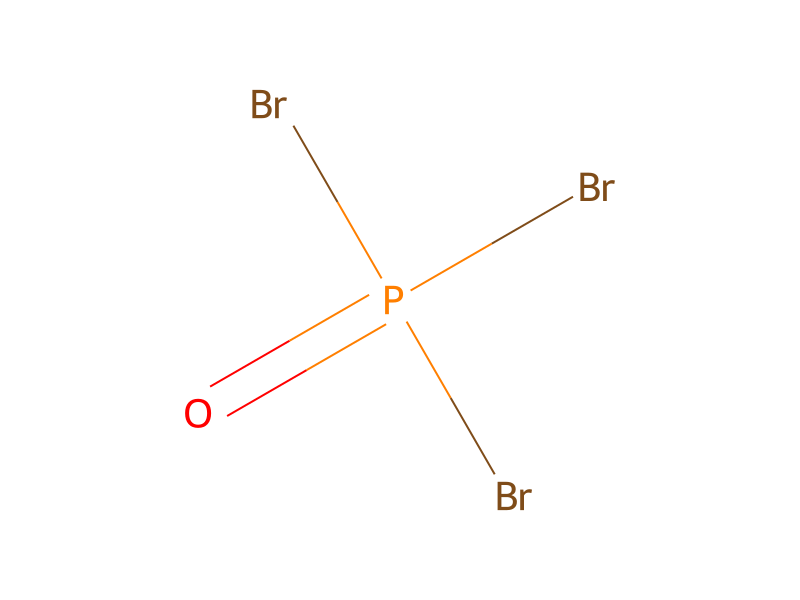


Product 2


Reagents, catalysts & solvents 1

Procedure
POBr3 (573 mg) was added to the solution of 3-(2,4-dichlorophenyl)-2,5-dimethylpyrazine 1-oxide (270 mg) and proton sponge (197 mg) in CH2Cl2 at 0° C. The reaction mixture was warmed to r.t. for 10 h. The reaction mixture was washed with 1N HCl, NaHCO3 and brine, dried (MgSO4), filtered and concentrated. Flash chromatography (silica gel Heptane:EtOAC 100:1) gave the title compound (110 mg, 35%) and 3-(2,4-dichlorophenyl)-2,5-dimethylpyrazine (100 mg, 38%). 1H NMR (CDCl3) δ 2.40, 2.71, 7.28, 7.40, 7.54; MS (ESI+) for C12H9Cl2N2Br1 m/z 333.0 (M+H)+.
Workup
- washThe reaction mixture was washed with 1N HCl, NaHCO3 and brine
- dry with materialdried (MgSO4)
- filtrationfiltered
- concentrationconcentrated
Sources & evidence
- ORD record
- ord-d5fafed2d75d4a4994e708e52bcea263
- Source dataset
- uspto-grants-2006_05
- Patent number
- US07041672B2
Reaction notes
Loading…