epsilon-CAPROLACTONE → L-lactide epsilon-caprolactone
Reaction equation

[CH3:1][C@@H:2]1[O:9][C:7](=[O:8])[C@H:6]([CH3:10])[O:5][C:3]1=[O:4].[C:11]1(=[O:18])[O:17][CH2:16][CH2:15][CH2:14][CH2:13][CH2:12]1>>[CH3:1][C@@H:2]1[O:9][C:7](=[O:8])[C@H:6]([CH3:10])[O:5][C:3]1=[O:4].[C:11]1(=[O:18])[O:17][CH2:16][CH2:15][CH2:14][CH2:13][CH2:12]1Participants
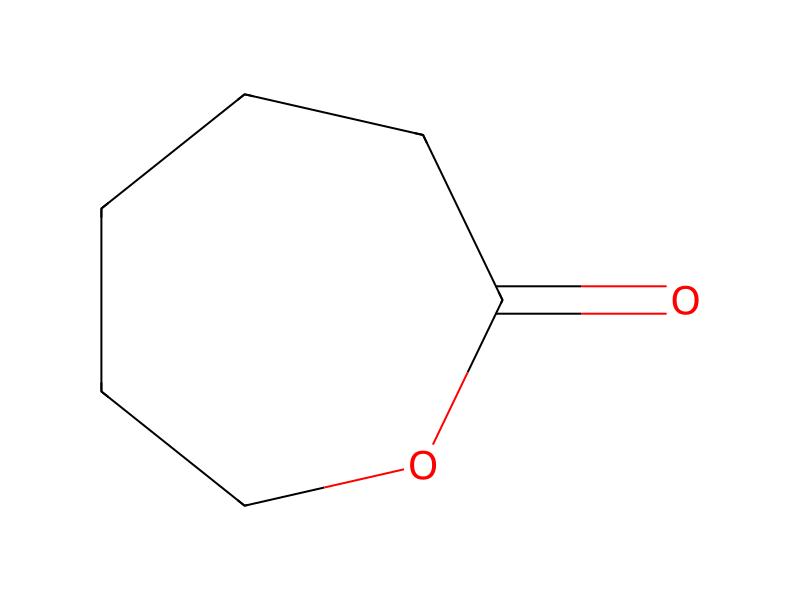
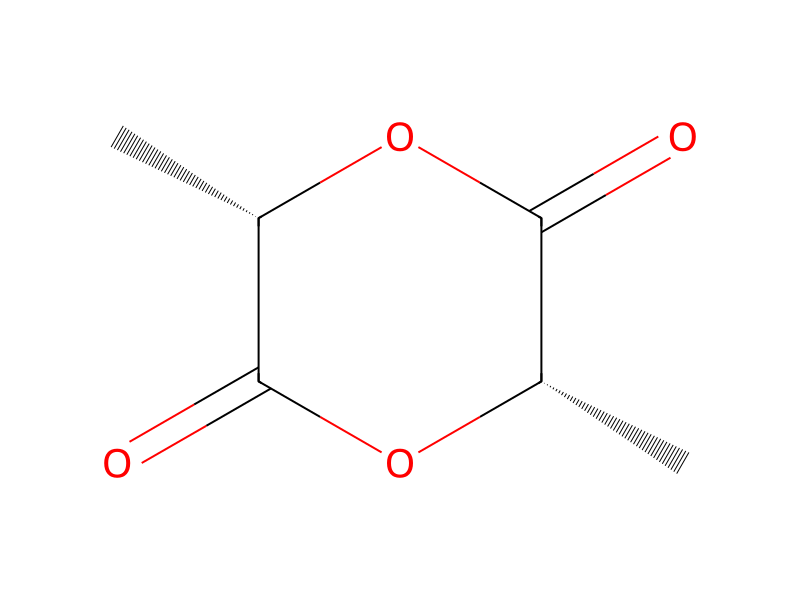
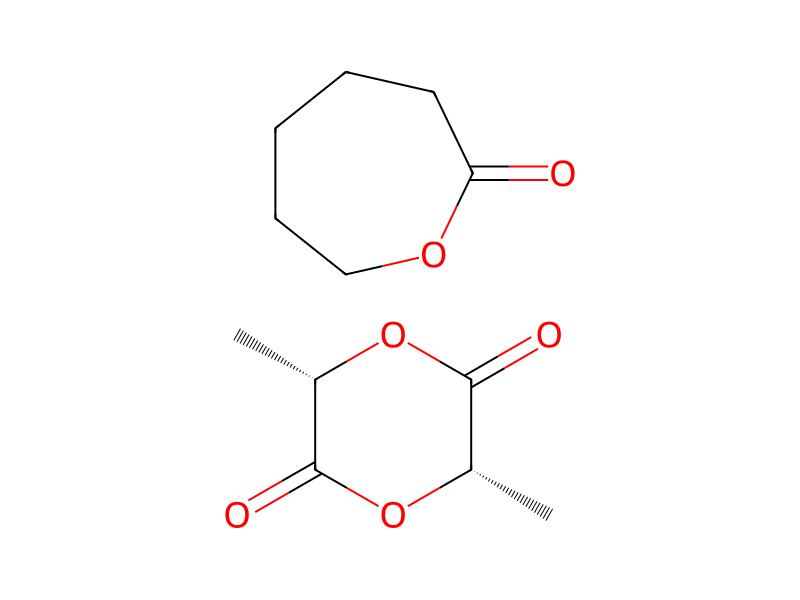
Procedure
144 g of L-lactide and 114 g of ε-caprolactone, and 100 ppm of the total weight of catalyst were placed in a glass ampoule, subjected to pressure reduction and sealed. Then, they were kept at 140° C. for 48 hours, obtaining a L-lactide/ε-caprolactone copolymer [molar ratio: 50/50; weight average molecular weight by GPC: 240,000; hereinafter referred to as P (L-LA/CL) (molar ratio: 50/50)]. Thus obtained P (L-LA/CL) (molar ratio: 50/50) was dissolved in a solvent (1,4-dioxane) so that the concentration of the solution became 6 wt %. After complete dissolution, the resultant solution was subjected to filtration to remove insoluble matter. The solution was then cast on a glass plate (flow casting) and subjected to lyophilization using a freeze dryer, followed by vacuum drying at 50° C. for 12 hours to remove the solvent, obtaining a spongy composition made of P (L-LA/CL) (molar ratio: 50/50). The thickness of the obtained spongy composition was 524 μm.
Workup
- customsealed
Sources & evidence
- ORD record
- ord-248a3f625a434afda5c2e259894ea357
- Source dataset
- uspto-grants-2006_05
- Patent number
- US07041713B2
Reaction notes
Loading…