Pyridine → HCID 22145392, compound
Reaction equation

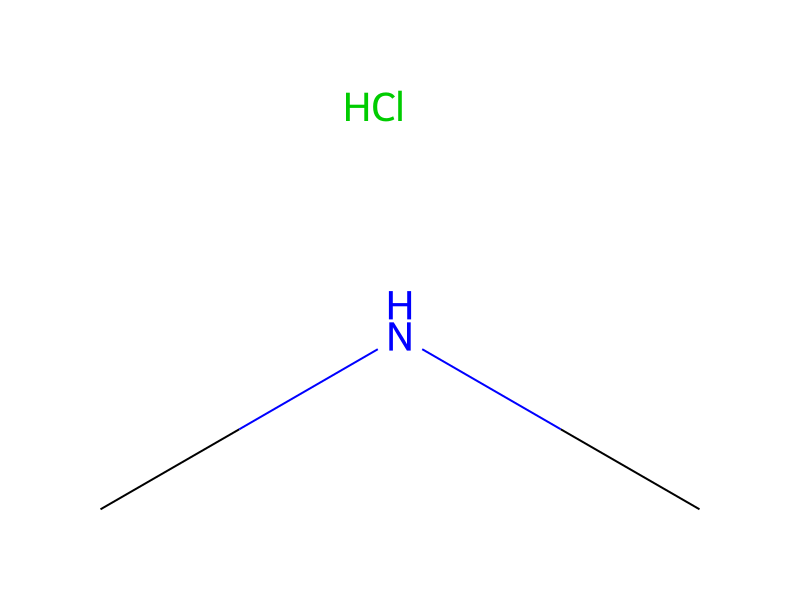
[C:1]([C:4]1[CH:8]=[C:7]([CH3:9])[N:6]([CH2:10][CH2:11][O:12][C:13](Cl)=[O:14])[N:5]=1)(=[O:3])[CH3:2].Cl.[CH3:17][NH:18][CH3:19].N1C=CC=CC=1>ClCCl>[C:1]([C:4]1[CH:8]=[C:7]([CH3:9])[N:6]([CH2:10][CH2:11][O:12][C:13]([N:18]([CH3:19])[CH3:17])=[O:14])[N:5]=1)(=[O:3])[CH3:2]Participants
Reactant 3


Product 1

Reagents, catalysts & solvents 1

Procedure
3-Acetyl-1-[2-(chlorocarbonyloxy)ethyl]-5-methylpyrazole (prepared in Example 22, Preparation 1) in dry dichloromethane (20 ml) was treated with dimethylamine hydrochloride (367 mg) and pyridine (712 mg) and the mixture stirred for 1.5 h. The mixture was then partitioned between ethyl acetate and 1M aqueous HCl. The organic phase was separated, washed with 1M aqueous HCl, saturated aqueous NaHCO3 and brine then dried over MgSO4 and evaporated. The residue was chromatographed on silica gel eluting with ethyl acetate/hexane mixtures to give 3-acetyl-1-[2-(N,N-dimethylaminocarbonyloxy)ethyl]-5-methylpyrazole (222 mg); νmax (KBr) 1697 and 1683 cm−1; δH (CDCl3) 2.31 (3H,s), 2.53 (3H,s), 2.82 (3H,s), 2.91 (3H,s), 4.4 (4H,m); Found m/z 239.1273 C11H17N3O3 requires 239.127.
Workup
- customThe mixture was then partitioned between ethyl acetate and 1M aqueous HCl
- customThe organic phase was separated
- washwashed with 1M aqueous HCl, saturated aqueous NaHCO3 and brine
- dry with materialthen dried over MgSO4
- customevaporated
- customThe residue was chromatographed on silica gel eluting with ethyl acetate/hexane
Sources & evidence
- ORD record
- ord-c4a39114071749dcba9a381af2772c08
- Source dataset
- uspto-grants-2006_05
- Patent number
- US07045619B2
Reaction notes
Loading…