Bisphenol A → Benzene, 1,1'-(1-methylethylidene)bis[4-(2-propen-1-yloxy)-
Reaction equation

[OH:1][C:2]1[CH:7]=[CH:6][C:5]([C:8]([C:11]2[CH:16]=[CH:15][C:14]([OH:17])=[CH:13][CH:12]=2)([CH3:10])[CH3:9])=[CH:4][CH:3]=1.[OH-].[K+].[CH2:20](Cl)[CH:21]=[CH2:22].[CH2:24](OCC=C)[CH:25]=[CH2:26]>C(C(C)=O)C.C1(C)C=CC=CC=1.CS(C)=O>[CH2:20]([O:1][C:2]1[CH:3]=[CH:4][C:5]([C:8]([C:11]2[CH:12]=[CH:13][C:14]([O:17][CH2:26][CH:25]=[CH2:24])=[CH:15][CH:16]=2)([CH3:10])[CH3:9])=[CH:6][CH:7]=1)[CH:21]=[CH2:22]Participants

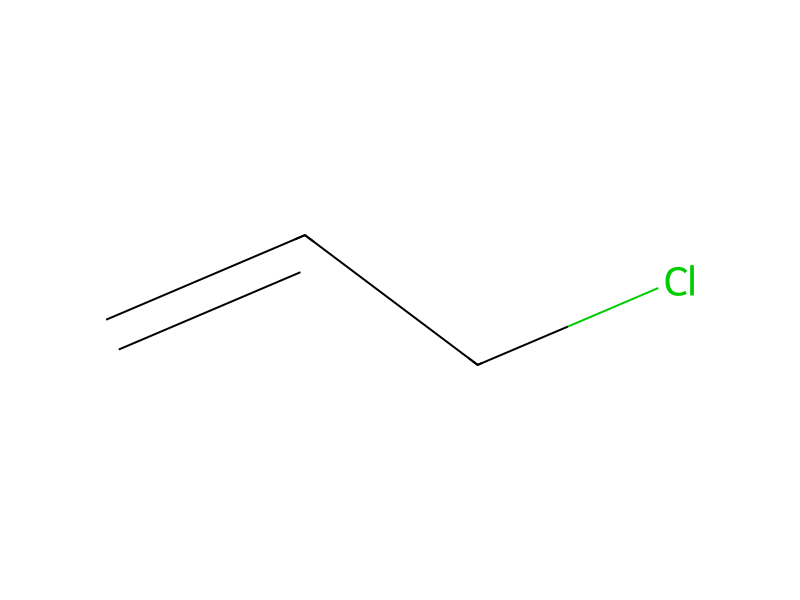





Conditions
- Temperature
- 37.5 °C
Procedure
Bisphenol A diallyl ether was synthesized as described in U.S. Pat. No. 4,740,330. In a four-necked reactor, equipped with a condenser, stirrer, thermometer with temperature controller, and an addition funnel, were added 800 mL of bis-(2-methoxy ethyl)ether(diglyme), 400 mL of dimethyl sulfoxide (DMSO), 228 g (1 mole) bisphenol-A, and 284 g (4 moles) of 85% KOH at ambient temperature (˜25° C.). The mixture was stirred and heated to 35-40° C., and the addition of 304 g (4 moles) of allyl chloride was begun. This reaction was exothermic and was controlled at less than 45° C. by controlling the allyl chloride addition rate. The allyl chloride was added over a 4-hour period, and the reaction was continued at 45° C. for an additional 12 hours to convert the bisphenol-A into diallyl ether. The reaction mixture was cooled to ambient temperature and filtered to remove salts formed in the reaction. The filtrate was mixed with 1000 mL of 50:50 (volume:volume) methyl ethyl ketone-toluene mixture and washed four times with 200 mL portions of water. The solvents were removed from the diallyl product by rotary evaporation first at 50-60° C. and 120 mmHg and then at 120-130° C. at 10 mmHg until gas chromatography (GC) showed all the diglyme and DMSO had disappeared. The yield was 235 g (76% yield) of a light yellow product, bis A diallyl ether, with greater than 95% purity as determined by GC.
Workup
- customIn a four-necked reactor, equipped with a condenser, stirrer, thermometer with temperature controller, and an addition funnel
- customwas controlled at less than 45° C.
- temperatureThe reaction mixture was cooled to ambient temperature
- filtrationfiltered
- customto remove salts
- customformed in the reaction
- washwashed four times with 200 mL portions of water
- customThe solvents were removed from the diallyl product by rotary evaporation first at 50-60° C.
- customat 120-130° C.
Sources & evidence
- ORD record
- ord-b4571b03363b4c04a7075bf8e91a602b
- Source dataset
- uspto-grants-2006_05
- Patent number
- US07049388B2
Reaction notes
Loading…