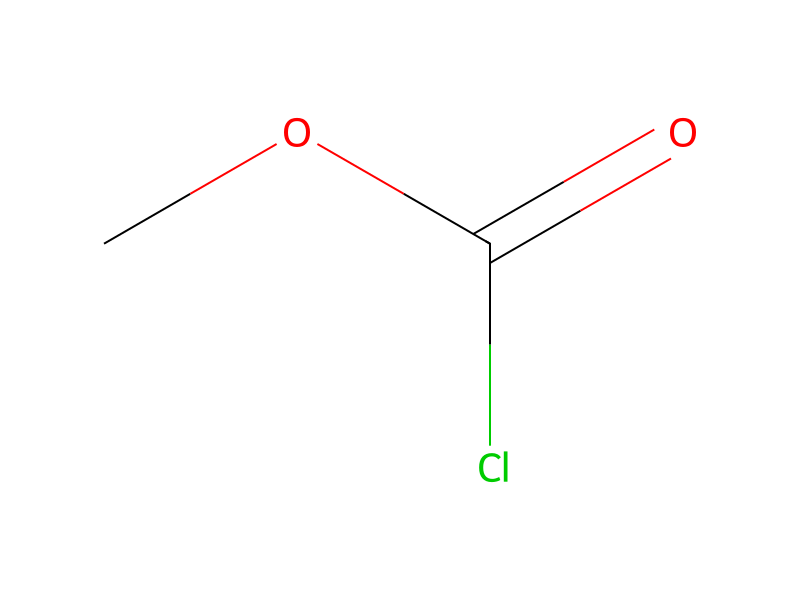
Methyl chloroformate → 6-Methoxy-2-(3-methoxyphenyl)quinoline
Reaction equation

[CH3:1][O:2][C:3]1[CH:4]=[C:5]2[C:10](=[CH:11][CH:12]=1)[N+:9]([O-])=[CH:8][CH:7]=[CH:6]2.ClC(OC)=O.[CH3:19][O:20][C:21]1[CH:22]=[C:23]([Mg]Br)[CH:24]=[CH:25][CH:26]=1>C1COCC1>[CH3:1][O:2][C:3]1[CH:4]=[C:5]2[C:10](=[CH:11][CH:12]=1)[N:9]=[C:8]([C:25]1[CH:24]=[CH:23][CH:22]=[C:21]([O:20][CH3:19])[CH:26]=1)[CH:7]=[CH:6]2Participants
5
Reactant 3


Product 1

Reagents, catalysts & solvents 1

Conditions
- Temperature
- 0 °C
Procedure
To a solution of 6-methoxyquinoline-N-oxide (175 mg, 1.0 mmol) in THF (3 mL) at room temperature is added methyl chloroformate (77 uL, 1.0 mmol). The mixture is cooled to 0° C. and 3-methoxyphenylmagnesium bromide (2 mL of 1M, 2 mmol) is added dropwise. The mixture is stirred for 16 h while warming to room temperature. The solvent is removed in vacuo and the resulting residue is partitioned between water and CH2Cl2. The organic phase is washed with water and brine, dried over MgSO4, filtered and concentrated. Flash chromotography (0–20% EtOAc/hexanes) yields 6-methoxy-2-(3-methoxy-phenyl)-quinoline (123 mg, 46% yield).
Workup
- temperaturewhile warming to room temperature
- customThe solvent is removed in vacuo
- customthe resulting residue is partitioned between water and CH2Cl2
- washThe organic phase is washed with water and brine
- dry with materialdried over MgSO4
- filtrationfiltered
- concentrationconcentrated
Sources & evidence
- ORD record
- ord-8c25b71552ab4600b5e5ddfe561eb5d8
- Source dataset
- uspto-grants-2006_06
- Patent number
- US07056931B2
Reaction notes
Loading…