Tetrahydrofuran → HCID 178423591, compound
Reaction equation

[CH:1]1([Na:6])[CH:5]=[CH:4][CH:3]=[CH:2]1.[C:7](=O)([O:10]C)[O:8]C.O1CCC[CH2:14]1>>[CH3:14][C:2]1[C:1]([C:7]([OH:10])=[O:8])([Na:6])[CH:5]=[CH:4][CH:3]=1Participants



Procedure
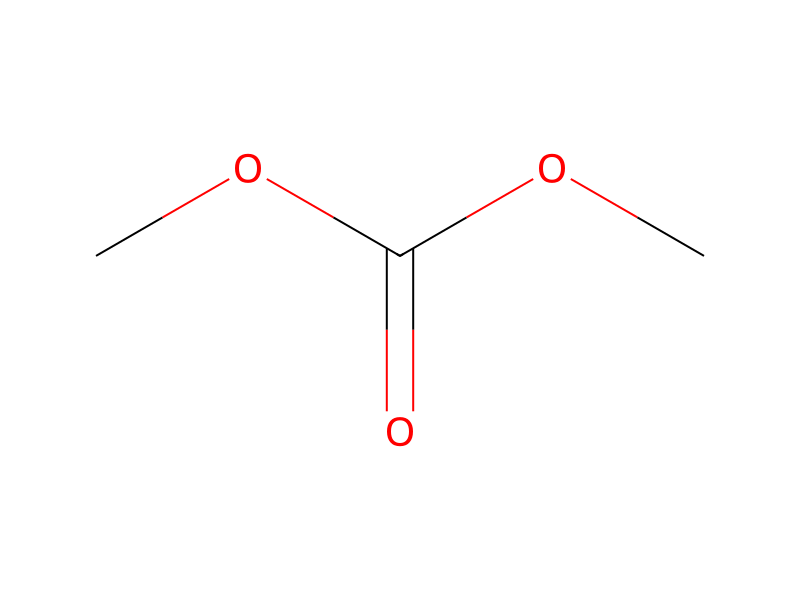
5.901 g (33.5 mmol) of the 1,4-dioxane complex of cyclopentadienylsodium were heated with 9.008 g (100.0 mmol) of dimethyl carbonate in 70 ml of tetrahydrofuran to reflux. After 3 h, the solvent and excess dimethyl carbonate were removed distillatively and the residue was washed with 150 ml of diethyl ether. After drying under reduced pressure, 4.68 g (32.03 mmol) of methylcarboxycyclopentadienylsodium were obtained. 2.913 g (19.94 mmol) of methylcarboxycyclopentadienylsodium were admixed with 4.854 g (18.39 mmol) of Mo(CO)6 in 80 ml of tetrahydrofuran, heated for 24 h to reflux, admixed with 4.55 g (32.06 mmol) of methyl iodide after cooling to room temperature and stirred for a further 24 hours at room temperature. After distillative removal of the solvent and the excess methyl iodide under reduced pressure, the crude product was subjected to purification by column chromatography (activated silica gel; cyclohexane:dichloromethane=5:2) to obtain 3.853 g (12.11 mmol) of (η5-methylcarboxycyclopentadienyl)triscarbonylmethylmolybdenum (II) as a yellow powder. 0.4598 g (1.445 mmol) of (η5-methylcarboxycyclopentadienyl)triscarbonylmethylmolybdenum (II) in 20 ml of dichloromethane was gradually admixed at −20° C. with a solution of 0.2169 g (1.4453 mmol) of trifluoromethanesulfonic acid in 5 ml of dichloromethane which caused the yellow solution to turn wine red and vigorous gas formation to occur. The reaction temperature was gradually increased to room temperature in 5° steps at 30 minute intervals. The reaction mixture was then admixed with 25 ml of n-hexane and concentrated under reduced pressure until a wine red product precipitated. The remaining solvent was pipetted off and the solid dried under reduced pressure. 0.443 g (0.9797 mmol, 68% of theory) of (η5-methylcarboxycyclopentadienyl)triscarbonylmolybdenum(II) triflate (I.7) was obtained as a wine red powder.
Workup
- temperatureto reflux
- customthe solvent and excess dimethyl carbonate were removed distillatively
- washthe residue was washed with 150 ml of diethyl ether
- customAfter drying under reduced pressure
Sources & evidence
- ORD record
- ord-5fbefa52543f45998b9f5ea9f22139bb
- Source dataset
- uspto-grants-2006_06
- Patent number
- US07064177B2
Reaction notes
Loading…