Hydrochloric Acid → HCID 22044636, compound
Reaction equation

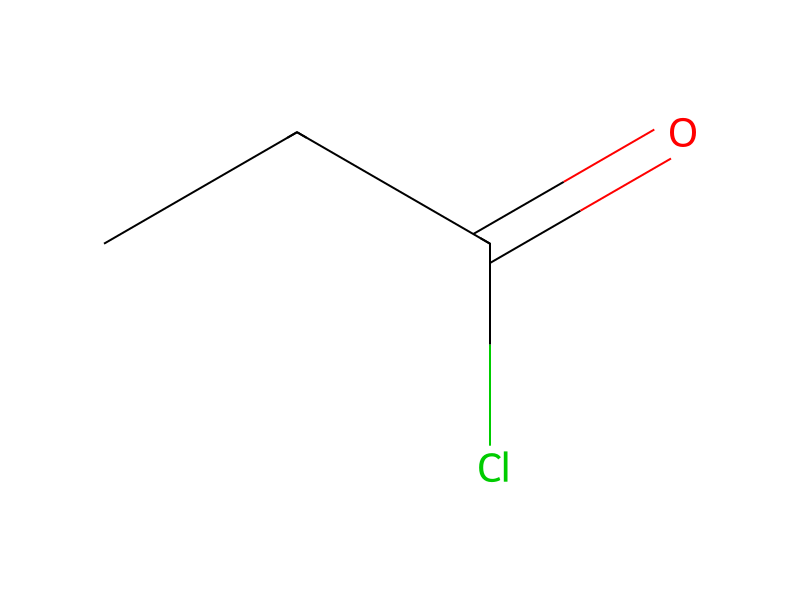
[F:1][C:2]1[C:14]2[CH2:13][C:12]3[C:7](=[CH:8][CH:9]=[CH:10][C:11]=3[F:15])[C:6]=2[CH:5]=[CH:4][CH:3]=1.[Cl-].[Al+3].[Cl-].[Cl-].[C:20](Cl)(=[O:23])[CH2:21][CH3:22].Cl>C(=S)=S>[C:20]([C:10]1[CH:9]=[CH:8][C:7]2[C:6]3[C:14](=[C:2]([F:1])[CH:3]=[CH:4][CH:5]=3)[CH2:13][C:12]=2[C:11]=1[F:15])(=[O:23])[CH2:21][CH3:22]Participants
Reactant 4



Product 1

Reagents, catalysts & solvents 1

Procedure
50.5 g of 1,8-difluorofluorene (K-1) was dissolved in 150 ml of carbon disulfide, and the temperature was lowered to −10° C. With the temperature maintained at this level, 30 g of anhydrous aluminum chloride was added, and with the temperature still held at −10° C., 25.4 g of propionyl chloride was added dropwise over a period of 30 minutes, and the mixture was then stirred at the same temperature for 2 hours. Following completion of the stirring, the reaction mixture was poured into 200 ml of cooled 1N dilute hydrochloric acid, and was then extracted with 250 ml of toluene. The thus obtained organic layer was washed twice with 100 ml portions of water. Following drying, the solvent was removed by evaporation and the product purified by silica gel chromatography (toluene) to yield 20.5 g of 2-propionyl-1,8-difluorofluorene (K-2).
Workup
- customwas lowered to −10° C
- additionwas added
- customstill held at −10° C.
- extractionwas then extracted with 250 ml of toluene
- washThe thus obtained organic layer was washed twice with 100 ml portions of water
- customFollowing drying
- customthe solvent was removed by evaporation
- customthe product purified by silica gel chromatography (toluene)
Sources & evidence
- ORD record
- ord-396f4ac0ba8b4fdcaedb3b5a088b3bb0
- Source dataset
- uspto-grants-2006_06
- Patent number
- US07067179B1
Reaction notes
Loading…