Tetrahydrofuran → HCID 22049707, compound
Reaction equation

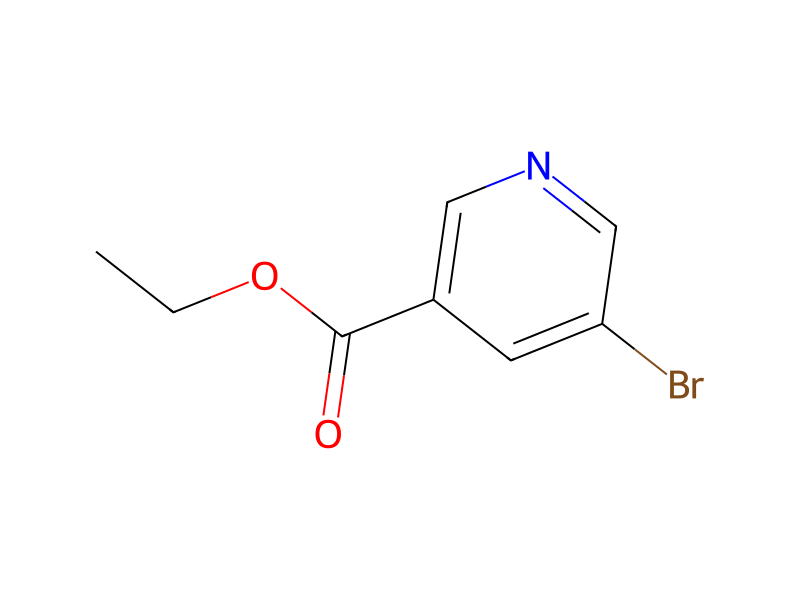
[Cl:1][C:2]1[CH:7]=[CH:6][C:5]([C:8]2[N:9]=[C:10](Br)[S:11][CH:12]=2)=[CH:4][CH:3]=1.Br[C:15]1[CH:16]=[N:17][CH:18]=[C:19]([CH:25]=1)[C:20]([O:22]CC)=[O:21].O1CC[CH2:28][CH2:27]1>[Cl-].[Zn+2].[Cl-].C1C=CC([P]([Pd]([P](C2C=CC=CC=2)(C2C=CC=CC=2)C2C=CC=CC=2)([P](C2C=CC=CC=2)(C2C=CC=CC=2)C2C=CC=CC=2)[P](C2C=CC=CC=2)(C2C=CC=CC=2)C2C=CC=CC=2)(C2C=CC=CC=2)C2C=CC=CC=2)=CC=1>[CH2:27]([C:18]1[N:17]=[CH:16][C:15]([C:10]2[S:11][CH:12]=[C:8]([C:5]3[CH:6]=[CH:7][C:2]([Cl:1])=[CH:3][CH:4]=3)[N:9]=2)=[CH:25][C:19]=1[C:20]([OH:22])=[O:21])[CH3:28]Participants





Conditions
- Temperature
- -78 °C
Procedure
A solution of compound (41) (0.25 g, 0.91 mmol) in tetrahydrofuran (5 ml) was cooled to −78° C. under an argon atmosphere and 1.6 M n-butyllithium-hexane solution (0.57 ml, 0.91 mmol) was added. After stirring at −78° C. for 30 min., a solution of zinc chloride (0.12 g, 0.91 mmol) in tetrahydrofuran (2 ml) was added to the reaction mixture. The reaction mixture was warmed to room temperature and stirred for 30 min. and ethyl 5-bromonicotinate (0.21 g, 0.91 mmol) and tetrakis(triphenylphosphine)palladium (0.16 g, 0.14 mmol) were added. The mixture was heated to 75° C. and stirred for 2 hrs. After cooling, the reaction mixture was poured into ice water and partitioned between ethyl acetate and brine. The aqueous layer was extracted with ethyl acetate and the extracts were combined and dried (MgSO4), and the solvent was evaporated under reduced pressure. The obtained residue was purified by silica gel column chromatography, and crystallized from ethyl acetate-n-hexane to give white crystals (0.16 g, 51%).
Workup
- addition1.6 M n-butyllithium-hexane solution (0.57 ml, 0.91 mmol) was added
- temperatureThe reaction mixture was warmed to room temperature
- stirringstirred for 30 min.
- temperatureThe mixture was heated to 75° C.
- stirringstirred for 2 hrs
- temperatureAfter cooling
- custompartitioned between ethyl acetate and brine
- extractionThe aqueous layer was extracted with ethyl acetate
- dry with materialdried (MgSO4)
- customthe solvent was evaporated under reduced pressure
- customThe obtained residue was purified by silica gel column chromatography
- customcrystallized from ethyl acetate-n-hexane
Sources & evidence
- ORD record
- ord-a3de0a11f79645059b0888b511d5f4cc
- Source dataset
- uspto-grants-2006_06
- Patent number
- US07067537B2
Reaction notes
Loading…