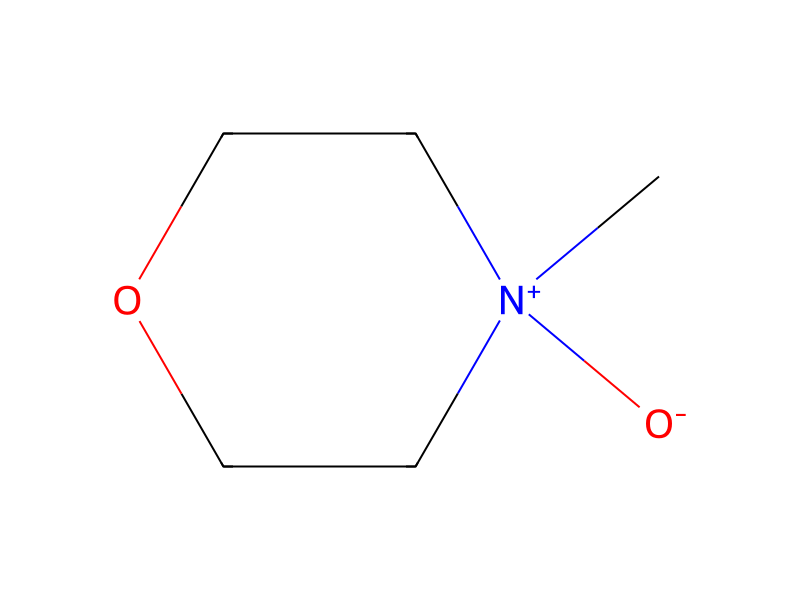
Methyl morpholine oxide → HCID 15429326, compound
Reaction equation

[OH:1][CH2:2][C:3]1[CH:4]=[CH:5][C:6]2[CH:7]3[CH2:16][CH2:15][CH2:14][CH:8]3[C:9](=[O:13])[NH:10][C:11]=2[CH:12]=1.C[N+]1([O-])CCOCC1>C(Cl)(Cl)Cl.ClCCl.C(#N)C.[Ru]([O-])(=O)(=O)=O.C([N+](CCC)(CCC)CCC)CC>[CH2:16]1[CH:7]2[CH:8]([C:9](=[O:13])[NH:10][C:11]3[CH:12]=[C:3]([CH:2]=[O:1])[CH:4]=[CH:5][C:6]=32)[CH2:14][CH2:15]1Participants
5



Procedure
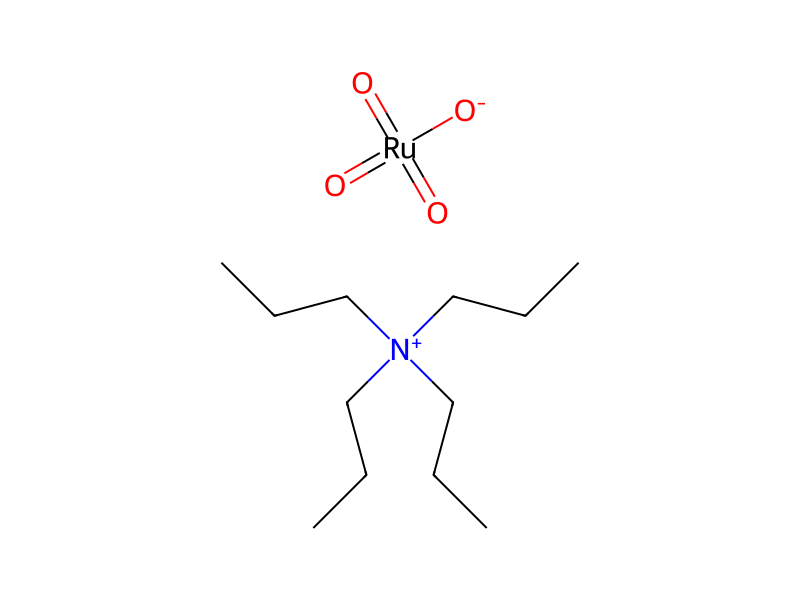
A solution of 187 mg (0.86 mmol) of 7-hydroxymethyl-1,2,3,3a,5,9b-hexahydrocyclopenta[c]quinolin-4-one in 20 ml of chloroform-dichloromethane-acetonitrile (2:1:1) is mixed with 151 mg (1.29 mmol) of N-methylmorpholin-N-oxide and 1.5 g of molecular sieve 4 Å. After 15 mg (0.043 mmol) of tetrapropylammonium perruthenate (TPAP) is added, the batch is stirred for 2.5 hours at room temperature, before another 10 mg (0.028 mmol) of TPAP is added. After 1.5 hours, silica gel is added to the reaction mixture, and the solvent is distilled off in a vacuum. Column chromatography with hexane-ethyl acetate yields 156 mg of product.
Workup
- additionis added
- additionsilica gel is added to the reaction mixture
- distillationthe solvent is distilled off in a vacuum
Sources & evidence
- ORD record
- ord-ff66b1c7ea154e2f832e02b12dcbc224
- Source dataset
- uspto-grants-2006_06
- Patent number
- US07067667B2
Reaction notes
Loading…