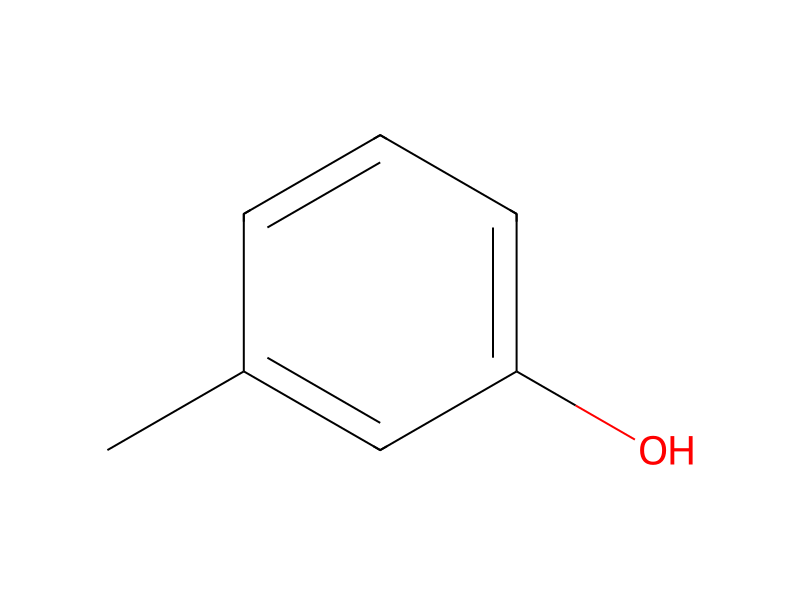
M-Cresol → 3-Methylcatechol
Reaction equation

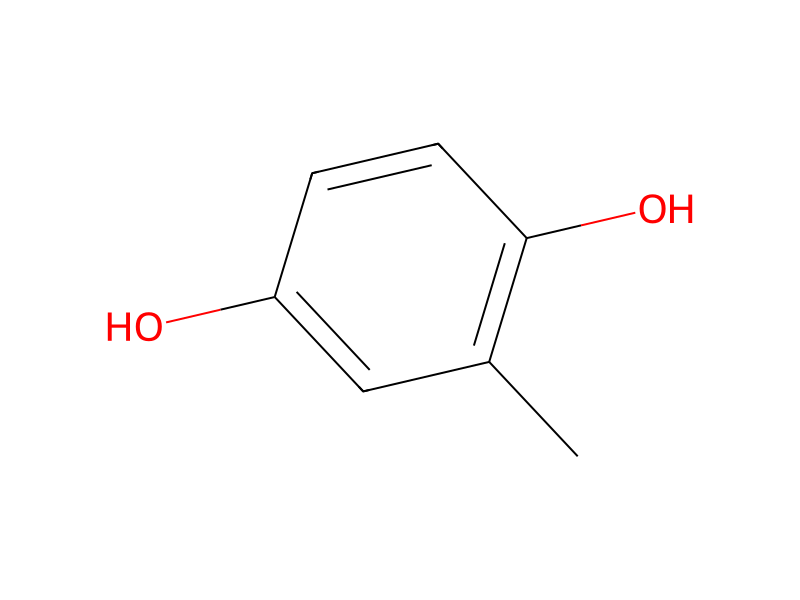
[CH:1]1[C:6]([OH:7])=[CH:5][CH:4]=[CH:3][C:2]=1[CH3:8].[CH3:9][CH2:10][C:11]([O:13]O)=[O:12]>>[CH3:8][C:2]1[C:1]([OH:12])=[C:6]([OH:7])[CH:5]=[CH:4][CH:3]=1.[CH3:3][C:4]1[CH:9]=[CH:10][C:11]([OH:13])=[C:6]([OH:7])[CH:5]=1.[CH3:8][C:2]1[CH:1]=[C:6]([OH:7])[CH:5]=[CH:4][C:3]=1[OH:12]Participants
5



Procedure
The procedure of Example 7 was repeated, except that 0.5 mol of meta-cresol was used in place of para-cresol and 0.05 mol of perpropionic acid was used in place of peracetic acid. The results showed the conversion of meta-cresol to be 3.8 percent and the yields of 3-methyl-1,2-dihydroxybenzene, 4-methyl-1,2-dihydroxybenzene and 3-methyl-1,4-dihydroxybenzene based on the consumed propionic acid to be 19.5 mol percent, 26.4 mol percent and 42.1 mol percent respectively.
Sources & evidence
- ORD record
- ord-c5954e3d481f42ed90cd1c5fe80121a7
- Source dataset
- uspto-grants-1978_01
- Patent number
- US04066707
Reaction notes
Loading…