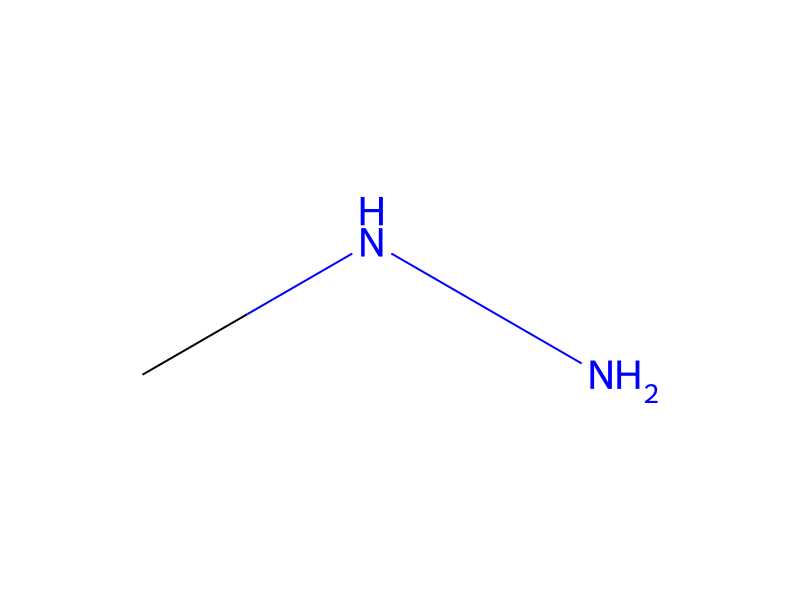
Methylhydrazine → 2-methyl-4-(2-methylpropyl)-1H,2H,6H-pyrrolo[3,4-d]pyridazin-1-one
Reaction equation

[CH3:1][CH:2]([CH3:15])[CH2:3][C:4]([C:6]1[C:7]([C:11](OC)=[O:12])=[CH:8][NH:9][CH:10]=1)=O.[CH3:16][NH:17][NH2:18]>>[CH3:16][N:17]1[C:11](=[O:12])[C:7]2=[CH:8][NH:9][CH:10]=[C:6]2[C:4]([CH2:3][CH:2]([CH3:15])[CH3:1])=[N:18]1Participants
3


Procedure
Methyl 4-(3-methyl-1-oxobutyl)-1H-pyrrole-3-carboxylate (Example 1, step b, 7.8 g) and methylhydrazine (6 ml) were heated at reflux for 18 hours. The solvent was evaporated and the residue was chromatographed, eluting with dichloromethane-ethanol (19:1), to give the sub-title compound as a sand coloured solid (5.2 g).
Workup
- temperatureat reflux for 18 hours
- customThe solvent was evaporated
- customthe residue was chromatographed
- washeluting with dichloromethane-ethanol (19:1)
Sources & evidence
- ORD record
- ord-b630b1f73946440884db9723a32ee3bf
- Source dataset
- uspto-grants-2004_08
- Patent number
- US06770646B2
Reaction notes
Loading…