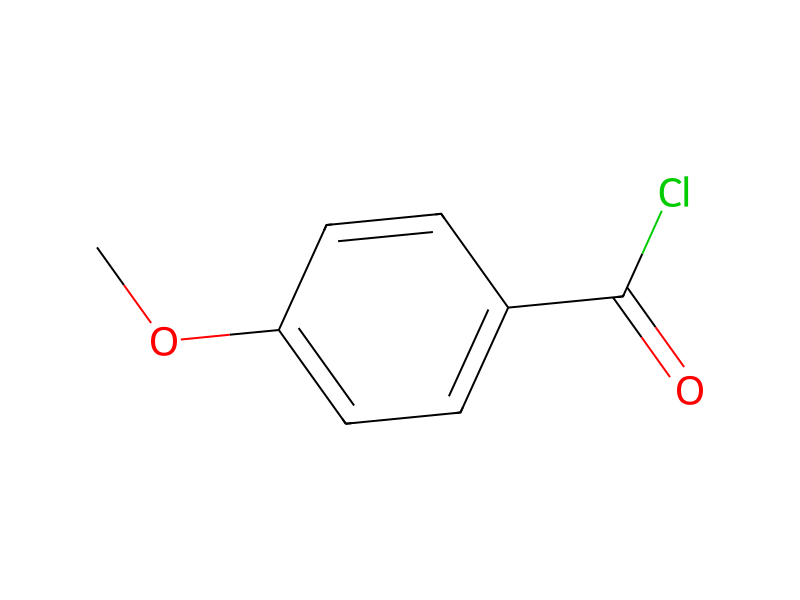
p-Anisoyl chloride → HCID 23517205, compound
Reaction equation

[CH:1]1[C:10]2[C:5](=[CH:6][CH:7]=[CH:8][CH:9]=2)[CH:4]=[CH:3][C:2]=1[OH:11].[Cl-].[CH:13](=[N+:20]([CH3:22])[CH3:21])[C:14]1[CH:19]=[CH:18][CH:17]=[CH:16][CH:15]=1.[CH3:23][O:24][C:25]1[CH:33]=[CH:32][C:28]([C:29](Cl)=[O:30])=[CH:27][CH:26]=1>>[CH3:21][N:20]([CH:13]([C:14]1[CH:19]=[CH:18][CH:17]=[CH:16][CH:15]=1)[C:1]1[C:10]2[C:5](=[CH:6][CH:7]=[CH:8][CH:9]=2)[CH:4]=[CH:3][C:2]=1[O:11][C:29](=[O:30])[C:28]1[CH:32]=[CH:33][C:25]([O:24][CH3:23])=[CH:26][CH:27]=1)[CH3:22]Participants
4


Procedure
The preparation was carried out in accordance with general synthesis instructions 4 and 6 from 2-naphthol, benzylidene-dimethyl-ammonium chloride and 4-methoxybenzoyl chloride. The structure was demonstrated by means of ESI-MS: mass calculated 411.51 g/mol, mass found M+H=412.0.
Sources & evidence
- ORD record
- ord-ebb337a9523a4fca8a3ab9db127dc531
- Source dataset
- uspto-grants-2004_08
- Patent number
- US06774136B2
Reaction notes
Loading…