L-Phenylalanine, methyl ester → HCID 10176363, compound
Reaction equation

[CH2:1]([C@@H:8]1[NH:12][C@H:11](C(C)(C)C)[N:10](C)[C:9]1=[O:18])[C:2]1[CH:7]=[CH:6][CH:5]=[CH:4][CH:3]=1.COC(=O)[C@H](CC1C=CC=CC=1)N>CN>[CH3:11][NH:10][C:9](=[O:18])[C@H:8]([CH2:1][C:2]1[CH:7]=[CH:6][CH:5]=[CH:4][CH:3]=1)[NH2:12]Participants
Reactant 2


Product 1

Reagents, catalysts & solvents 1
Procedure
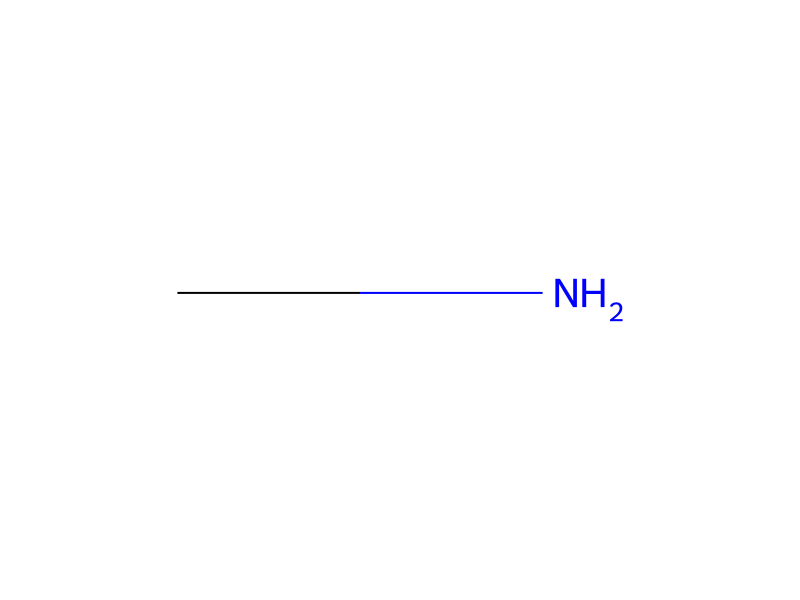
Hydrochloride salt of (2S,5S)-5-benzyl-2-tert-butyl-3-methylimidazolidin-4-one (1): To a solution of ethanolic MeNH2 (8.0 M, 50 ml) was added (S)-phenylalanine methyl ester (23.0 g, 130 mmol). The resulting solution was stirred at room temperature until the amino ester was judged to be consumed by TLC analysis. The resulting solution was then concentrated to provide (S)-phenylalanine N-methyl amide (18 g, 82% yield) as a white solid. To a flask containing (S)-phenylalanine N-methyl amide (8.9 g, 50 mmol) was added THF (100 ml), trimethylacetaldehyde (5.4 g, 50 mmol), FeCl3 (1.7 g, 10 mmol) and 4 Å MS (5.0 g). The resulting mixture was stirred at room temperature for 36 h, then washed with H2O (3×100 mL). The combined organics were concentrated and the resulting residue was treated with HCl (27 mL, 1N in ether). The resulting heterogeneous mixture was filtered to removed the undesired trans isomer.HCl salt and the resulting solution was concentrated. The residue was recrystallized (9:1 pentane/CH2Cl2) to provide the product (1) as a crystalline solid (2.88 g, 23% yield, >99% ee). IR (film) 3343, 2958, 1605, 1028 cm−1; 1H NMR (300 MHz, CDCl3) δ 7.31-7.17 (m, 5H, ArH), 4.04 (s, 1H, NCHN), 3.72-3.65 (m, 1H, CHCH2), 3.13 (dd, J=4.1, 13.7 Hz, 1H, CH2), 2.92 (dd, J=7.7, 13.7 Hz, 1H, CH2), 2.90 (s, 3H, NCH3), 0.82 (s, 9H, C(CH3)3); 13C NMR (75 MHz, CDCl3) δ 175.3, 138.0, 129.8, 128.7, 126.8, 82.7, 77.8, 77.4, 76.9, 59.7, 38.6, 35.4, 31.0, 25.7; [α]D=−39.6 (c=1.0, CHCl3). The enantiomeric ratio was determined by HPLC using a Chiralpak OD-H and OD guard column (3.0% i-PrOH/hexanes, 1 mL/min); (5S) isomer tr=16.7 min, (5R) isomer tr=20.1 min.
Workup
- customto be consumed by TLC analysis
- concentrationThe resulting solution was then concentrated
Sources & evidence
- ORD record
- ord-5716e2f9696948a0b14799ea3d5d68f1
- Source dataset
- uspto-grants-2004_08
- Patent number
- US06784323B2
Reaction notes
Loading…