3-Pyridinemethanamine → 4-Chloro-6-(2-hydroxy-ethylamino)-2-[(pyridin-3-ylmethyl)-amino]-pyrimidine-5-carbonitrile
Reaction equation

[Cl:1][C:2]1[C:7]([C:8]#[N:9])=[C:6]([NH:10][CH2:11][CH2:12][OH:13])[N:5]=[C:4](S(C)(=O)=O)[N:3]=1.[N:18]1[CH:23]=[CH:22][CH:21]=[C:20]([CH2:24][NH2:25])[CH:19]=1.C(N(C(C)C)C(C)C)C>O1CCOCC1>[Cl:1][C:2]1[C:7]([C:8]#[N:9])=[C:6]([NH:10][CH2:11][CH2:12][OH:13])[N:5]=[C:4]([NH:25][CH2:24][C:20]2[CH:19]=[N:18][CH:23]=[CH:22][CH:21]=2)[N:3]=1Participants
5
Reactant 3
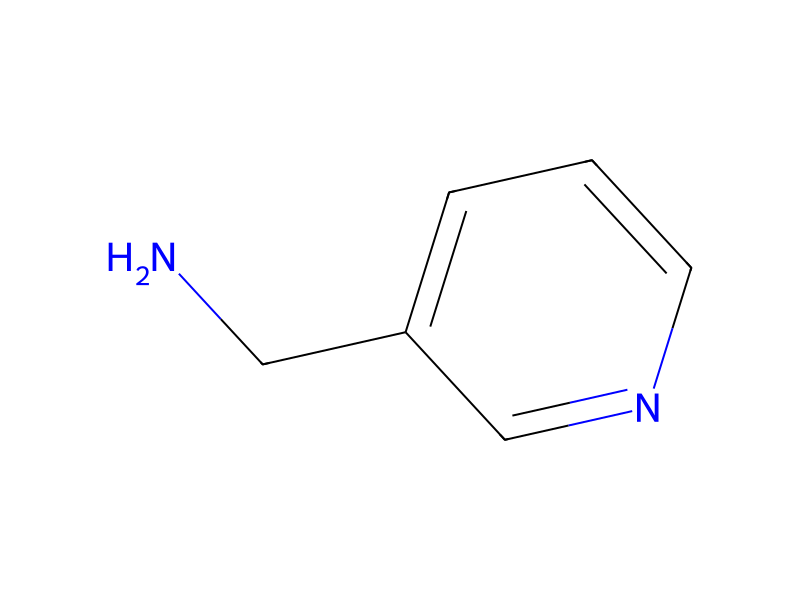


Product 1

Reagents, catalysts & solvents 1

Procedure
In analogy to the procedure described in example 47a, the crude 4-chloro-6-(2-hydroxy-ethylamino)-2-methanesulfonyl-pyrimidine-5-carbonitrile was treated with 3-picolyl-amine in dioxane in the presence of N-ethyl-diisopropylamine at 40° C. to yield 4-chloro-6-(2-hydroxy-ethylamino)-2-[(pyridin-3-ylmethyl)-amino]-pyrimidine-5-carbonitrile as a brown solid which was used in the next step without further purification and characterization.
Sources & evidence
- ORD record
- ord-87fc64335203441fba09aeca4a645cd0
- Source dataset
- uspto-grants-2004_01
- Patent number
- US06673795B2
Reaction notes
Loading…