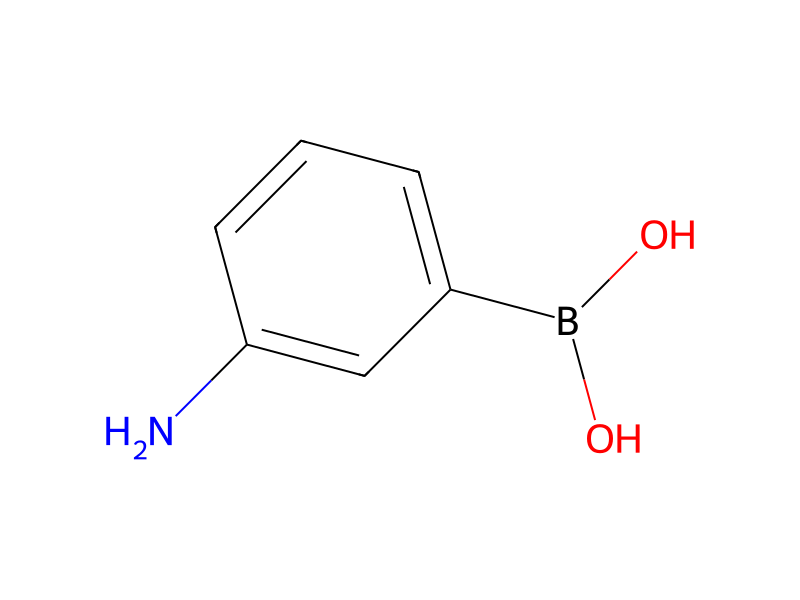
3-Aminophenylboronic acid → HCID 21925704, compound
Reaction equation

[NH2:1][C:2]1[CH:3]=[C:4](B(O)O)[CH:5]=[CH:6][CH:7]=1.Br[C:12]1[CH:13]=[CH:14][C:15]([F:21])=[C:16]([N+:18]([O-:20])=[O:19])[CH:17]=1.C(=O)(O)[O-].[Na+]>C1(C)C=CC=CC=1.C1C=CC([P]([Pd]([P](C2C=CC=CC=2)(C2C=CC=CC=2)C2C=CC=CC=2)([P](C2C=CC=CC=2)(C2C=CC=CC=2)C2C=CC=CC=2)[P](C2C=CC=CC=2)(C2C=CC=CC=2)C2C=CC=CC=2)(C2C=CC=CC=2)C2C=CC=CC=2)=CC=1>[F:21][C:15]1[CH:14]=[CH:13][C:12]([C:4]2[CH:5]=[CH:6][CH:7]=[C:2]([NH2:1])[CH:3]=2)=[CH:17][C:16]=1[N+:18]([O-:20])=[O:19]Participants
6




Procedure
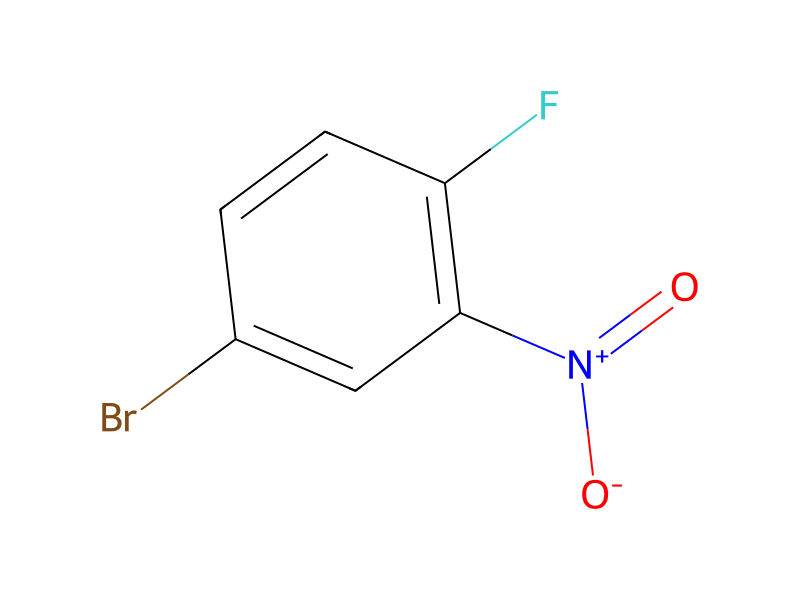
3-Aminophenylboronic acid (3.9 g), 5 g 5-bromo-2-fluoro-nitrobenzene, 0.8 g tetrakis(triphenylphosphine)palladium and 23 mL of 2 M sodium bicarbonate solution in 50 mL of toluene were refluxed under nitrogen for 2.5 hours. The reaction mixture was poured into 200 mL of ice water and the mixture extracted three times with 50 mL of ethyl acetate. The combined organic layers were washed with 50 mL of water and 20 mL of brine, dried over anhydrous sodium sulfate and concentrated to give 9.7 g (92% yield) of 2-fluoro-5-(3-aminophenyl)nitrobenzene as a dark brown oil.
Workup
- extractionthe mixture extracted three times with 50 mL of ethyl acetate
- washThe combined organic layers were washed with 50 mL of water and 20 mL of brine
- dry with materialdried over anhydrous sodium sulfate
- concentrationconcentrated
Sources & evidence
- ORD record
- ord-cd97ebaf36a146489f542f0d11a0ecb9
- Source dataset
- uspto-grants-2004_01
- Patent number
- US06683082B2
Reaction notes
Loading…