Quinoline → 6-Acetyl-3,4-dihydroquinolin-2(1H)-one
Reaction equation

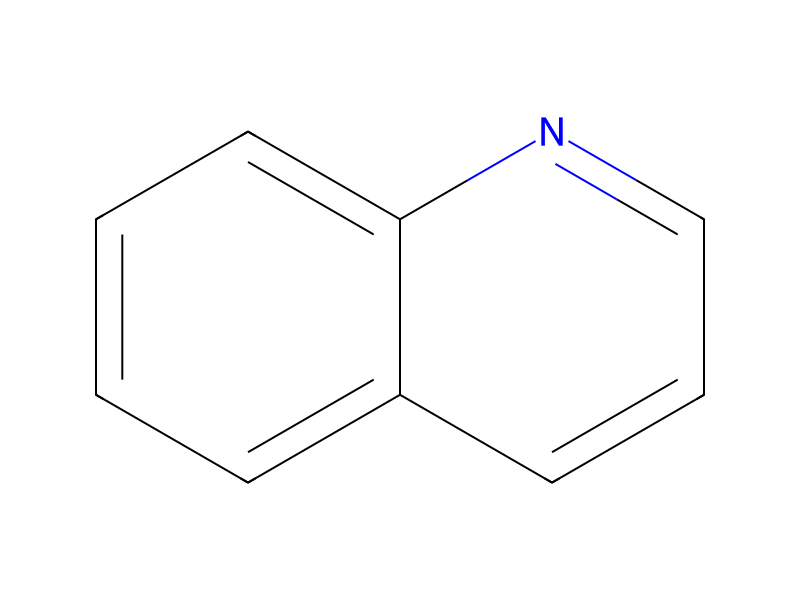
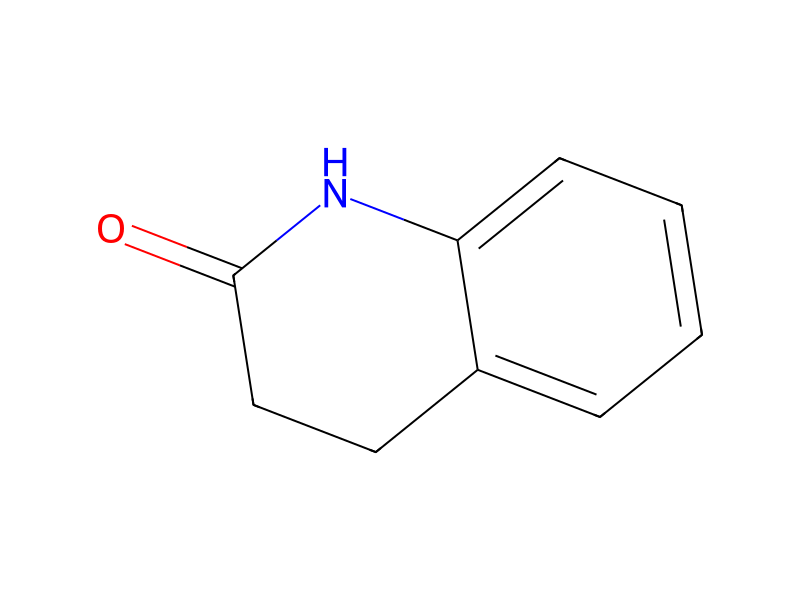
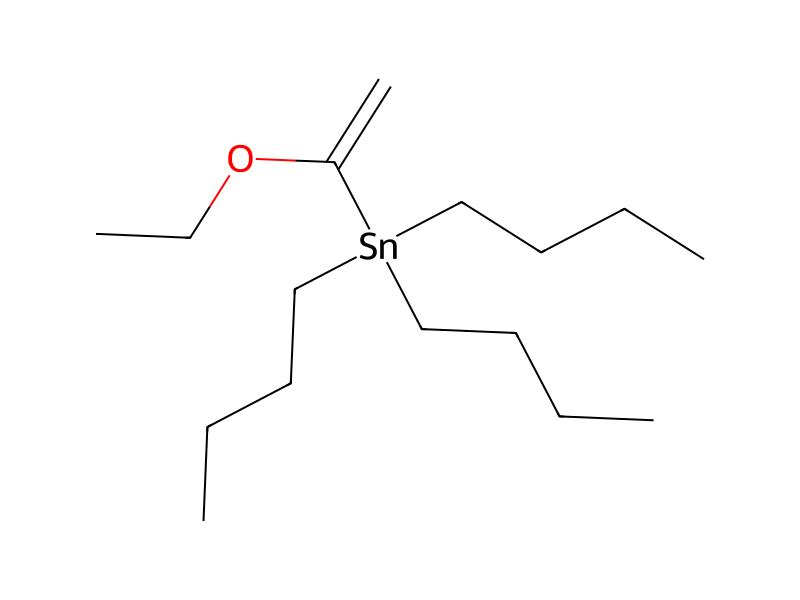
[NH:1]1[C:10]2[C:5](=[CH:6][CH:7]=[CH:8][CH:9]=2)[CH2:4][CH2:3][C:2]1=[O:11].C([Sn](CCCC)(CCCC)[C:17]([O:19]CC)=[CH2:18])CCC.N1C2C(=CC=CC=2)C=CC=1>>[C:17]([C:7]1[CH:6]=[C:5]2[C:10](=[CH:9][CH:8]=1)[NH:1][C:2](=[O:11])[CH2:3][CH2:4]2)(=[O:19])[CH3:18]Participants

Procedure
The 3,4-dihydro-1H-quinolin-2-one derivative of Formula 5 is reacted with tributyl(1-ethoxyvinyl)tin to introduce an acetyl group into the 6 position of the quinoline nucleus and to provide a 6-acetyl-3,4-dihydro-1H-quinolin-2-one derivative of Formula 6. The R3 group (R3 is as defined in connection with Formula 1) is introduced into the molecule by treatment of the compound of Formula 6 with a reagent of the formula R3—I and a strong base, such as sodium hydride in a polar aprotic solvent, such as dimnethylformamide (DMF). Instead of the iodo derivative R3—I, other alkylating agents of the formula R3—X1 (where X1 is a leaving group) could also be used in this reaction to provide a 6-acetyl-1-alkyl (or 1-phenylalkyl) 3,4-dihydro-1H-quinolin-2-one derivative of Formula 7. The 6-acetyl-1-alkyl (or 1-phenylalkyl) 3,4-dihydro-1H-quinolin-2-one derivative of Formula 7 is reacted with a bromophenyl or bromo heteroaryl aldehyde of Formula 8 to give the 1-alkyl-6-[3-(bromo phenyl or bromo-heteroaryl)-acryloyl]-3,4-dihydro-1H-quinolin-2-one of Formula 9. The bromo compound of Formula 9 is reacted with carbon monoxide in the presence of 1,3-bis(diphenylphosphino)propane (DPPP), palladium acetate (Pd(OAc)2), triethylamine (TEA) in dimethylformamide and ethanol and thereafter with base (such as NaOH or KOH) to provide [3-(1-alkyl-2-oxo-1,2,3,4-tetrahydro-quinolin-6-yl)-3-oxo-propenyl]-benzoic or heteroaryl carboxylic acids of Formula 10.
Sources & evidence
- ORD record
- ord-06c5a87cf33a4111b13dd49aff10e093
- Source dataset
- uspto-grants-2004_01
- Patent number
- US06683092B1
Reaction notes
Loading…