Hydrochloric Acid → 2-(1H-Pyrrol-1-yl)isoindoline-1,3-dione
Reaction equation

[NH2:1][N:2]1[C:6](=[O:7])[C:5]2=[CH:8][CH:9]=[CH:10][CH:11]=[C:4]2[C:3]1=[O:12].CO[CH:15]1[CH2:19][CH2:18][CH:17](OC)O1.Cl>O1CCOCC1>[C:3]1(=[O:12])[N:2]([N:1]2[CH:15]=[CH:19][CH:18]=[CH:17]2)[C:6](=[O:7])[C:5]2=[CH:8][CH:9]=[CH:10][CH:11]=[C:4]12Participants
5
Reactant 3


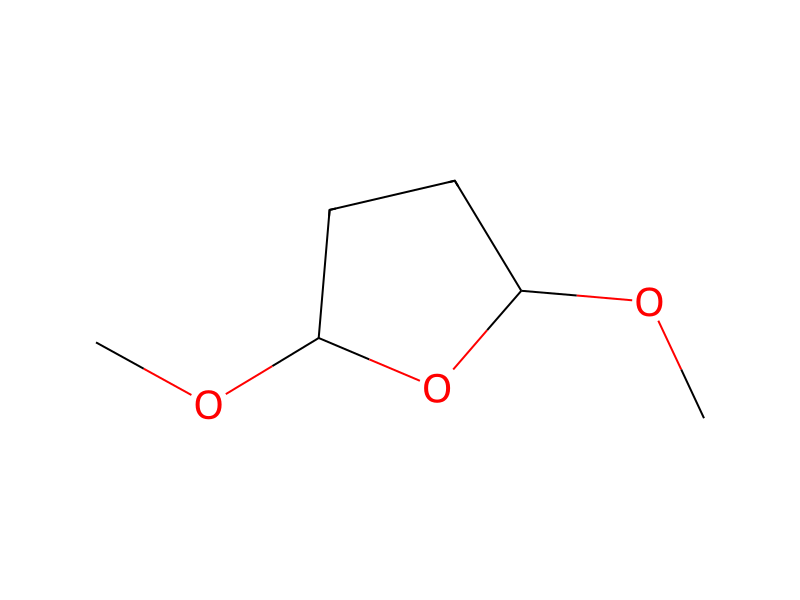
Product 1

Reagents, catalysts & solvents 1

Procedure
A solution of N-aminophthalimide (29.0 g, 178.8 mmol) and 2,5-dimethoxytetrahydrofuran (24.2 mL, 187.8 mmol) in anhydrous dioxane (290 mL) was stirred under reflux. While heating so that the resulting solution remained yellow, 5 N hydrochloric acid solution was cautiously added. The resulting mixture was allowed to cool to room temperature. The produced solid was filtered and washed with a 1:3 solution of dioxane and water. The target compound was yielded as a white solid (34.9 g, 164.5 mmol, 92% yield).
Workup
- temperatureunder reflux
- temperatureWhile heating so that the resulting solution
- filtrationThe produced solid was filtered
- washwashed with a 1:3 solution of dioxane and water
Sources & evidence
- ORD record
- ord-d73f6022f7314eedb8470d2e2e297b4a
- Source dataset
- uspto-grants-2015_02
- Patent number
- US08957102B2
Reaction notes
Loading…