Acrylic Acid → Acrylic Acid
Reaction equation

[C:1]([O:5][CH2:6][CH2:7][CH2:8][CH3:9])(=[O:4])[CH:2]=[CH2:3].[C:10]([OH:14])(=[O:13])[CH:11]=[CH2:12].[C:15]([O:19][CH2:20][CH2:21][OH:22])(=[O:18])[CH:16]=[CH2:17]>C(OCC)(=O)C>[C:1]([O-:5])(=[O:4])[CH:2]=[CH2:3].[C:1]([O:5][CH2:6][CH2:7][CH2:8][CH3:9])(=[O:4])[CH:2]=[CH2:3].[C:10]([OH:14])(=[O:13])[CH:11]=[CH2:12].[C:15]([O:19][CH2:20][CH2:21][OH:22])(=[O:18])[CH:16]=[CH2:17]Participants
8
Reactant 3

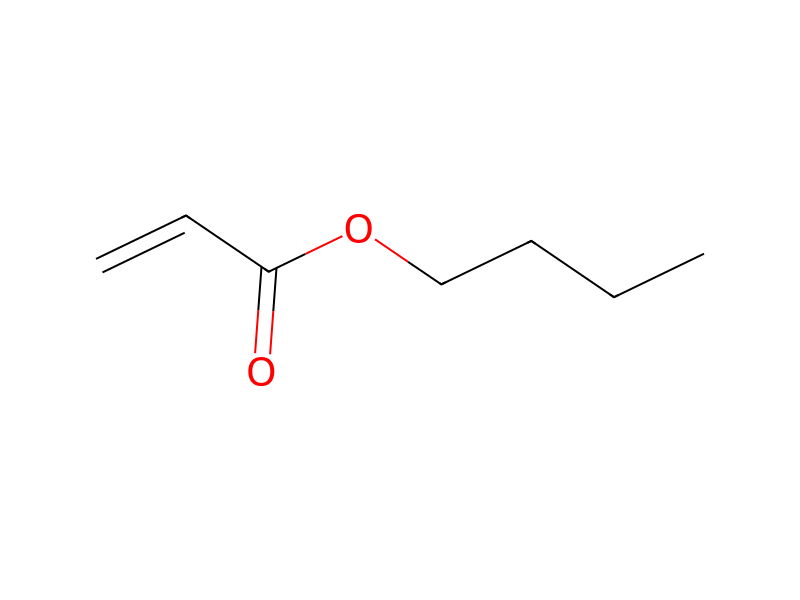

Product 4

Reagents, catalysts & solvents 1

Procedure
100 parts by weight of butyl acrylate, 5 parts by weight of acrylic acid, 0.075 parts by weight of 2-hydroxyethyl acrylate, 0.3 parts by weight of 2,2-azobisisobutyronitrile, and ethyl acetate were added to a reactor vessel equipped with a cooling tube, a nitrogen introducing tube, a thermometer, and a stirrer so that a solution was formed. While nitrogen gas was blown into the solution, the solution was then subjected to a polymerization reaction at 60° C. for 4 hours to give an acrylate copolymer of butyl acrylate, acrylic acid and 2-hydroxyethyl acrylate with a weight average molecular weight of 2,200,000.
Workup
- customequipped with a cooling tube, a nitrogen introducing tube
- customa thermometer, and a stirrer so that a solution was formed
- customthe solution was then subjected to a polymerization reaction at 60° C. for 4 hours
Sources & evidence
- ORD record
- ord-522bca7c84dd4def88cf615b84d7636e
- Source dataset
- uspto-grants-2015_02
- Patent number
- US08962108B2
Reaction notes
Loading…