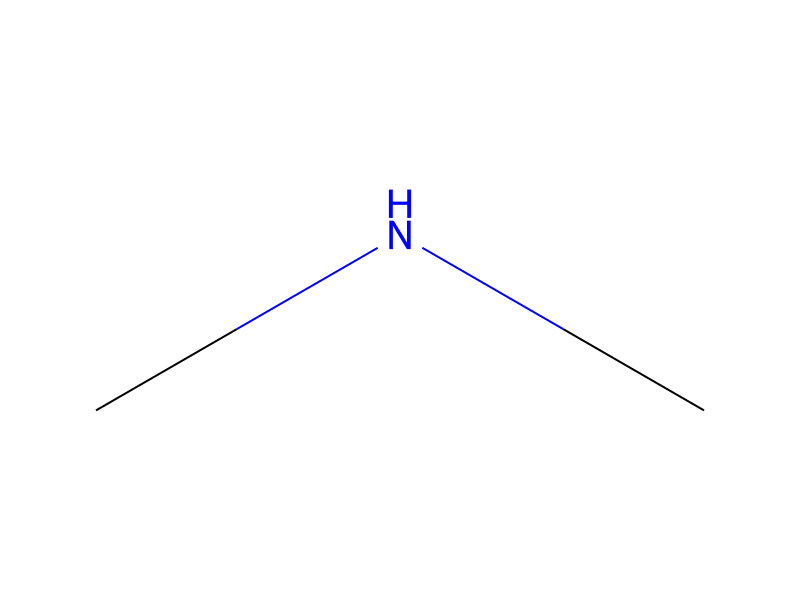
Dimethylamine → HCID 23347374, compound
Reaction equation

[CH:1]([C:4]1[NH:5][C:6]2[C:11]([CH:12]=1)=[CH:10][CH:9]=[CH:8][CH:7]=2)([CH3:3])[CH3:2].[CH3:13][NH:14][CH3:15].C=O.[C:18](=O)([O-])[O-].[K+].[K+]>C(O)C.C(O)(=O)C>[CH3:13][N:14]([CH2:18][C:12]1[C:11]2[C:6](=[CH:7][CH:8]=[CH:9][CH:10]=2)[NH:5][C:4]=1[CH:1]([CH3:3])[CH3:2])[CH3:15]Participants
Reactant 4



Product 1

Reagents, catalysts & solvents 2


Conditions
- Temperature
- 5 °C
Procedure
To a well-stirred solution of 2-isopropylindole (9.9 g.) in ethanol (30 ml.) at 0° C., there was added a 33% (w./w.) solution of dimethylamine in ethanol (10 ml.) and glacial acetic acid (3.5 ml.). A solution of 40% (w./v.) aqueous formaldehyde (5 ml.) was then added dropwise to the mixture, and the resulting solution was stirred at 5° C. for a period of one hour. Ice/water was next added to the reaction mixture, followed by excess solid potassium carbonate to give an orange oil. The liquid was then repeatedly extracted with diethyl ether (three times), using 50 ml. portions for each extraction. The combined ethereal extracts were then dried over anhydrous sodium sulfate and evaporated to give crude 3-(dimethylaminomethyl)-2-isopropylindole (4.5 g.) as a brown oil. The latter substance was used directly in Example I (as a starting material) without any further purification being necessary.
Workup
- customto give an orange oil
- extractionThe liquid was then repeatedly extracted with diethyl ether (three times)
- extractionportions for each extraction
- dry with materialThe combined ethereal extracts were then dried over anhydrous sodium sulfate
- customevaporated
Sources & evidence
- ORD record
- ord-e34c01c06c2a42a3a33daa63fcdbf48a
- Source dataset
- uspto-grants-1980_08
- Patent number
- US04217357
Reaction notes
Loading…