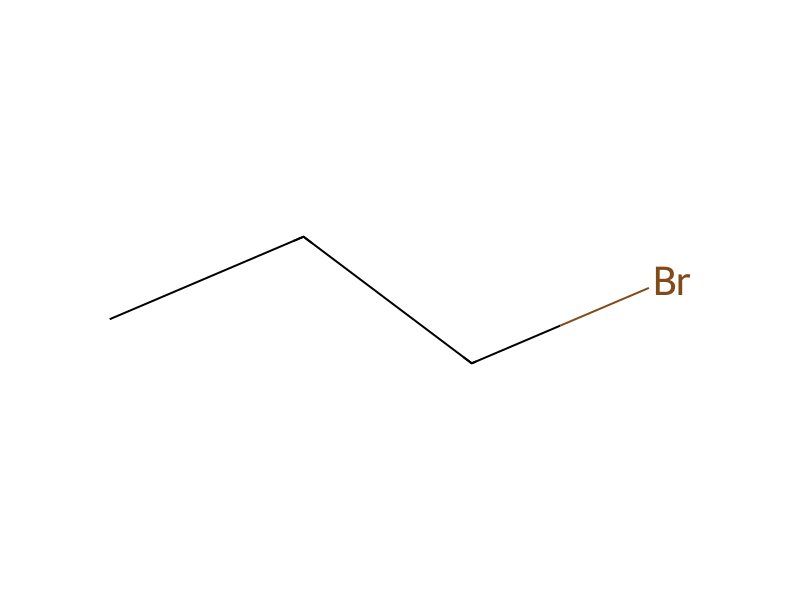
1-Bromopropane → 2,6-Dimethyl-4-propoxyazobenzene
Reaction equation

[Na].[CH3:2][C:3]1[CH:8]=[C:7]([OH:9])[CH:6]=[C:5]([CH3:10])[C:4]=1[N:11]=[N:12][C:13]1[CH:18]=[CH:17][CH:16]=[CH:15][CH:14]=1.Br[CH2:20][CH2:21][CH3:22]>>[CH3:2][C:3]1[CH:8]=[C:7]([O:9][CH2:20][CH2:21][CH3:22])[CH:6]=[C:5]([CH3:10])[C:4]=1[N:11]=[N:12][C:13]1[CH:18]=[CH:17][CH:16]=[CH:15][CH:14]=1Participants
4



Procedure
To a solution of sodium (2.0 g) in absolute alcohol (120 ml) was added 2,6-dimethyl-4-hydroxyazobenzene (18.3 g) and 1-bromo propane (20 g). The mixture was refluxed for three hours and was left overnight at room temperature. A precipitate of sodium bromide was filtered off, was washed with some cold absolute ethanol, and was discarded. The alcohol was removed from the filtrate by distillation, the residue was dissolved in ether (200 ml), and was extracted with 2% sodium hydroxide solution (4×50 ml) and once with water. After drying (Na2SO4) and filtering, the ether solution was evaporated to dryness leaving a residual oily material (20.2 g), sufficiently pure for the following reaction step.
Workup
- temperatureThe mixture was refluxed for three hours
- filtrationA precipitate of sodium bromide was filtered off
- washwas washed with some cold absolute ethanol
- customThe alcohol was removed from the filtrate by distillation
- dissolutionthe residue was dissolved in ether (200 ml)
- extractionwas extracted with 2% sodium hydroxide solution (4×50 ml) and once with water
- dry with materialAfter drying (Na2SO4)
- filtrationfiltering
- customthe ether solution was evaporated to dryness
Sources & evidence
- ORD record
- ord-cc7f7a2cc4c9400fae9171e35472b43b
- Source dataset
- uspto-grants-1980_08
- Patent number
- US04218477
Reaction notes
Loading…