Quinone → HCID 178509507, compound
Reaction equation

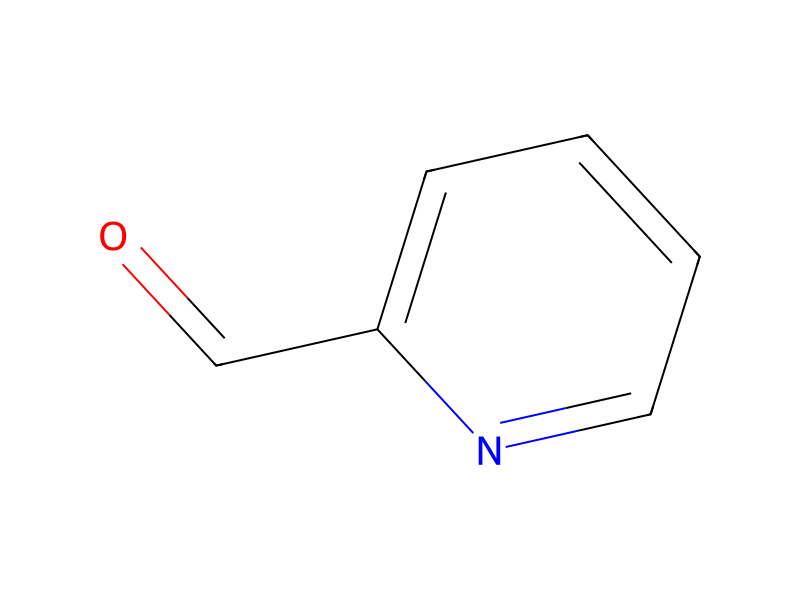
[N:1]1[CH:6]=[CH:5][CH:4]=[CH:3][C:2]=1[CH:7]=O.[NH2:9][C:10]1[CH:11]=[C:12]([CH:15]=[CH:16][C:17]=1[NH2:18])[C:13]#[N:14].C1(=O)C=CC(=O)C=C1>C(O)C>[N:1]1[CH:6]=[CH:5][CH:4]=[CH:3][C:2]=1[C:7]1[NH:18][C:17]2[CH:16]=[CH:15][C:12]([C:13]#[N:14])=[CH:11][C:10]=2[N:9]=1Participants
Reactant 3


Product 1

Reagents, catalysts & solvents 1

Procedure
A mixture comprising 2-pyridinecarboxaldehyde (212 mg, 1.98 mmol, 1 eq), 3,4-diaminobenzonitrile (263 mg, 1.98 mmol, 1 eq) and ethanol (20 mL) was stirred at ambient temperature under nitrogen for 5 to 10 minutes and then 1,4-benzoquinone (233 mg, 2.16 mmol, 1.2 eq) was added. The mixture was heated at reflux for 3 hours and then concentrated. The residue was partitioned between ethyl acetate and saturated sodium bicarbonate. The organic layer was separated, dried (MgSO4), filtered and concentrating to dryness to provide 2-pyridin-2-yl-1H-benzimidazole-5-carbonitrile (348 mg, 1.58 mmol) as an off white solid; ESI LC/MS: 261.9=(MH+ +CH3CN); 1H-NMR (300 Mhz, DMSO-d6): 7.65-7.755 (m, 2H), 7.769 (d, 1H), 8.060 (t, 1H), 8.163 (s, 1H), 8.395 (d, 1H), 8.772 (d, 1H).
Workup
- temperatureThe mixture was heated
- temperatureat reflux for 3 hours
- concentrationconcentrated
- customThe residue was partitioned between ethyl acetate and saturated sodium bicarbonate
- customThe organic layer was separated
- dry with materialdried (MgSO4)
- filtrationfiltered
- concentrationconcentrating to dryness
Sources & evidence
- ORD record
- ord-b1760ffd98cf4fa4ac0c961e7a14629c
- Source dataset
- uspto-grants-2000_11
- Patent number
- US06150379
Reaction notes
Loading…