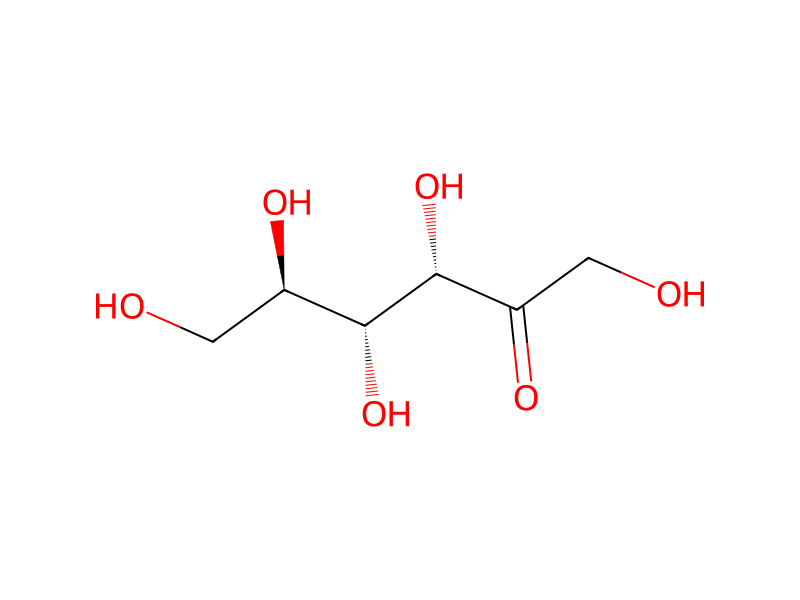
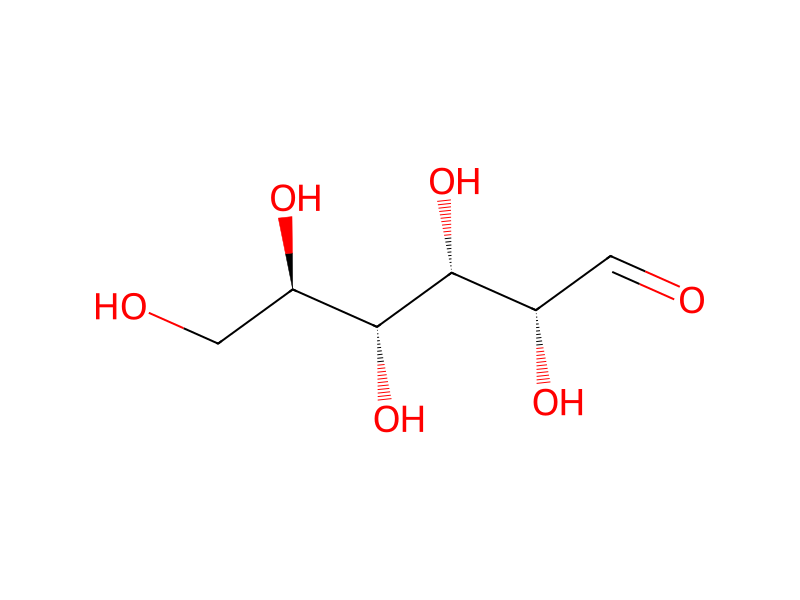
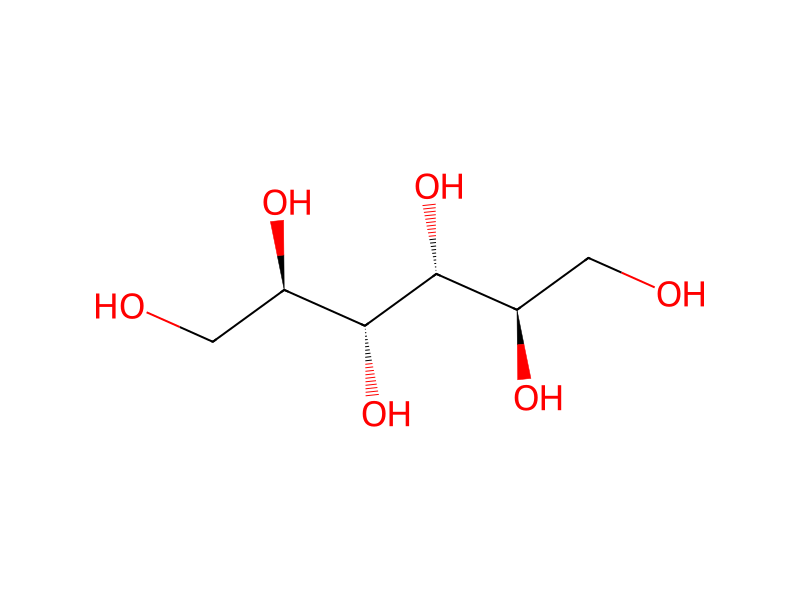
D-(-)-Fructose → Mannitol
Reaction equation

[OH:1][CH2:2][C:3]([C@H:5]([C@@H:7]([C@@H:9]([CH2:11][OH:12])[OH:10])[OH:8])[OH:6])=[O:4].O=C[C@@H]([C@H]([C@@H]([C@@H](CO)O)O)O)O>>[CH2:11]([OH:12])[C@H:9]([C@H:7]([C@@H:5]([C@@H:3]([CH2:2][OH:1])[OH:4])[OH:6])[OH:8])[OH:10]Participants
Procedure
Main Culture: After inoculating the seed culture fluid with 50 ml of the fermentation medium contained in the 250 ml flask, it was cultured in a shaking culture medium at 220 rpm and 30° C. until fructose was completely exhausted. The pH of the medium was not controlled after it was adjusted to 5.0 at the initial stage of the fermentation. Wherein, the components of the medium were 50 g/L of glucose, 100 g/L of fructose, 5 g/L of a yeast extract, 2.5 g/L of ammonium sulfate and 2.5 g/L of dibasic potassium phosphate. The results of observing production of mannitol with the passage of time are shown in table 5. The maximum specific proliferation rate of the isolated strain was 0.26 h−1, the maximum quantity of biomass thereof was 3.9 g/L, and 42 g/L of mannitol was produced.
Workup
- extractionextract
Sources & evidence
- ORD record
- ord-4d4b2c01f69549509dadeaae17e89514
- Source dataset
- uspto-grants-2003_03
- Patent number
- US06528290B1
Reaction notes
Loading…