Cephalosporin C → Glutaryl-7-aminocephalosporanic acid
Reaction equation

[C:1]([O:4][CH2:5][C:6]1[CH2:7][S:8][C@@H:9]2[CH:16]([NH2:17])[C:15](=[O:18])[N:10]2[C:11]=1[C:12]([OH:14])=[O:13])(=[O:3])[CH3:2].CC(OC[C:24]1[CH2:33]S[C@@H]2[C@H](N)C(=O)N2[C:25]=1[C:34]([OH:36])=[O:35])=O.C[C:38](OCC1CS[C@@H]2[C@H](NC(CCC[C@@H](N)C(O)=O)=O)C(=O)N2C=1C(O)=O)=[O:39]>>[CH3:2][C:1]([O:4][CH2:5][C:6]1[CH2:7][S:8][C@@H:9]2[C@H:16]([NH:17][C:38]([CH2:33][CH2:24][CH2:25][C:34]([OH:36])=[O:35])=[O:39])[C:15](=[O:18])[N:10]2[C:11]=1[C:12]([OH:14])=[O:13])=[O:3]Participants
4



Procedure
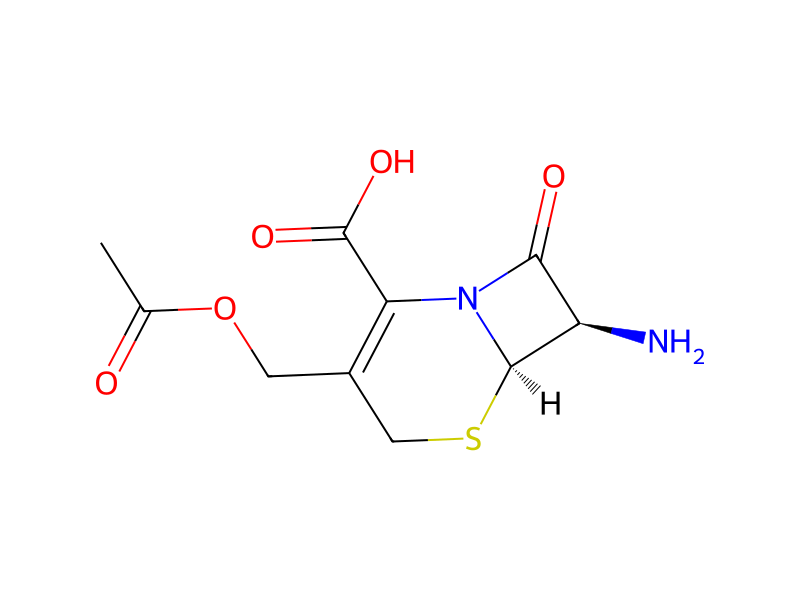
3-Acetoxymethyl 7-amino-3-cephem-4-carboxylic acid (7-aminocephalosporanic acid, 7-ACA) is the starting material for the synthesis of many semi-synthetic cephalosporin antibiotics. 7-ACA can be generated from cephalosporin C (a readily available fermentation product) by a two-step enzymatic process (Scheme 1), using first a D-amino acid oxidase in conjunction with oxidative decarboxylation to produce glutaryl 7-ACA (Step A), and then using a glutaryl 7-ACA acylase to remove the glutaryl group to produce 7-ACA (Step B).
Sources & evidence
- ORD record
- ord-4867499790c846e6a1d8d4667b58d653
- Source dataset
- uspto-grants-2003_03
- Patent number
- US06528300B2
Reaction notes
Loading…