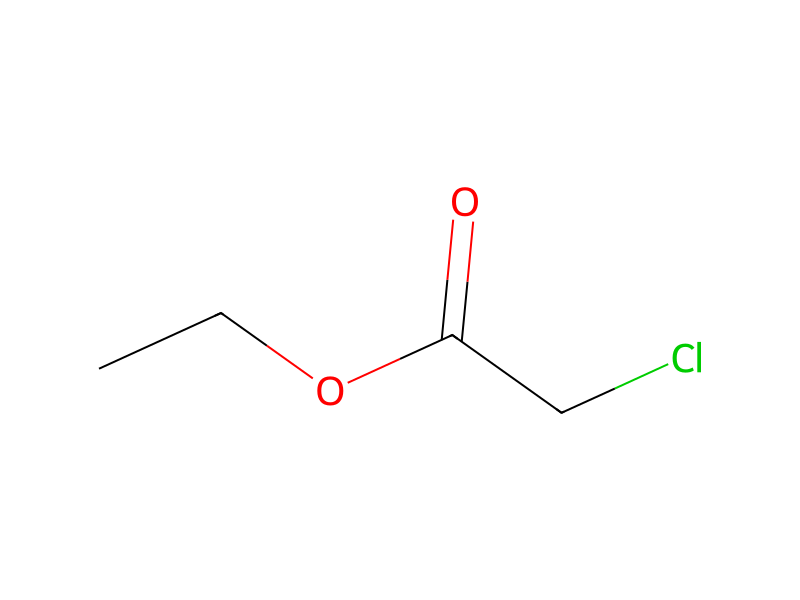
Ethyl chloroacetate → HCID 67551310, compound
Reaction equation

CC(C)([O-])C.[K+].[N+:7]([C:10]1[S:14][C:13]([C:15]([NH2:17])=[O:16])=[CH:12][CH:11]=1)([O-:9])=[O:8].Cl[CH2:19][C:20]([O:22][CH2:23][CH3:24])=[O:21]>O1CCCC1>[C:15]([C:13]1[S:14][C:10]([N+:7]([O-:9])=[O:8])=[C:11]([CH2:19][C:20]([O:22][CH2:23][CH3:24])=[O:21])[CH:12]=1)(=[O:16])[NH2:17]Participants
Reactant 3


Product 1

Reagents, catalysts & solvents 1

Conditions
- Temperature
- -50 °C
Procedure
Potassium tertiary-butoxide (1.96 g, 17.4 mmol) was dissolved in tetrahydrofuran (45 ml) and the solution cooled to −50° C. A solution of 5-nitrothiophene-2-carboxamide (1 g, 1.94 mmol) and ethyl chloroacetate (0.5 ml, 5.81 mmol) was added dropwise in dry tetrahydrofuran (12 ml) over 5 minutes. The reaction mixture was stirred at −50° C. for 16 hours then quenched with acetic acid (3 ml), then washed with water (20 ml). The aqueous phase was extracted with ethyl acetate and the combined organic fractions were washed with saturated brine solution. The organic phase was dried over magnesium sulfate, evaporated to dryness and the residue chromatographed on silica gel using hexane/ethyl acetate (4:1) as eluent to give 610 mg of ethyl 5-carbamoyl-2-nitrothiophene-3-acetate as a yellow/brown oil. MS(ES): m/e 259 [M+H].
Workup
- customthen quenched with acetic acid (3 ml)
- washwashed with water (20 ml)
- extractionThe aqueous phase was extracted with ethyl acetate
- washthe combined organic fractions were washed with saturated brine solution
- dry with materialThe organic phase was dried over magnesium sulfate
- customevaporated to dryness
- customthe residue chromatographed on silica gel
Sources & evidence
- ORD record
- ord-5fc7aa49da6e47108411941fc03b1a02
- Source dataset
- uspto-grants-2003_03
- Patent number
- US06528653B2
Reaction notes
Loading…