Methyl morpholine oxide → 1-Acetyl-3-(4-methylbenzyl)piperidine-3-carbaldehyde
Reaction equation

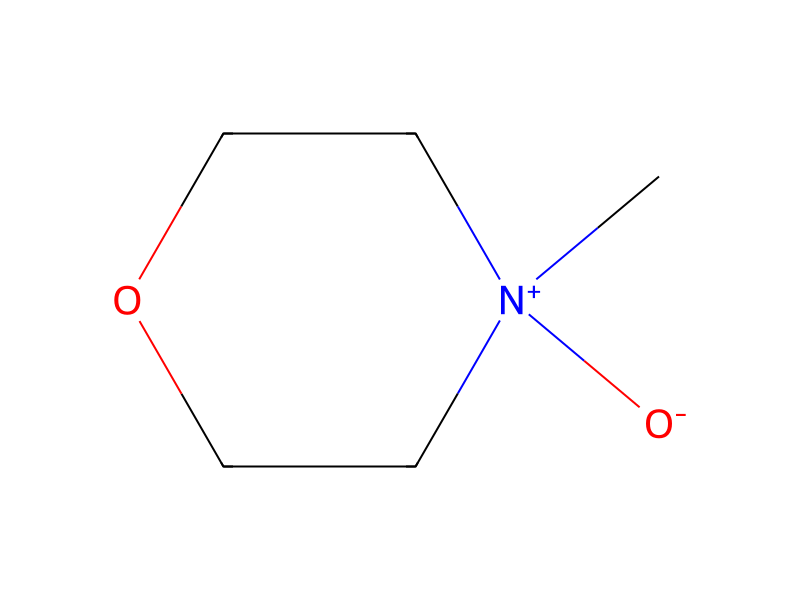
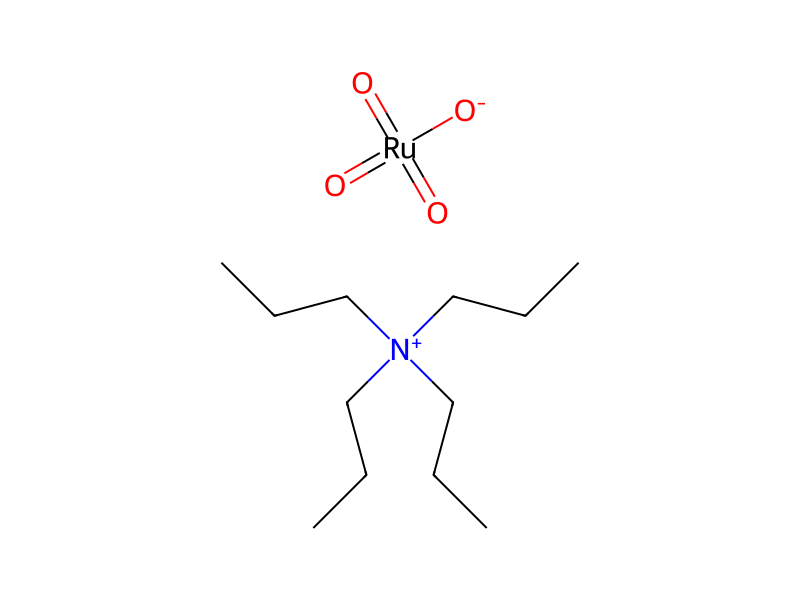
C[N+]1([O-])CCOCC1.[C:9]([N:12]1[CH2:17][CH2:16][CH2:15][C:14]([CH2:26][OH:27])([CH2:18][C:19]2[CH:24]=[CH:23][C:22]([CH3:25])=[CH:21][CH:20]=2)[CH2:13]1)(=[O:11])[CH3:10]>ClCCl.[Ru]([O-])(=O)(=O)=O.C([N+](CCC)(CCC)CCC)CC>[C:9]([N:12]1[CH2:17][CH2:16][CH2:15][C:14]([CH2:18][C:19]2[CH:24]=[CH:23][C:22]([CH3:25])=[CH:21][CH:20]=2)([CH:26]=[O:27])[CH2:13]1)(=[O:11])[CH3:10]Participants
5



Procedure
N-methyl morpholine-N-oxide (0.19 g, 1.62 mmol) and powdered 4 angstrom molecular sieves (0.5 g) were added to a solution of the product from STEP 4 (0.3 g, 1.08 mmol) in 15 ml dichloromethane. Tetrapropyl-ammonium perruthenate (19 mg, 0.054 mmol) was added at 0° C., and the reaction was allowed to warm to room room temperature. After 1.5 h, the reaction was filtered through a short column of silica gel (2″) and washed with CH2Cl2/MeOH (9/1). The filtrate was concentrated, and the residue was purified by chromatography (SiO2, CH2Cl2/MeOH/NH4OH=95/5/0.1) to give 0.25 g of a viscous. The 1H NMR spectrum of the product was consistent for the proposed structure.
Workup
- filtrationthe reaction was filtered through a short column of silica gel (2″) and
- washwashed with CH2Cl2/MeOH (9/1)
- concentrationThe filtrate was concentrated
- customthe residue was purified by chromatography (SiO2, CH2Cl2/MeOH/NH4OH=95/5/0.1)
- customto give 0.25 g of a viscous
Sources & evidence
- ORD record
- ord-35280abcd5be4d6ab635cacc808cb552
- Source dataset
- uspto-grants-2003_03
- Patent number
- US06531494B1
Reaction notes
Loading…