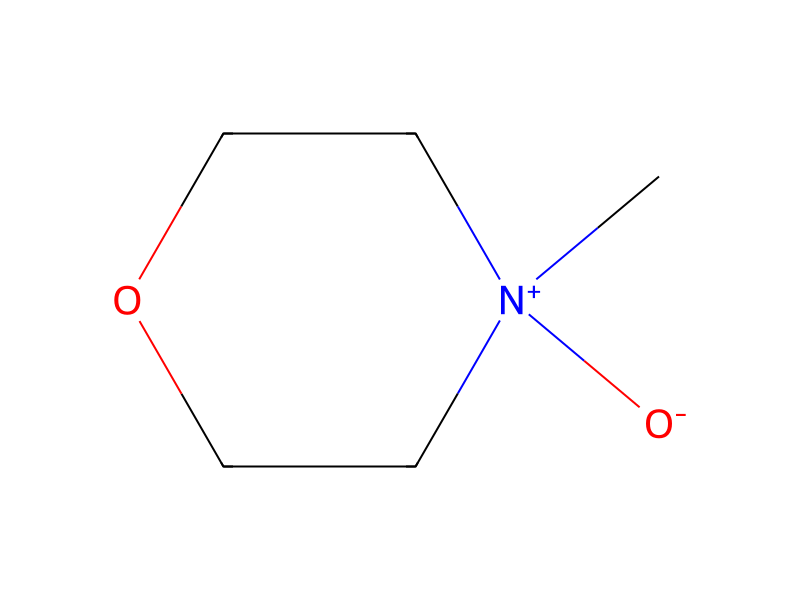
Methyl morpholine oxide → 2-Methyl-3-(4-methylphenyl)-2-pyridin-3-ylpropanal
Reaction equation

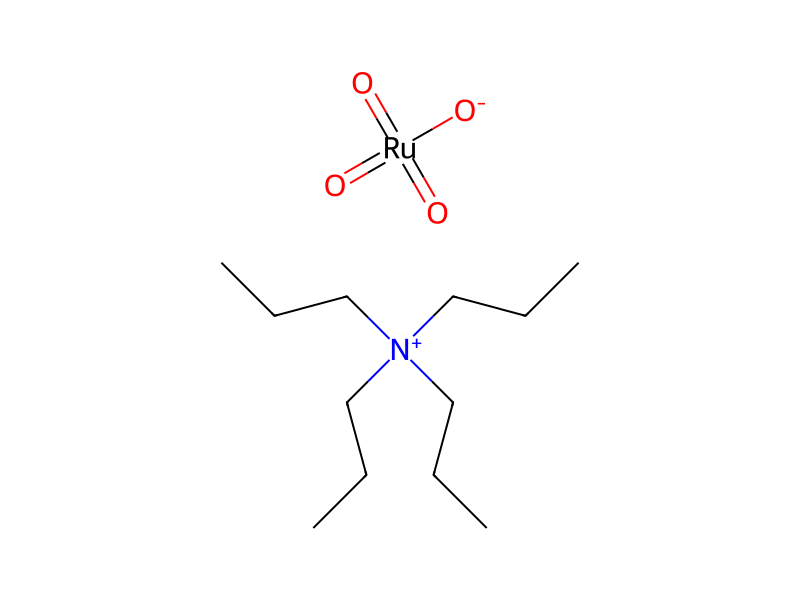
[CH3:1][C:2]([C:13]1[CH:14]=[N:15][CH:16]=[CH:17][CH:18]=1)([CH2:5][C:6]1[CH:11]=[CH:10][C:9]([CH3:12])=[CH:8][CH:7]=1)[CH2:3][OH:4].C[N+]1([O-])CCOCC1>[Ru]([O-])(=O)(=O)=O.C([N+](CCC)(CCC)CCC)CC>[CH3:1][C:2]([C:13]1[CH:14]=[N:15][CH:16]=[CH:17][CH:18]=1)([CH2:5][C:6]1[CH:11]=[CH:10][C:9]([CH3:12])=[CH:8][CH:7]=1)[CH:3]=[O:4]Participants


Procedure
A mixture of the product of STEP 3 (4.1 g, 16 mmol), N-methyl morpholine-N-oxide (2.9 g, 25 mmol), dry molecular sieves (8 g) and methylene chloride (35 ml) was stirred at room temperature for 15 min. Tetrapropylammoniumperruthenate (281 mg, 0.8 mmol) was added. The reaction was monitored by TLC, an additional N-methyl morpholine-N-oxide (0.73 g, 6.3 mmol), dry molecular sieves (2 g), and tetrapropylammoniumperruthenate (70.3 mg, 0.2 mmol) were added. After 2.5 h, the reaction mixture was filtered through a short column of Celite®. The filtrate was concentrated. The residue was purified by chromatography (on silica gel, ethyl acetate/hexane=4/1) to give a pale brown liquid in 1.66 g. NMR spectra of the product were consistent for the proposed structure.
Workup
- dry with materialdry molecular sieves (8 g) and methylene chloride (35 ml)
- additionwere added
- waitAfter 2.5 h
- filtrationthe reaction mixture was filtered through a short column of Celite®
- concentrationThe filtrate was concentrated
- customThe residue was purified by chromatography (on silica gel, ethyl acetate/hexane=4/1)
- customto give a pale brown liquid in 1.66 g
Sources & evidence
- ORD record
- ord-c7e653a3eb7a4dabb52280be357e62a8
- Source dataset
- uspto-grants-2003_03
- Patent number
- US06531494B1
Reaction notes
Loading…