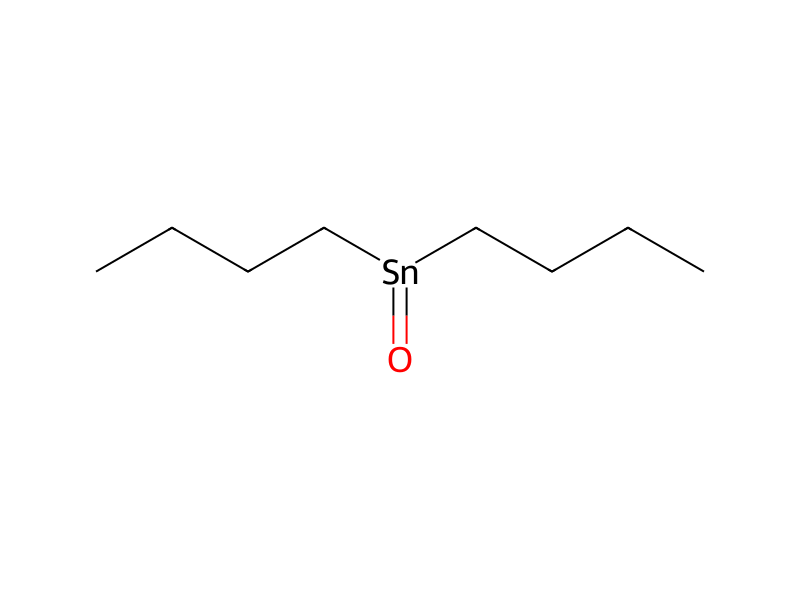
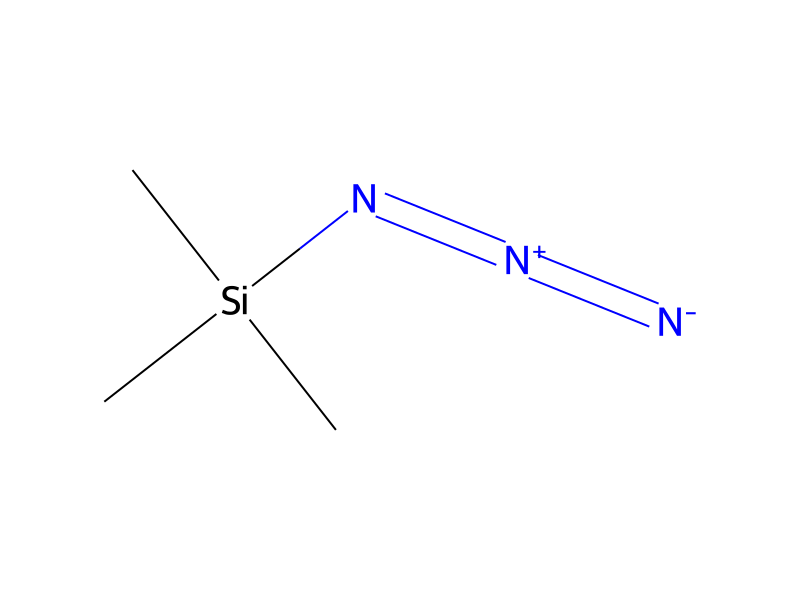
Dibutyltin oxide → 5-(4,5-dimethoxy-2-nitrophenyl)-2H-tetrazole
Reaction equation

[CH3:1][O:2][C:3]1[C:10]([O:11][CH3:12])=[CH:9][C:6]([C:7]#[N:8])=[C:5]([N+:13]([O-:15])=[O:14])[CH:4]=1.C([Sn](=O)CCCC)CCC.C[Si]([N:30]=[N+:31]=[N-:32])(C)C>C1(C)C=CC=CC=1>[CH3:1][O:2][C:3]1[C:10]([O:11][CH3:12])=[CH:9][C:6]([C:7]2[N:30]=[N:31][NH:32][N:8]=2)=[C:5]([N+:13]([O-:15])=[O:14])[CH:4]=1Participants
5
Reactant 3

Product 1

Reagents, catalysts & solvents 1

Conditions
- Temperature
- 100 °C
Procedure
2.33 g of 4,5-dimethoxy-2-nitro-benzonitrile was added to 15 ml of toluene, 0.28 g of dibutyltinoxide and 2.58 g of trimethylsilyl azide was added thereto, and the mixture was stirred at 100° C. for 16 hours. The reaction mixture was distilled under a reduced pressure to remove the solvent, and the resulting solid was washed with 250 ml of dichloromethane to obtain 2.0 g of the title compound as a grey solid (yield 71%).
Workup
- additionwas added
- distillationThe reaction mixture was distilled under a reduced pressure
- customto remove the solvent
- washthe resulting solid was washed with 250 ml of dichloromethane
Sources & evidence
- ORD record
- ord-265f85bfba4242fa9999047fec169005
- Source dataset
- uspto-grants-2009_12
- Patent number
- US07625926B2
Reaction notes
Loading…