Triphenylphosphine → 3-[2-(4-Bromophenyl)ethyl]-1,3-oxazolidine-2,4-dione
Reaction equation

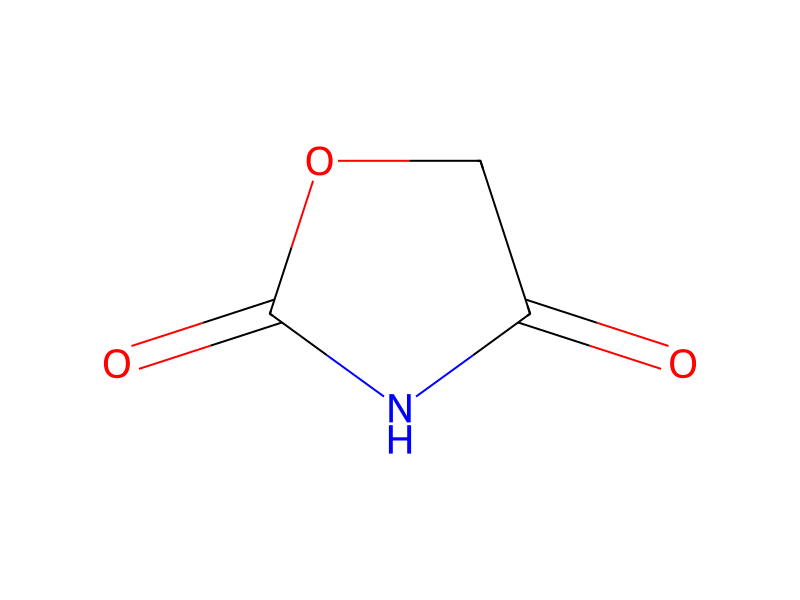
[Br:1][C:2]1[CH:7]=[CH:6][C:5]([CH2:8][CH2:9]O)=[CH:4][CH:3]=1.C1(P(C2C=CC=CC=2)C2C=CC=CC=2)C=CC=CC=1.[O:30]1[CH2:34][C:33](=[O:35])[NH:32][C:31]1=[O:36].N(C(OC(C)C)=O)=NC(OC(C)C)=O>>[Br:1][C:2]1[CH:3]=[CH:4][C:5]([CH2:8][CH2:9][N:32]2[C:33](=[O:35])[CH2:34][O:30][C:31]2=[O:36])=[CH:6][CH:7]=1Participants
5




Procedure
The procedure described in Example 2 (step 2.1.) is used; starting from 4 g (19.89 mmol) of 2-(4-bromophenyl)ethanol, 6.3 g (23.87 mmol) of triphenylphosphine, 2.4 g (23.87 mmol) of 1,3-oxazolidine-2,4-dione and 4.8 g (23.87 mmol) of diisopropyl azodicarboxylate, 4.6 g of pure product are obtained in the form of a white solid, after chromatography on silica gel, eluting with dichloromethane.
Workup
- customare obtained in the form of a white solid
- washafter chromatography on silica gel, eluting with dichloromethane
Sources & evidence
- ORD record
- ord-c027a185b48c4f0b8ab02f23f882c6bc
- Source dataset
- uspto-grants-2009_12
- Patent number
- US07632850B2
Reaction notes
Loading…