Ethanol → Ethyl (4-chlorophenyl)acetate
Reaction equation

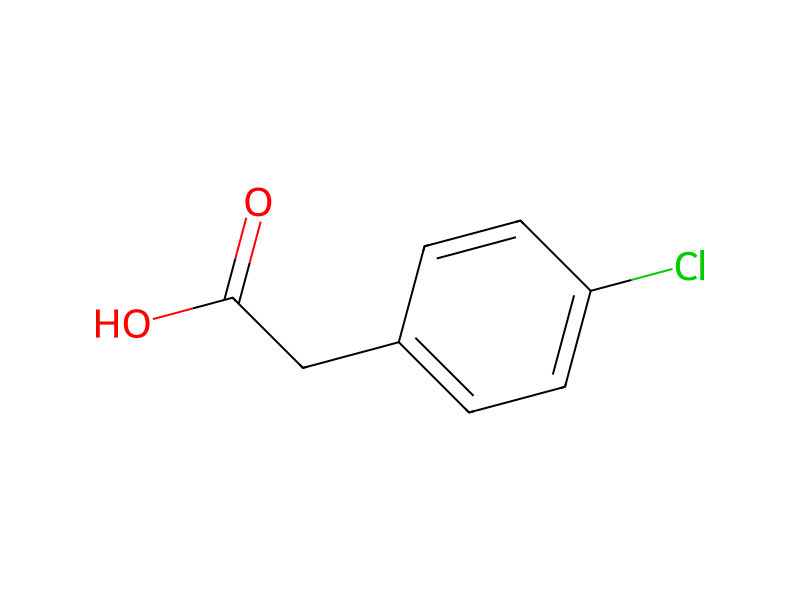
[Cl:1][C:2]1[CH:7]=[CH:6][C:5]([CH2:8][C:9]([OH:11])=[O:10])=[CH:4][CH:3]=1.[CH2:12](O)[CH3:13]>C1(C)C=CC(S(O)(=O)=O)=CC=1>[Cl:1][C:2]1[CH:3]=[CH:4][C:5]([CH2:8][C:9]([O:11][CH2:12][CH3:13])=[O:10])=[CH:6][CH:7]=1Participants
4
Reactant 2

Product 1

Reagents, catalysts & solvents 1

Procedure
First, 17.24 g of 4-chlorophenylacetic acid was dissolved in 200 ml of ethanol, to which a catalytic amount of p-toluenesulfonic acid was added, and the mixture was heated under reflux for 10 hours. After completion of the reaction, the reaction mixture was cooled to room temperature and concentrated. The residue was poured into water and extracted with ethyl acetate, and the organic layer was dried and then concentrated. The residue was subjected to silica gel chromatography, which afforded 19.0 g of ethyl 4-chlorophenylacetate.
Workup
- additionwas added
- temperaturethe mixture was heated
- temperatureunder reflux for 10 hours
- customAfter completion of the reaction
- concentrationconcentrated
- additionThe residue was poured into water
- extractionextracted with ethyl acetate
- customthe organic layer was dried
- concentrationconcentrated
Sources & evidence
- ORD record
- ord-798996bbe3554d8bb59696b26da3d550
- Source dataset
- uspto-grants-2000_08
- Patent number
- US06100257
Reaction notes
Loading…