2,3-Dichloro-5,6-dicyano-1,4-benzoquinone → 2-(1H-Indol-2-yl)quinoline
Reaction equation

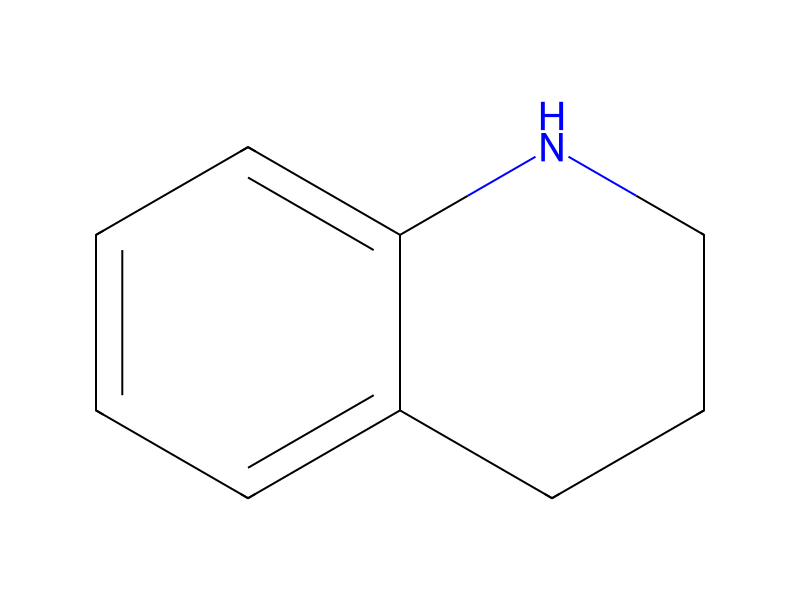
N1C2C(=CC=CC=2)C=C1[N:10]1[C:19]2[C:14](=[CH:15][CH:16]=[CH:17][CH:18]=2)[CH2:13][CH2:12][CH2:11]1.[NH:20]1[C:29]2[C:24](=[CH:25][CH:26]=[CH:27][CH:28]=2)[CH2:23][CH2:22]C1.ClC1C(=O)C(C#N)=C(C#N)C(=O)C=1Cl>ClCCl>[NH:20]1[C:29]2[C:24](=[CH:25][CH:26]=[CH:27][CH:28]=2)[CH:23]=[C:22]1[C:11]1[CH:12]=[CH:13][C:14]2[C:19](=[CH:18][CH:17]=[CH:16][CH:15]=2)[N:10]=1Participants
Reactant 3


Product 1

Reagents, catalysts & solvents 1

Conditions
- Temperature
- 0 °C
Procedure
The indolyl-tetrahydroquinoline was made according to the established lanthanide triflate catalyzed Kobayashi chemistry (for a leading reference, see Kobayashi, S.; Ishitani, H.; Nagayama, S. Synthesis, 1995, 1195-1202). The tetrahydroquinoline (50.0 mg, 0.102 mmol) was dissolved in 10 mL anhydrous dichloromethane and the solution was cooled to 0° C. under nitrogen atmosphere. 2,3-Dichloro-5,6-dicyano-1,4-benzoquinone (47.6 mg, 0.210 mmol) in 2 mL dichloromethane was then added in a drop-wise fashion. The reaction mixture was stirred at 0° C. for additional 30 minutes. The reaction crude was filtered through celite and the solvent was evaporated in vacuo to supply a yellow solid. Further purification by flash column chromatography (alumina basic, CH2Cl2 /MeOH=20:1) yielded 27.5 mg of indolyl-quinoline 517.
Workup
- customSynthesis, 1995, 1195-1202)
- customThe reaction crude
- filtrationwas filtered through celite
- customthe solvent was evaporated in vacuo to supply a yellow solid
- customFurther purification by flash column chromatography (alumina basic, CH2Cl2 /MeOH=20:1)
Sources & evidence
- ORD record
- ord-656931743ab8492db9b2294fbef7bc5e
- Source dataset
- uspto-grants-2000_08
- Patent number
- US06103905
Reaction notes
Loading…