Morpholine → 4-(2-chloro-6-methylpyrimidin-4-yl)morpholine
Reaction equation

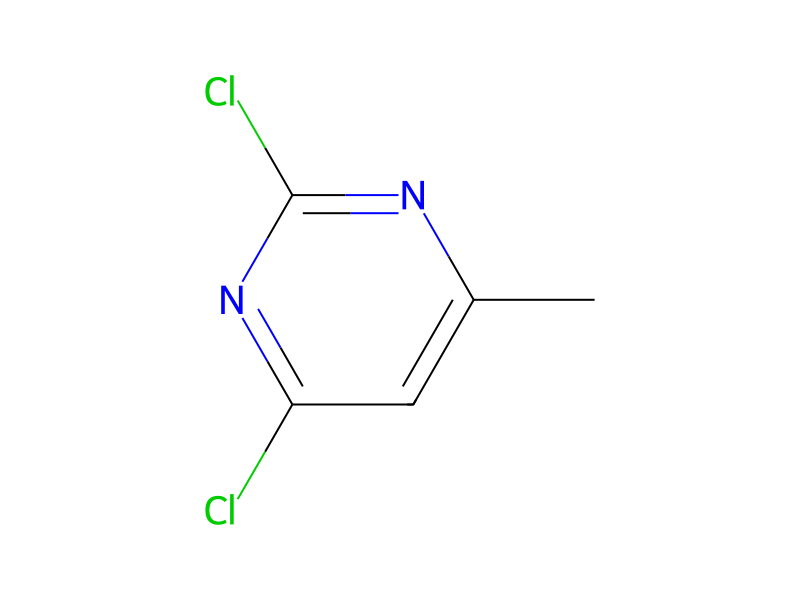
[Cl:1][C:2]1[N:7]=[C:6](Cl)[CH:5]=[C:4]([CH3:9])[N:3]=1.[NH:10]1[CH2:15][CH2:14][O:13][CH2:12][CH2:11]1.C(N(CC)C(C)C)(C)C>C(O)C>[Cl:1][C:2]1[N:7]=[C:6]([N:10]2[CH2:15][CH2:14][O:13][CH2:12][CH2:11]2)[CH:5]=[C:4]([CH3:9])[N:3]=1Participants
5
Reactant 3


Product 1

Reagents, catalysts & solvents 1

Conditions
- Temperature
- 25 °C
Procedure
Part A: A mixture of 2,4-dichloro-6-methylpyrimidine (4 g, 24.54 mmoles), morpholine (2.14 mL, 24.54 mmoles) and N,N-diisopropylethylamine (4.52 mL) in ethanol (60 mL) was stirred at 0° C. for 3 hours, 25° C. for 24 hours, followed by reflux for 1 hour. The solvent was removed under vacuum and the residue was partitioned between ethyl acetate (200 mL) and aq. sodium hydroxide (1 M, 50 mL). The organic layer was washed with water and brine and dried and concentrated in vacuo. The residue was recrystallized from ethyl acetate/hexanes to give 2-chloro-4-morpholino-6-methylpyrimidine (3.8 g).
Workup
- temperatureby reflux for 1 hour
- customThe solvent was removed under vacuum
- customthe residue was partitioned between ethyl acetate (200 mL) and aq. sodium hydroxide (1 M, 50 mL)
- washThe organic layer was washed with water and brine
- customdried
- concentrationconcentrated in vacuo
- customThe residue was recrystallized from ethyl acetate/hexanes
Sources & evidence
- ORD record
- ord-9891d888db7e40beb4876e2a26d55331
- Source dataset
- uspto-grants-2000_08
- Patent number
- US06107301
Reaction notes
Loading…