Acryloyl chloride → N-Acryloyl-D-glucamine
Reaction equation

[NH2:1][CH2:2][C@@H:3]([C@H:5]([C@@H:7]([C@@H:9]([CH2:11][OH:12])[OH:10])[OH:8])[OH:6])[OH:4].[C:13](Cl)(=[O:16])[CH:14]=[CH2:15].[OH-].[K+]>CO.O.C1COCC1>[C:13]([NH:1][CH2:2][C@@H:3]([C@H:5]([C@@H:7]([C@@H:9]([CH2:11][OH:12])[OH:10])[OH:8])[OH:6])[OH:4])(=[O:16])[CH:14]=[CH2:15]Participants
7
Reactant 3
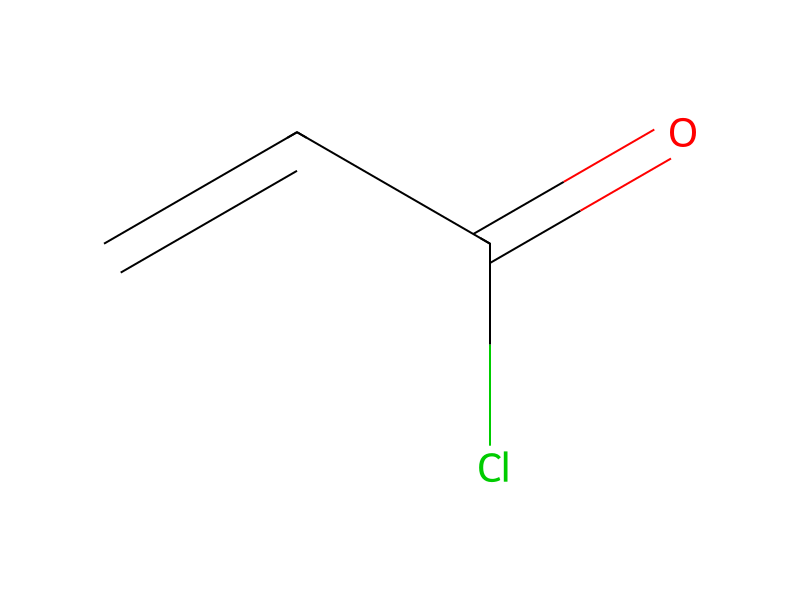


Product 1

Reagents, catalysts & solvents 3



Procedure
1-Amino-1-deoxy-D-sorbitol (D-glucamine) 10 (5.0 g, 28 mmol) was dissolved in a mixture of CH3OH (120 mL) and H2O (15 mL) and cooled in an ice bath. Acryloyl chloride (30 mL of a 2.35 M solution in THF, 71 mmol) was added dropwise to the above solution, while the pH of the reaction mixture was maintained between 8 and 9 by periodic addition of 2M aqueous KOH. After an additional 1-h period on ice, the volatiles were evaporated under reduced pressure and the residue was subjected to silica gel chromatography with a gradient of 5-15% CH2Cl2 in MeOH to give 3.6 g (56%) compound 3 as a white solid; mp 122-123° C.
Workup
- temperaturecooled in an ice bath
- customAfter an additional 1-h period on ice, the volatiles were evaporated under reduced pressure
Sources & evidence
- ORD record
- ord-49e9678765d744788536216995cba789
- Source dataset
- uspto-grants-2000_08
- Patent number
- US06107365
Reaction notes
Loading…