Hydrochloric Acid → 2-Chloro-6-methyl-4-(tetrahydro-2H-pyran-2-yl)pyridine-3,5-dicarbonitrile
Reaction equation

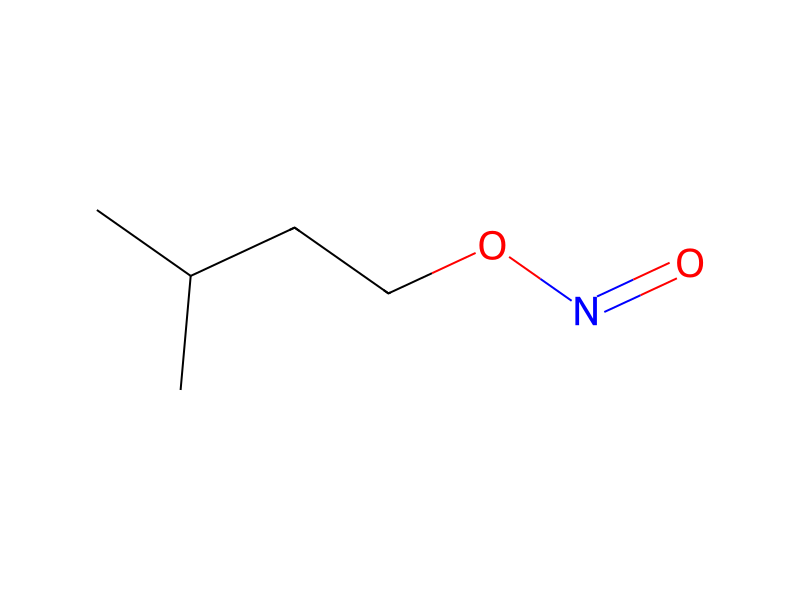
N[C:2]1[C:7]([C:8]#[N:9])=[C:6]([CH:10]2[CH2:15][CH2:14][CH2:13][CH2:12][O:11]2)[C:5]([C:16]#[N:17])=[C:4]([CH3:18])[N:3]=1.N(OCCC(C)C)=O.[ClH:27]>C(#N)C.[Cu](Cl)Cl>[Cl:27][C:2]1[C:7]([C:8]#[N:9])=[C:6]([CH:10]2[CH2:15][CH2:14][CH2:13][CH2:12][O:11]2)[C:5]([C:16]#[N:17])=[C:4]([CH3:18])[N:3]=1Participants
6
Reactant 3


Product 1

Reagents, catalysts & solvents 2


Conditions
- Temperature
- 60 °C
Procedure
610 mg (2.52 mmol) of the compound from Example 39A are initially charged in 44 ml of acetonitrile, and 590 mg (5.04 mmol) of isopentyl nitrite and 677 mg (5.04 mmol) of copper(II) chloride are added. The reaction mixture is stirred at 60° C. for 30 min. 40 ml of 1 N hydrochloric acid are then added to the mixture and the mixture is extracted three times with in each case 100 ml of ethyl acetate. The combined organic phases are dried over magnesium sulfate and the solvent is removed on a rotary evaporator. The product is used in the next reaction without further purification.
Workup
- extractionthe mixture is extracted three times with in each case 100 ml of ethyl acetate
- dry with materialThe combined organic phases are dried over magnesium sulfate
- customthe solvent is removed on a rotary evaporator
- customThe product is used in the next reaction without further purification
Sources & evidence
- ORD record
- ord-6095a4f546834cb89aeaf15bbe4bea82
- Source dataset
- uspto-grants-2012_11
- Patent number
- US08304412B2
Reaction notes
Loading…