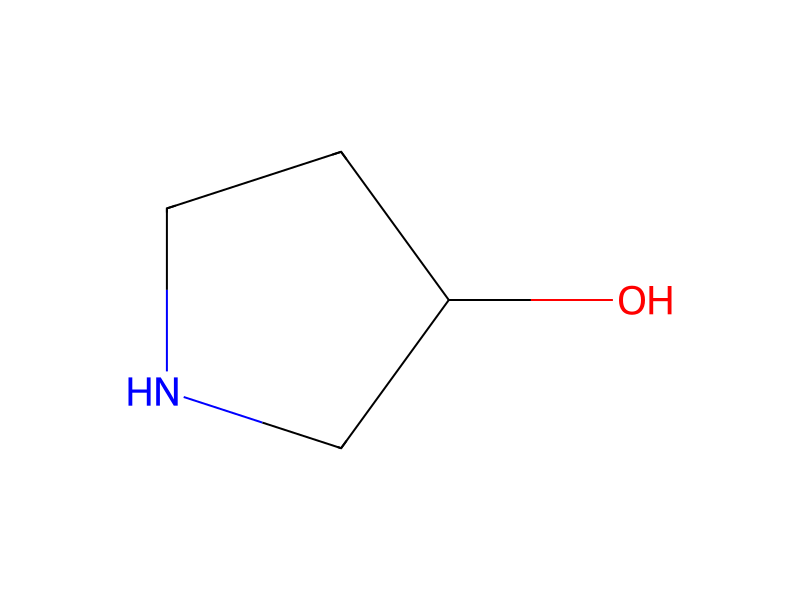
4-Hydroxypyrrolidine → 2-[(R)-2-(5-chloro-7-cyclopentylamino-1H-indol-2-yl)-4,5-dihydro-thiazol-4-yl]-1-(3-hydroxy-pyrrolidin-1-yl)-ethanone
Reaction equation

[Cl:1][C:2]1[CH:3]=[C:4]2[C:8](=[C:9]([NH:11][CH:12]3[CH2:16][CH2:15][CH2:14][CH2:13]3)[CH:10]=1)[NH:7][C:6]([C:17]1[S:18][CH2:19][C@@H:20]([CH2:22][C:23]([OH:25])=O)[N:21]=1)=[CH:5]2.[NH:26]1[CH2:30][CH2:29][CH:28]([OH:31])[CH2:27]1>>[Cl:1][C:2]1[CH:3]=[C:4]2[C:8](=[C:9]([NH:11][CH:12]3[CH2:16][CH2:15][CH2:14][CH2:13]3)[CH:10]=1)[NH:7][C:6]([C:17]1[S:18][CH2:19][C@@H:20]([CH2:22][C:23]([N:26]3[CH2:30][CH2:29][CH:28]([OH:31])[CH2:27]3)=[O:25])[N:21]=1)=[CH:5]2Participants
3


Procedure
The compound (40 mg, 0.11 mmol) prepared in Example 27 and 3-pyrrolidinol instead of morpholine were reacted according to the same procedure as Example 73 to give the title compound (19 mg, Yield 40%).
Sources & evidence
- ORD record
- ord-19bddf3fcf534be588ea429e9c465d67
- Source dataset
- uspto-grants-2012_11
- Patent number
- US08309586B2
Reaction notes
Loading…