Sulfuric Acid → Laurolactam
Reaction equation

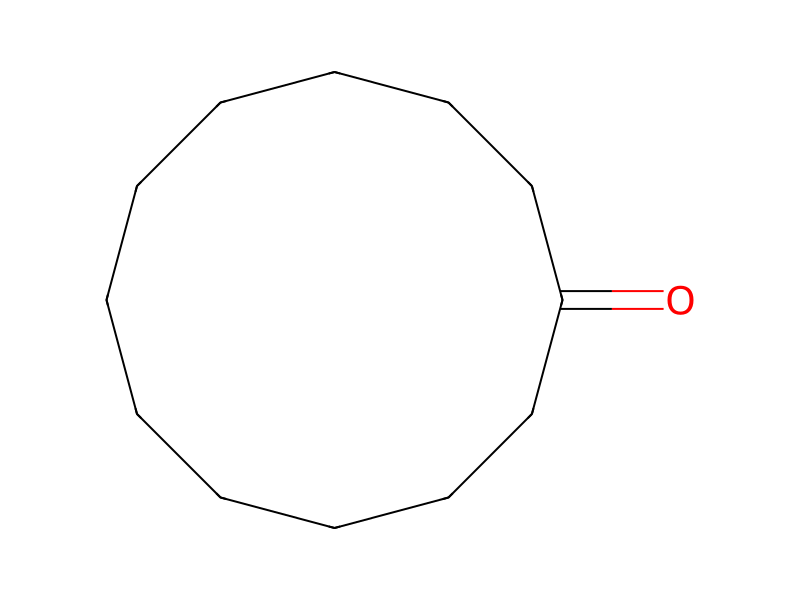
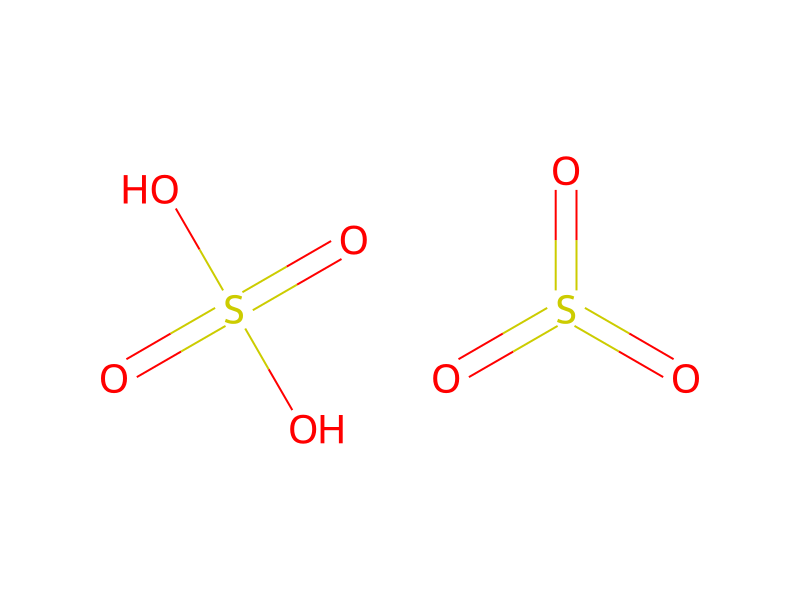
[C:1]1(=[N:13]O)[CH2:12][CH2:11][CH2:10][CH2:9][CH2:8][CH2:7][CH2:6][CH2:5][CH2:4][CH2:3][CH2:2]1.C1(=N[OH:22])CCCCC1.C1(=O)CCCCC1.C1(=O)CCCCCCCCCCC1.S(=O)(=O)(O)O.OS(O)(=O)=O.O=S(=O)=O>>[C:1]1(=[O:22])[NH:13][CH2:2][CH2:3][CH2:4][CH2:5][CH2:6][CH2:7][CH2:8][CH2:9][CH2:10][CH2:11][CH2:12]1Participants





Procedure
Another industrial process is that commercially developed by Ube Industries-EMS. This process utilizes the fact that cyclohexanone oxime and caprolactam are good solvents for cyclododecanone oxime and laurolactam, respectively (for example, see Patent Reference 2). Specifically, a mixture of cyclododecanone and cyclohexanone is blended with an aqueous solution of hydroxylamine to produce oximes. Cyclohexanone oxime produced has a low melting point and is a good solvent for cyclododecanone oxime, so that the reaction can be conducted at 100° C. or lower and at an ambient pressure. Furthermore, cyclohexanone oxime is adequately hydrophilic for the oxime-forming reaction to quickly proceed, and the mixture is transferred to the rearrangement step without residual cyclohexanone or cyclododecanone. A rearrangement catalyst used is concentrated sulfuric acid or oleum. Whereas laurolactam produced has a high melting point, it is highly soluble in caprolactam having a low melting point. Therefore, the reaction can be carried out even at a temperature of 100° C. or lower. The resulting rearrangement reaction solution is neutralized with ammonia water and then extracted with an organic solvent. Caprolactam can be dissolved in water to some extent, but is extracted into an organic solvent due to salting-out effect of ammonium sulfate. Next, a large amount of water is added to the solution containing extracted laurolactam and caprolactam, and caprolactam is extracted into the aqueous phase. From the separated organic phase, the organic solvent is recovered and laurolactam is purified by distillation. The aqueous phase is concentrated and after removing impurities, caprolactam is purified.
Workup
- customso that the reaction
- customcan be conducted at 100° C.
- customforming
- customreaction
Sources & evidence
- ORD record
- ord-3c9b2867e9ea40019f0056844c0299ea
- Source dataset
- uspto-grants-2012_11
- Patent number
- US08309714B2
Reaction notes
Loading…