Pentafluoropropionic acid → HCID 86643203, compound
Reaction equation

C[Si](C)(C)[N:3]([CH2:8][CH2:9][O:10][CH3:11])[Si](C)(C)C.[CH3:14][O:15][CH2:16][CH2:17][NH:18][C:19]([CH3:24])=[CH:20][C:21](=O)[CH3:22].FC(F)(F)C(F)(F)C(O)=O.CC(C)([O-])C.[Na+]>O1CCCC1>[CH3:11][O:10][CH2:9][CH2:8][NH:3][C:21](=[CH:20][C:19](=[N:18][CH2:17][CH2:16][O:15][CH3:14])[CH3:24])[CH3:22]Participants


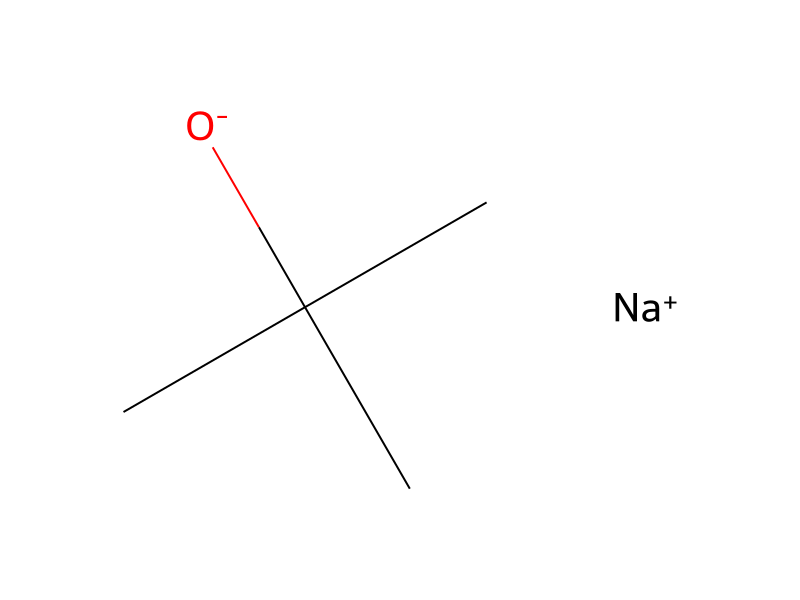



Conditions
- Temperature
- 150 °C
Procedure
6.56 g (0.03 moles) of N,N-Bis(trimethylsilyl)-2-methoxyethylamine were mixed with 3.14 g (0.02 moles) of 4-(2-methoxyethylamino)-3-penten-2-one. To this mixture was added 4.1 g (0.026 moles) of pentafluoropropionic acid dropwise over 5 minutes with rapid stirring. The mixture darkened and became warm, eventually forming two immiscible layers, and was allowed to stir for 1 hour. 2.5 g (0.0266 moles) of sodium t-butoxide dissolved in 5 ml of tetrahydrofuran was then added dropwise over a five minute period. The mixture warmed and became one liquid phase, which was yellow. The solvent was then removed by vacuum distillation at room temperature, and the product then vacuum distilled out of the resulting residue as a clear liquid by heating>150° C. Yield of MeC(NCH2CHOMe)CHC(HNCH2CH2OMe)Me=3.9 g (91% of theoretical).
Workup
- temperaturebecame warm
- customeventually forming two immiscible layers
- additionwas then added dropwise over a five minute period
- temperatureThe mixture warmed
- customThe solvent was then removed by vacuum distillation at room temperature
- distillationthe product then vacuum distilled out of the resulting residue as a clear liquid
Sources & evidence
- ORD record
- ord-ae6bd8f3eb794bbbab8c8530435c4cb3
- Source dataset
- uspto-grants-2012_11
- Patent number
- US08313807B2
Reaction notes
Loading…