Ammonium formate → Diethyl (4-amino-2,5-difluorophenyl)propanedioate
Reaction equation
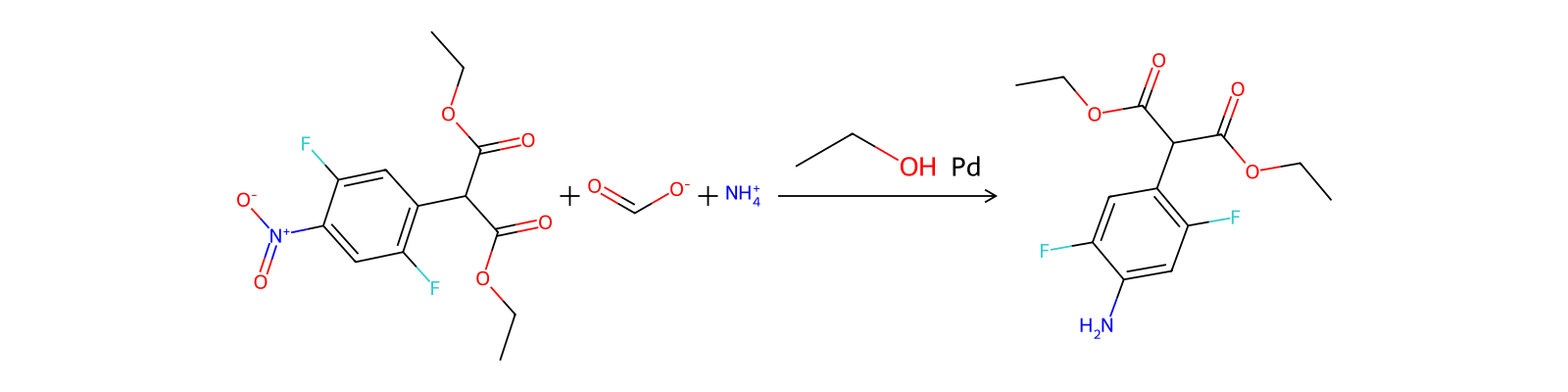
[F:1][C:2]1[CH:7]=[C:6]([N+:8]([O-])=O)[C:5]([F:11])=[CH:4][C:3]=1[CH:12]([C:18]([O:20][CH2:21][CH3:22])=[O:19])[C:13]([O:15][CH2:16][CH3:17])=[O:14].C([O-])=O.[NH4+]>C(O)C.[Pd]>[NH2:8][C:6]1[C:5]([F:11])=[CH:4][C:3]([CH:12]([C:18]([O:20][CH2:21][CH3:22])=[O:19])[C:13]([O:15][CH2:16][CH3:17])=[O:14])=[C:2]([F:1])[CH:7]=1Participants
5




Procedure
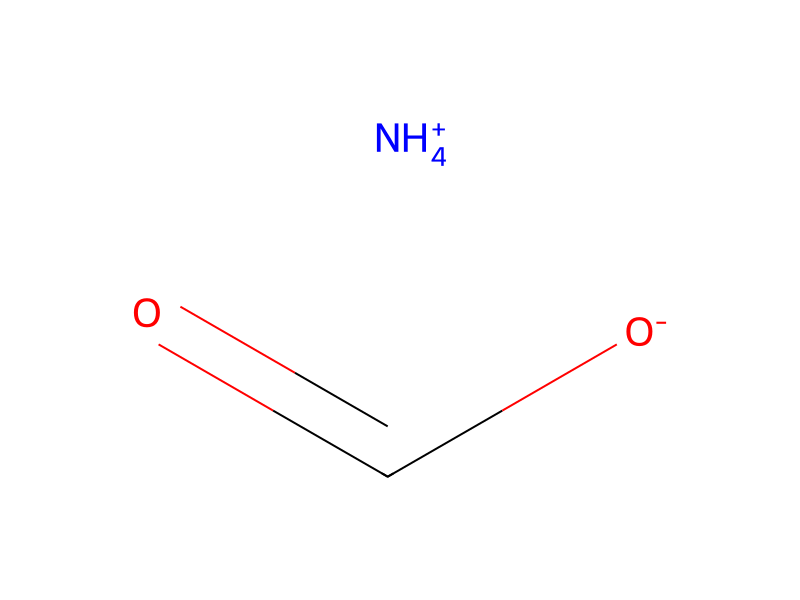
10% Pd/C (wet paste, 484 mg) was added to a solution of diethyl (2,5-difluoro-4-nitrophenyl)propanedioate (4.84 g, 15.3 mmol) and ammonium formate (5 eq, 4.81 g, 76.34 mmol) in ethanol (100 mL). The reaction mixture was heated to reflux under argon for one hour. The reaction was allowed to cool and then filtered through celite to remove the Pd residues. The filtrate was evaporated to dryness and then partitioned between ethyl acetate (100 mL) and water (100 mL). The organic layer was separated, dried over magnesium sulfate, filtered and then evaporated to dryness to give the title compound as an orange oil (4.39 g) LC/MS Rt=1.07 min, [MH]+ 288.
Workup
- temperatureThe reaction mixture was heated
- temperatureto reflux under argon for one hour
- temperatureto cool
- filtrationfiltered through celite
- customto remove the Pd residues
- customThe filtrate was evaporated to dryness
- custompartitioned between ethyl acetate (100 mL) and water (100 mL)
- customThe organic layer was separated
- dry with materialdried over magnesium sulfate
- filtrationfiltered
- customevaporated to dryness
Sources & evidence
- ORD record
- ord-e8458a7ae14643eea5fc6c13a51fc5e3
- Source dataset
- uspto-grants-2012_11
- Patent number
- US08314147B2
Reaction notes
Loading…