Morpholine → 4-(2-Fluoropyridin-3-yl)morpholine
Reaction equation

[F:1][C:2]1[C:7](I)=[CH:6][CH:5]=[CH:4][N:3]=1.[NH:9]1[CH2:14][CH2:13][O:12][CH2:11][CH2:10]1.C1(P(C2CCCCC2)C2C=CC=CC=2C2C(OC)=CC=CC=2OC)CCCCC1.CC(C)([O-])C.[Na+]>C1(C)C=CC=CC=1.C1C=CC(/C=C/C(/C=C/C2C=CC=CC=2)=O)=CC=1.C1C=CC(/C=C/C(/C=C/C2C=CC=CC=2)=O)=CC=1.C1C=CC(/C=C/C(/C=C/C2C=CC=CC=2)=O)=CC=1.[Pd].[Pd]>[F:1][C:2]1[C:7]([N:9]2[CH2:14][CH2:13][O:12][CH2:11][CH2:10]2)=[CH:6][CH:5]=[CH:4][N:3]=1Participants
Reactant 4



Product 1

Reagents, catalysts & solvents 2


Conditions
- Temperature
- 150 °C
Procedure
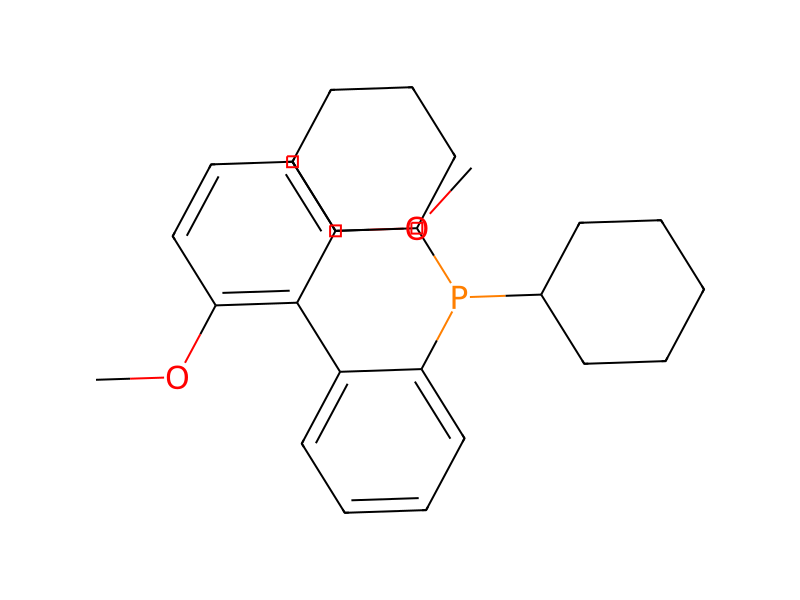
A microwave reaction vessel was charged with 2-fluoro-3-iodopyridine (1.0211 g, 4.579 mmol), morpholine (0.3989 mL, 4.579 mmol), Pd2(dba)3 (0.2633 g, 0.2748 mmol), 2-dicyclohexylphosphino-2′,6′-dimethoxy-1,1′-biphenyl (0.2232 g, 0.5495 mmol), and sodium t-butoxide (1.1363 g, 13.74 mmol) in toluene (15 mL). The reaction mixture was stirred and heated in a Discover® model microwave reactor (CEM, Matthews, N.C.) at 150° C. for 20 min (125 watts, Powermax™ feature on, ramp time 5 min). The solvent was evaporated. The crude product was adsorbed onto a plug of silica gel and chromatographed through a Biotage™ pre-packed silica gel column (40M), eluting with a gradient of 1% to 5% methanol in DCM, to provide 4-(2-fluoropyridin-3-yl)morpholine.
Workup
- customA microwave reaction vessel
- customThe solvent was evaporated
- customchromatographed through a Biotage™ pre-packed silica gel column (40M)
- washeluting with a gradient of 1% to 5% methanol in DCM
Sources & evidence
- ORD record
- ord-87093cb456f747a8a5e58ff7d6f198e1
- Source dataset
- uspto-grants-2012_11
- Patent number
- US08318718B2
Reaction notes
Loading…