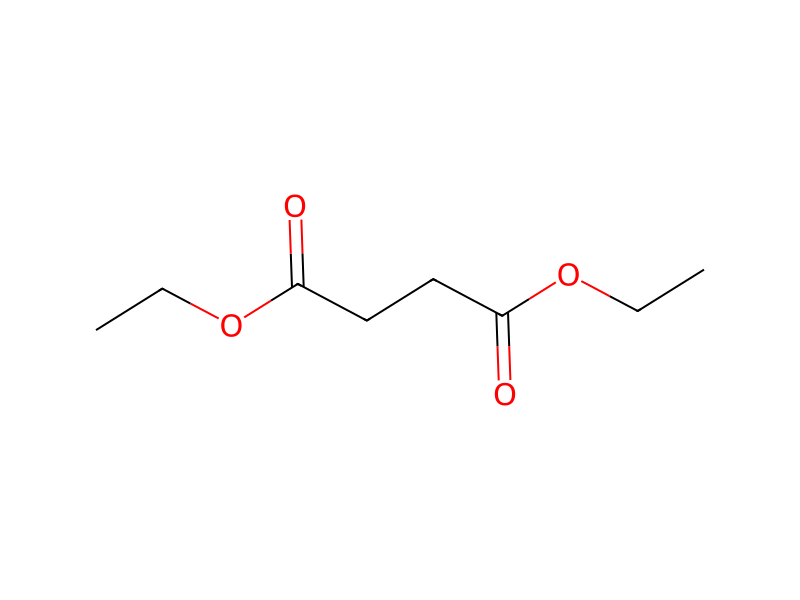
Diethyl Succinate → HCID 178471161, compound
Reaction equation

[CH2:1]([C:3]1[C:7]([CH:8]=O)=[CH:6][NH:5][N:4]=1)[CH3:2].[C:10]([O:19]CC)(=O)[CH2:11][CH2:12][C:13]([O:15][CH2:16][CH3:17])=[O:14].[CH3:22]C([O-])(C)C.[K+]>C(O)(C)(C)C>[CH2:1]([C:3]1[C:7]([CH:8]=[C:12]([CH2:11][C:10](=[O:19])[CH3:22])[C:13]([O:15][CH2:16][CH3:17])=[O:14])=[CH:6][NH:5][N:4]=1)[CH3:2]Participants
Reactant 3


Product 1

Reagents, catalysts & solvents 1

Conditions
- Temperature
- 80 °C
Procedure
To a solution of 3-ethyl-1H-pyrazole-4-carbaldehyde (2.2 g, 18 mmol) and diethyl succinate (12.3 g, 71.0 mmol) in t-butanol (15 mL) was added a solution of t-BuOK (8.08 g, 53.2 mmol) in t-butanol (10 mL). The mixture was heated to 80° C. for 3 hours before the mixture was concentrated. The obtained residue was dissolved in water (30 mL), acidified (pH˜2) using 6 N HCl and extracted with ethyl acetate (2×30 mL). The combined organic layers were washed with aqueous NaHCO3 (2×50 mL). The combined aqueous layers were acidified (pH˜2) and extracted with ethyl acetate (2×75 mL). The combined ethyl acetate layers were washed with saturated aqueous NaCl (25 mL), dried over anhydrous Na2SO4 and concentrated to afford ethyl 2-[(3-ethyl-1H-pyrazol-4-yl)methylene]-4-oxopentanoate (4 g, 100%) as gum, which was taken as such into next step.
Workup
- concentrationwas concentrated
- dissolutionThe obtained residue was dissolved in water (30 mL)
- extractionextracted with ethyl acetate (2×30 mL)
- washThe combined organic layers were washed with aqueous NaHCO3 (2×50 mL)
- extractionextracted with ethyl acetate (2×75 mL)
- washThe combined ethyl acetate layers were washed with saturated aqueous NaCl (25 mL)
- dry with materialdried over anhydrous Na2SO4
- concentrationconcentrated
Sources & evidence
- ORD record
- ord-5cc7c09690b34f46839de89a02324ecf
- Source dataset
- uspto-grants-2012_11
- Patent number
- US08318762B2
Reaction notes
Loading…