1,3-Propanediol → 2-(2-Bromophenyl)-1,3-dioxane
Reaction equation

[Br:1][C:2]1[CH:9]=[CH:8][CH:7]=[CH:6][C:3]=1[CH:4]=[O:5].[CH2:10](O)[CH2:11][CH2:12][OH:13].O.C1(C)C=CC(S(O)(=O)=O)=CC=1>C1C=CC=CC=1>[Br:1][C:2]1[CH:9]=[CH:8][CH:7]=[CH:6][C:3]=1[CH:4]1[O:13][CH2:12][CH2:11][CH2:10][O:5]1Participants
5
Reactant 3
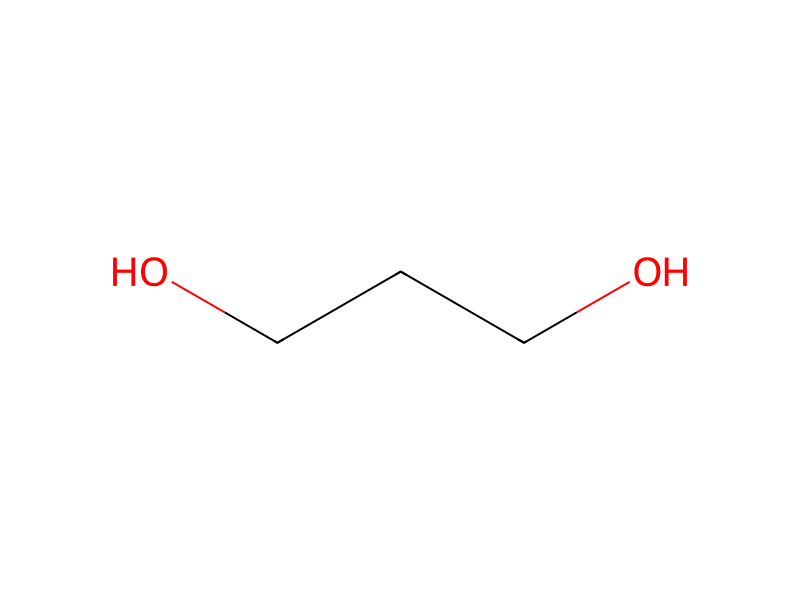


Product 1

Reagents, catalysts & solvents 1

Procedure
ortho-Bromobenzaldehyde (4a) (8 g, 43.24 mmol) was stirred with 1,3 propanediol (4.7 ml, 64.86 mmol) and p-toluenesulfonic acid monohydrate (164 mg, 0.86 mmol) in benzene (150 ml) in a flask equipped with a Dean-Stark trap and a condenser. The mixture was heated at reflux for 12 hrs, cooled, and extracted with 2 M NaOH (100 ml), and brine (100 ml×3). The solution was dried over MgSO4, and the solvent evaporated to the title compound in quantitative yield.
Workup
- customequipped with a Dean-Stark trap and a condenser
- temperatureThe mixture was heated
- temperatureat reflux for 12 hrs
- temperaturecooled
- extractionextracted with 2 M NaOH (100 ml), and brine (100 ml×3)
- dry with materialThe solution was dried over MgSO4
- customthe solvent evaporated to the title compound in quantitative yield
Sources & evidence
- ORD record
- ord-2392adcaa6e24e03a52a623dc451e650
- Source dataset
- uspto-grants-2012_11
- Patent number
- US08318938B2
Reaction notes
Loading…