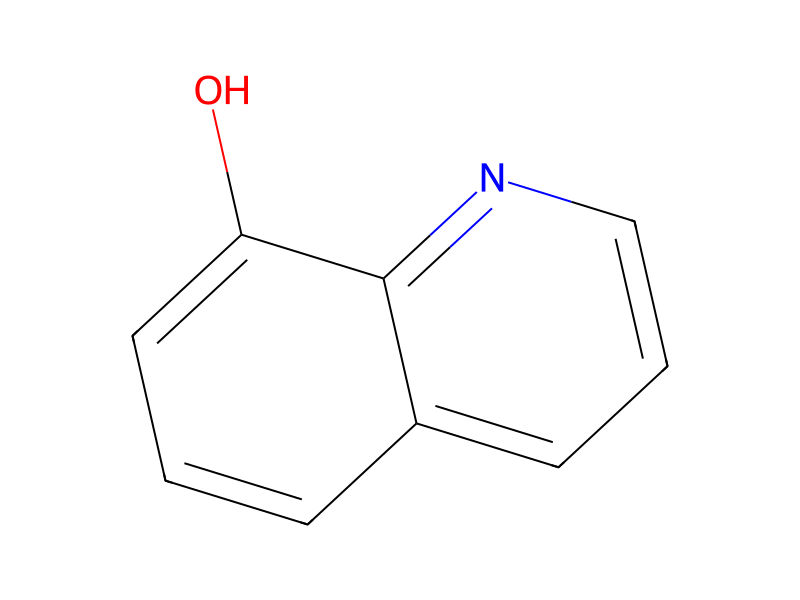
8-Hydroxyquinoline → HCID 178420580, compound
Reaction equation

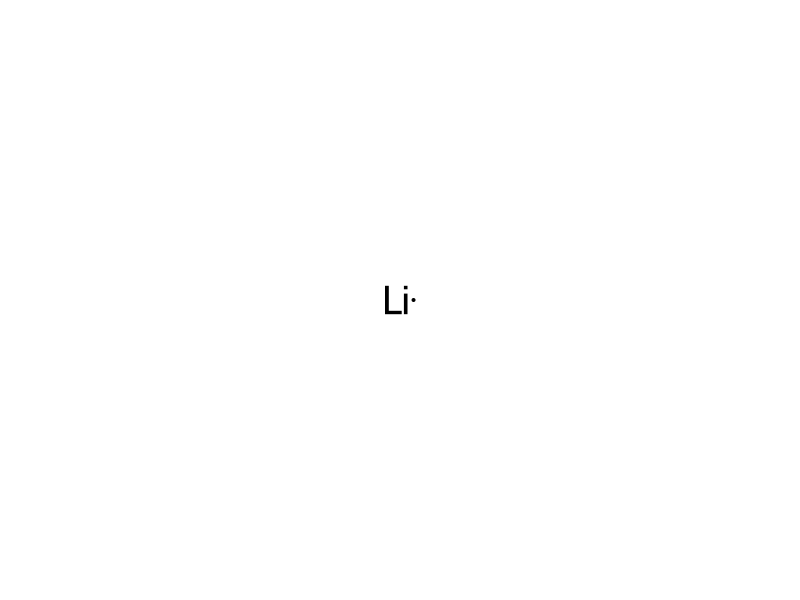
[Li].[OH:2][C:3]1[CH:4]=[CH:5][CH:6]=[C:7]2[C:12]=1[N:11]=[CH:10][CH:9]=[CH:8]2.[Cl-:13].[Cl-].[Cl-].[Cl-].[CH:17]1([Nb+4:22])[CH:21]=[CH:20][CH:19]=[CH:18]1>O1CCCC1>[Cl-:13].[Cl-:13].[Cl-:13].[N:11]1[C:12]2[C:7](=[CH:6][CH:5]=[CH:4][C:3]=2[O:2][Nb+3:22][CH:17]2[CH:21]=[CH:20][CH:19]=[CH:18]2)[CH:8]=[CH:9][CH:10]=1Participants
5
Reactant 3

Product 1

Reagents, catalysts & solvents 1

Procedure
A solution of 0.01 moles of the lithium salt of 8-hydroxyquinoline in 30 mL of tetrahydrofuran (prepared as described in Example 3) is added dropwise to a solution of 0.01 moles of cyclopentadienyl niobium tetrachloride in 50 mL of tetrahydrofuran at −78° C. After warming to room temperature and stirring overnight, the suspension is filtered and the solvent evaporated under vacuum. The product is recovered by extraction with toluene and then isolated by evaporating the toluene. Polymers may be produced using this catalyst by following the procedure of Example 4.
Workup
- filtrationthe suspension is filtered
- customthe solvent evaporated under vacuum
- customThe product is recovered by extraction with toluene
- customisolated
- customby evaporating the toluene
- customPolymers may be produced
Sources & evidence
- ORD record
- ord-ad0fd871ebc54ec394637aa72797e571
- Source dataset
- uspto-grants-2004_07
- Patent number
- US06759493B1
Reaction notes
Loading…