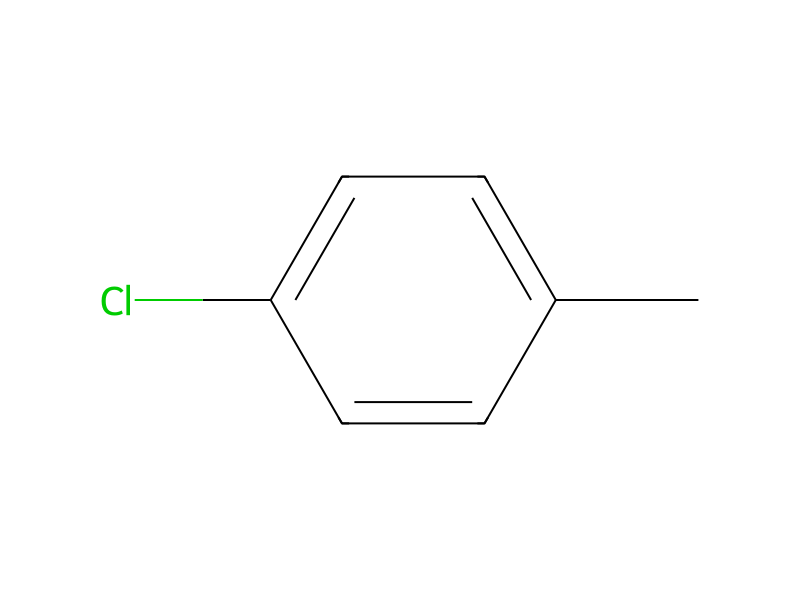
4-Chlorotoluene → 4-Methylbiphenyl
Reaction equation

[CH3:1][C:2]1[CH:7]=[CH:6][C:5](Cl)=[CH:4][CH:3]=1.[C:9]1(B(O)O)[CH:14]=[CH:13][CH:12]=[CH:11][CH:10]=1.N(P(Cl)Cl)(C1CCCCC1)C1CCCCC1>O1CCOCC1.C1C=CC(/C=C/C(/C=C/C2C=CC=CC=2)=O)=CC=1.C1C=CC(/C=C/C(/C=C/C2C=CC=CC=2)=O)=CC=1.C1C=CC(/C=C/C(/C=C/C2C=CC=CC=2)=O)=CC=1.[Pd].[Pd]>[C:9]1([C:5]2[CH:6]=[CH:7][C:2]([CH3:1])=[CH:3][CH:4]=2)[CH:14]=[CH:13][CH:12]=[CH:11][CH:10]=1Participants
6





Procedure
The general procedure from Example 8 was followed using 4-methylchlorobenzene (152 mg, 1.2 mmol) and PhB(OH)2 (1.2 mmol) with Pd2(dba)3 (20 mg, 0.0218 mmol) and (Me3C)2PH(O) from Experiment 2 (14.5 mg, 0.0878 mmol) and CsCO3 (651 mg, 2.0 mmol) in 4.0 mL of 1,4-dioxane. After 24 h, the reaction mixture was chromatographed with 5% ethyl acetate/hexane to give 127 mg (63% yield) of 4-phenyltoluene. It was >95% pure by 1H NMR and GC/MS. 1H NMR (500 MHz, CDCl3): δ7.74 (d, J=7.50 Hz, 2H), 7.65 (d, J=8.05 Hz, 2H), 7.57 (m, 2H), 7.47 (m, 1H), 7.40 (m, 2H), 2.54 (s, 3H) ppm. 13C NMR (125 MHz, CDCl3): δ141.1, 138.3, 136.9, 129.4, 128.6, 126.9, 126.8, 21.0 ppm.
Workup
- customthe reaction mixture was chromatographed with 5% ethyl acetate/hexane
Sources & evidence
- ORD record
- ord-5a15e5d1d45e4dd89acc32c93330982e
- Source dataset
- uspto-grants-2004_07
- Patent number
- US06762330B2
Reaction notes
Loading…