Sodium Sulfate → Disulfuric acid, sodium salt (1:2)
Reaction equation
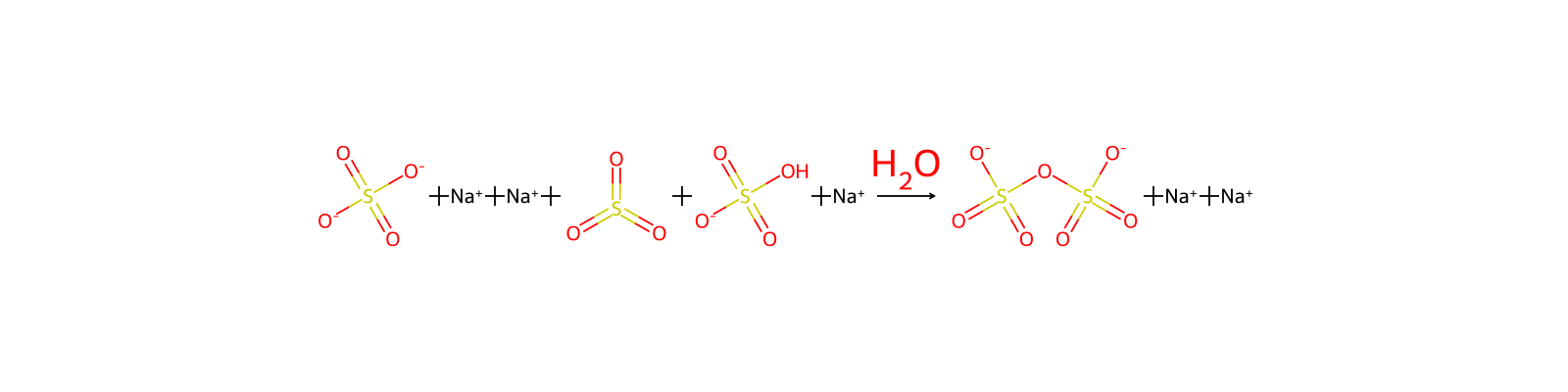
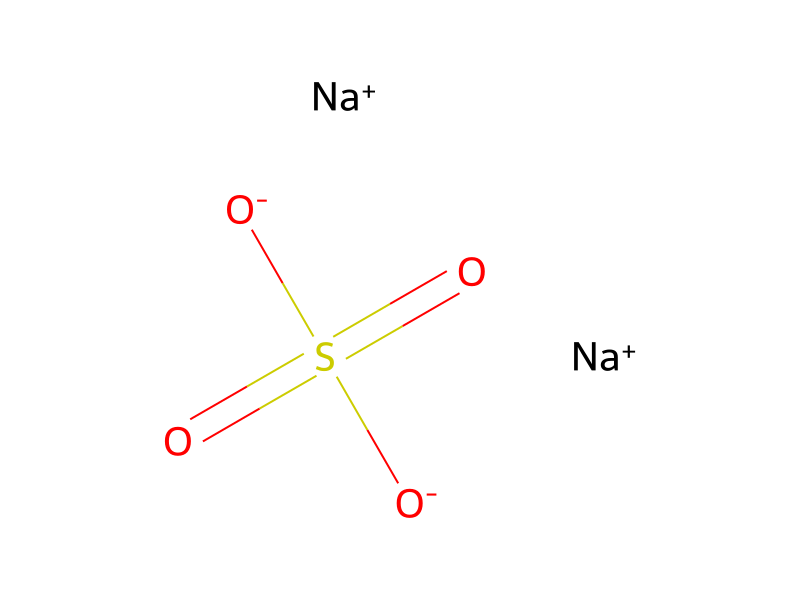
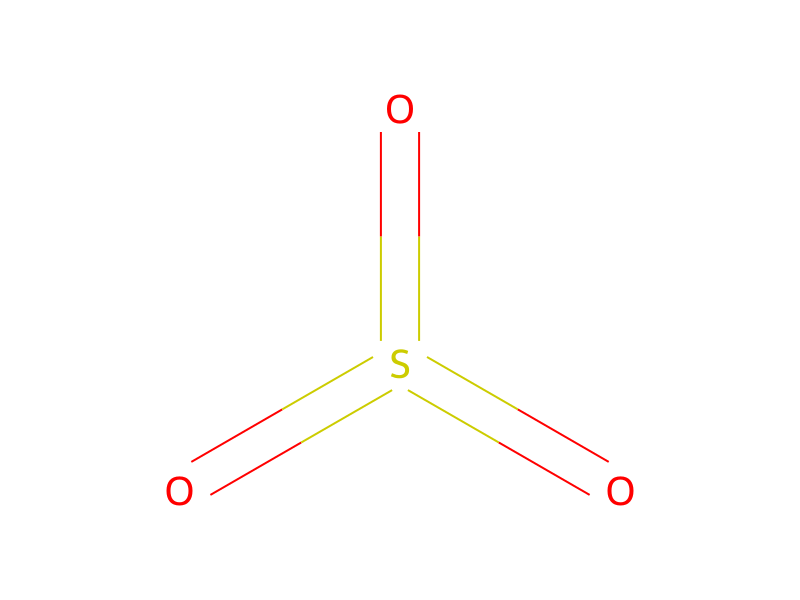
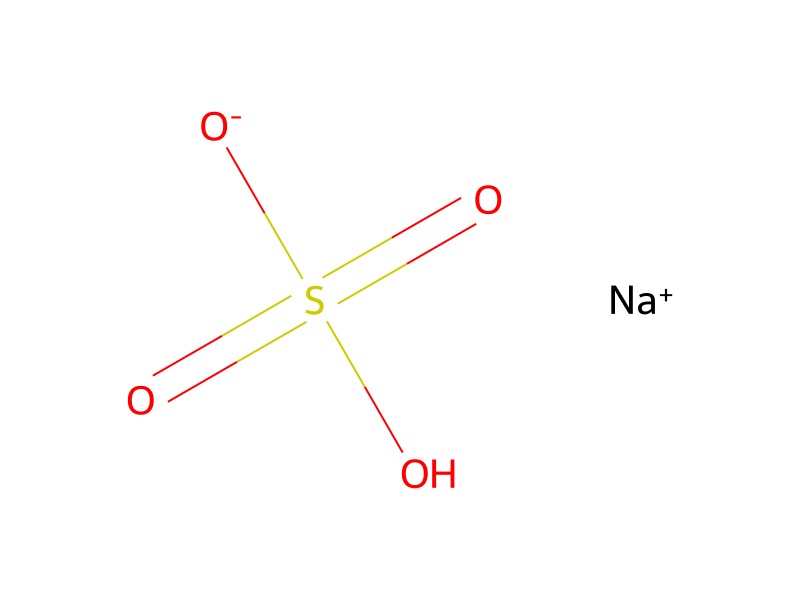
[S:1]([O-:5])([O-:4])(=[O:3])=[O:2].[Na+:6].[Na+].[S:8](=[O:11])(=[O:10])=[O:9].S([O-])(O)(=O)=O.[Na+]>O>[S:1]([O:5][S:8]([O-:11])(=[O:10])=[O:9])([O-:4])(=[O:3])=[O:2].[Na+:6].[Na+:6]Participants
Reactant 3
Product 1

Reagents, catalysts & solvents 1

Procedure
As the gaseous and solid streams flow counter current to each other, they undergo the reactions shown in equations 3 and 6. Beginning at the far right, the combustion gases are sufficiently hot to decompose sodium pyrosulfate to produce sodium sulfate and sulfur trioxide. The sodium sulfate is discharged from the kiln through a port at the far right end, and the sulfur trioxide enters the gas stream which is moving to the left. Somewhere towards the middle of the kiln, sodium hydrogen sulfate is decomposed to give sodium pyrosulfate and water vapor. The solid pyrosulfate moves toward the right while the water vapor flows with the combustion gases upwards towards the left. In the left hand section of the kiln, water vapor and sulfur trioxide combine to form sulfuric acid. This acid for the most part is lost with the product gases since the temperature of the flue gases at the exit exceeds the boiling points of lower concentrations of sulfuric acid. Acid in the feed combines with the salt to form hydrogen chloride and sodium hydrogen sulfate. The solid sodium hydrogen sulfate moves to the right while the hydrogen chloride escapes with the combustion gases through the vent in the left end of the kiln.
Sources & evidence
- ORD record
- ord-fc622c7cb40b49368c73f0b22de10690
- Source dataset
- uspto-grants-2004_07
- Patent number
- US06767528B2
Reaction notes
Loading…