Hydrochloric Acid → HCID 9879787, compound
Reaction equation

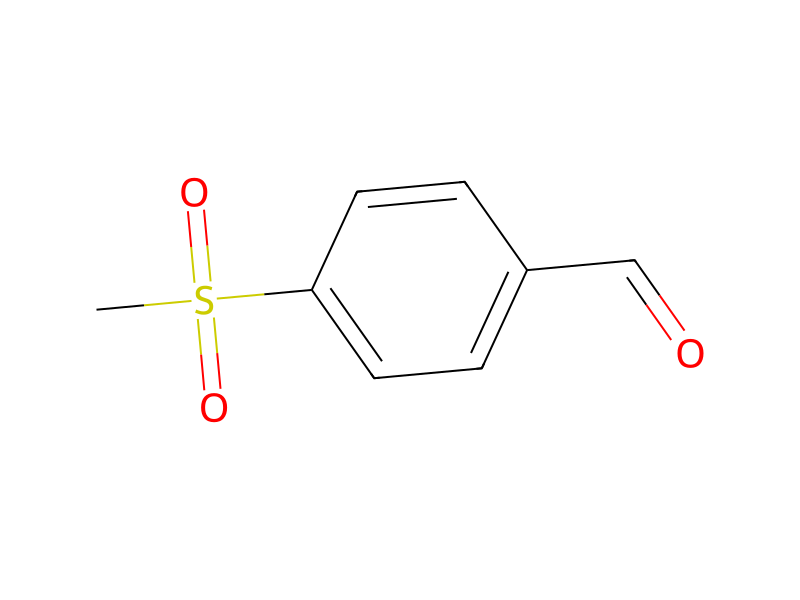
[CH3:1][S:2]([C:5]1[CH:12]=[CH:11][C:8]([CH:9]=O)=[CH:7][CH:6]=1)(=[O:4])=[O:3].Cl.[CH2:14]1[C:23](=[O:24])[CH2:22][C:21]2[C:16](=[CH:17][CH:18]=[CH:19][CH:20]=2)[CH2:15]1.O>C(O)(=O)C.C(OC(=O)C)C.CCCCCC.ClCCl>[CH3:1][S:2]([C:5]1[CH:12]=[CH:11][C:8](/[CH:9]=[C:22]2/[C:23](=[O:24])[CH2:14][CH2:15][C:16]3[C:21]/2=[CH:20][CH:19]=[CH:18][CH:17]=3)=[CH:7][CH:6]=1)(=[O:4])=[O:3]Participants
8







Conditions
- Temperature
- 7.5 °C
Procedure
4-methylsulfonylbenzaldehyde (1.0 g, 5.43 mmol) was dissolved in glacial acetic acid (20 ml) and con. Hydrochloric acid (10 ml) was added and cooled at 5-10° C. Then, beta-tetralone (0.72 ml, 5.45 mmol) was dropped slowly and stirred for 3 hours at the same temperature. At room temperature, water (200 ml) and dichloromethane (200 ml) were poured, separated with layers, washed with the saturated brine, dried over anhydrous magnesium sulfate and then concentrated under reduced pressure. The residue was purified by performing a silica gel column chromatography (an eluting agent: ethylacetate/n-hexane=2/3, v/v) and 1.32 g of the present compound (productive yield 78%) was obtained as a yellow crystal.
Workup
- customseparated with layers
- washwashed with the saturated brine
- dry with materialdried over anhydrous magnesium sulfate
- concentrationconcentrated under reduced pressure
- customThe residue was purified
Sources & evidence
- ORD record
- ord-30ad5297645544aaae28bdd8148a8239
- Source dataset
- uspto-grants-2004_07
- Patent number
- US06768019B2
Reaction notes
Loading…