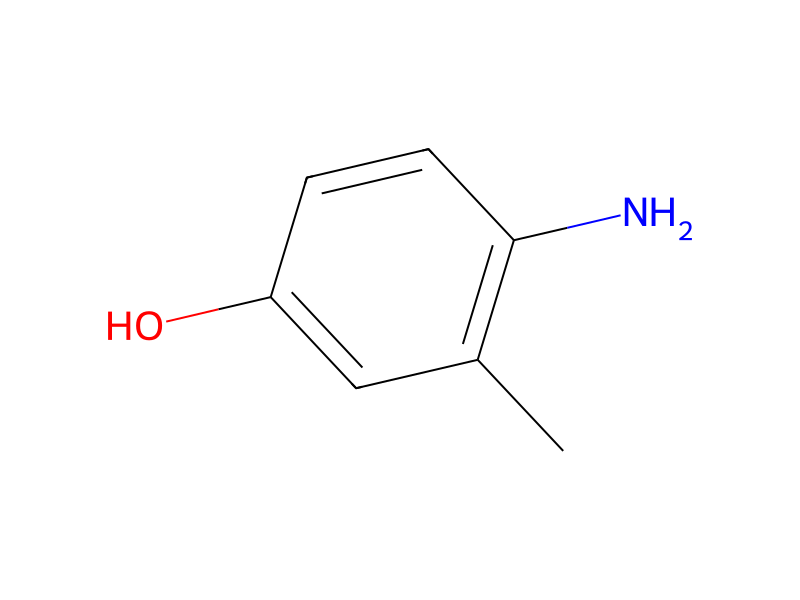
4-Amino-m-cresol → 3-Butyryl-4-(4-hydroxy-2-methylphenylamino)-8-acetylquinoline
Reaction equation

[C:1]([C:6]1[CH:7]=[N:8][C:9]2[C:14]([C:15]=1Cl)=[CH:13][CH:12]=[CH:11][C:10]=2[C:17](=[O:19])[CH3:18])(=[O:5])[CH2:2][CH2:3][CH3:4].[NH2:20][C:21]1[CH:26]=[CH:25][C:24]([OH:27])=[CH:23][C:22]=1[CH3:28]>O1CCOCC1>[C:1]([C:6]1[CH:7]=[N:8][C:9]2[C:14]([C:15]=1[NH:20][C:21]1[CH:26]=[CH:25][C:24]([OH:27])=[CH:23][C:22]=1[CH3:28])=[CH:13][CH:12]=[CH:11][C:10]=2[C:17](=[O:19])[CH3:18])(=[O:5])[CH2:2][CH2:3][CH3:4]Participants
4
Reactant 2

Product 1

Reagents, catalysts & solvents 1

Procedure
A solution of 3-butyryl-4-chloro-8-acetylquinoline (2.0 g) and 4-amino-3-methylphenol (1.23 g, 10 mmol) in 1,4-dioxan (25 ml) was warmed briefly to reflux, then the dioxan evaporated. Chromatography (silica, 4-6% methanol in dichloromethane) and recrystallisation from ethyl acetate gave 3-butyryl-4-(4-hydroxy-2-methylphenylamino)-8-acetylquinoline (0.65 g), m.p. 183°-185°.
Workup
- temperatureto reflux
- customthe dioxan evaporated
- customChromatography (silica, 4-6% methanol in dichloromethane) and recrystallisation from ethyl acetate
Sources & evidence
- ORD record
- ord-020611f96fff4f0b8ad22713ed6e76b1
- Source dataset
- uspto-grants-1992_09
- Patent number
- US05143920
Reaction notes
Loading…