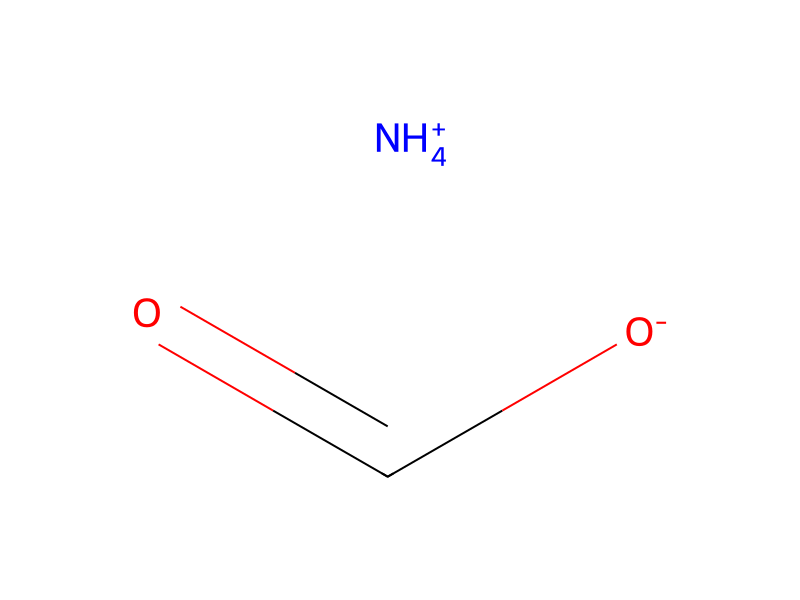
Ammonium formate → HCID 136210639, compound
Reaction equation

[N+:1]([C:4]1[CH:13]=[C:12]2[C:7]([C:8](=[O:24])[NH:9][C:10]([C:14]3[CH:19]=[CH:18][CH:17]=[CH:16][C:15]=3[O:20][CH2:21][CH2:22][CH3:23])=[N:11]2)=[CH:6][CH:5]=1)([O-])=O.C([O-])=O.[NH4+]>CO.[Pd]>[NH2:1][C:4]1[CH:13]=[C:12]2[C:7]([C:8](=[O:24])[NH:9][C:10]([C:14]3[CH:19]=[CH:18][CH:17]=[CH:16][C:15]=3[O:20][CH2:21][CH2:22][CH3:23])=[N:11]2)=[CH:6][CH:5]=1Participants
5
Reactant 2

Product 1

Reagents, catalysts & solvents 2


Procedure
A stirred solution of 7-nitro-2-(2-propoxyphenyl)-4(3H)-quinazolinone (3.0 g) in dry methanol (450 ml) was treated sequentially under a carbon dioxide atmosphere with 5% Pd/C (1.5 g) and anhydrous ammonium formate (2.8 g). After 60 minutes solids were removed by filtration and the filtrate evaporated to dryness. The residue was partitioned between water and dichloromethane, the organic layer separated, dried (magnesium sulphate) and evaporated. The residue was recrystallised from diethyl ether-petroleum ether to give 7-amino-2-(2-propoxyphenyl)-4(3H)-quinazolinone, 2.7 g, m.p. 185° C.
Workup
- customAfter 60 minutes solids were removed by filtration
- customthe filtrate evaporated to dryness
- customThe residue was partitioned between water and dichloromethane
- customthe organic layer separated
- dry with materialdried (magnesium sulphate)
- customevaporated
- customThe residue was recrystallised from diethyl ether-petroleum ether
Sources & evidence
- ORD record
- ord-c1b756a0e39b4e63a8a0383d93fde906
- Source dataset
- uspto-grants-1992_09
- Patent number
- US05147875
Reaction notes
Loading…