Sulfuric Acid → 1,4-Bis(3-Hydroxyphenoxy)Butane
Reaction equation

[C:1]1([CH:8]=[CH:7][CH:6]=[C:4]([OH:5])[CH:3]=1)[OH:2].Br[CH2:10][CH2:11][CH2:12][CH2:13]Br.[OH-:15].[K+].S(=O)(=O)(O)O>O>[OH:2][C:1]1[CH:3]=[C:4]([CH:6]=[CH:7][CH:8]=1)[O:5][CH2:10][CH2:11][CH2:12][CH2:13][O:15][C:4]1[CH:6]=[CH:7][CH:8]=[C:1]([OH:2])[CH:3]=1Participants
Reactant 4
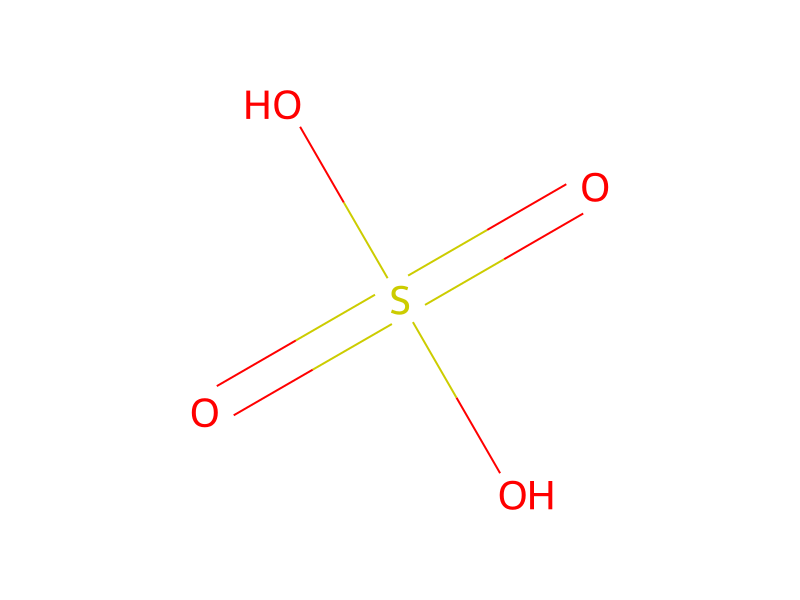
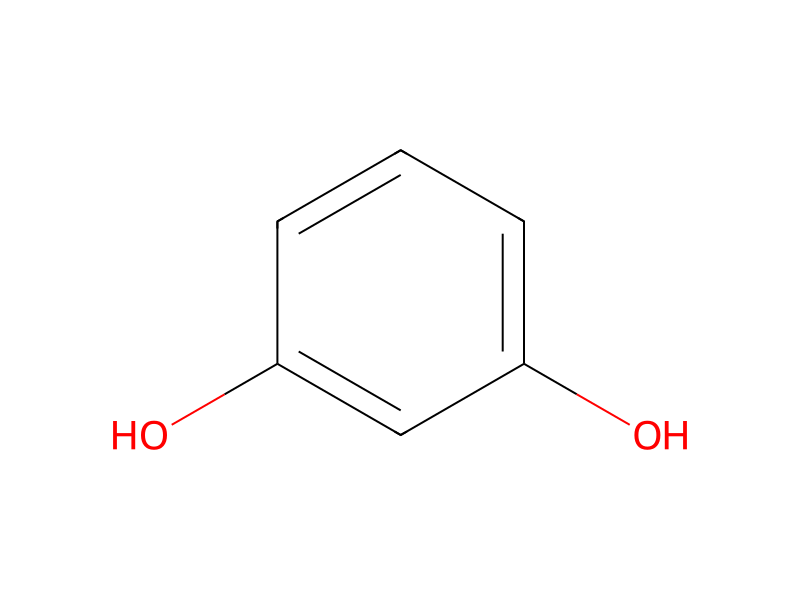
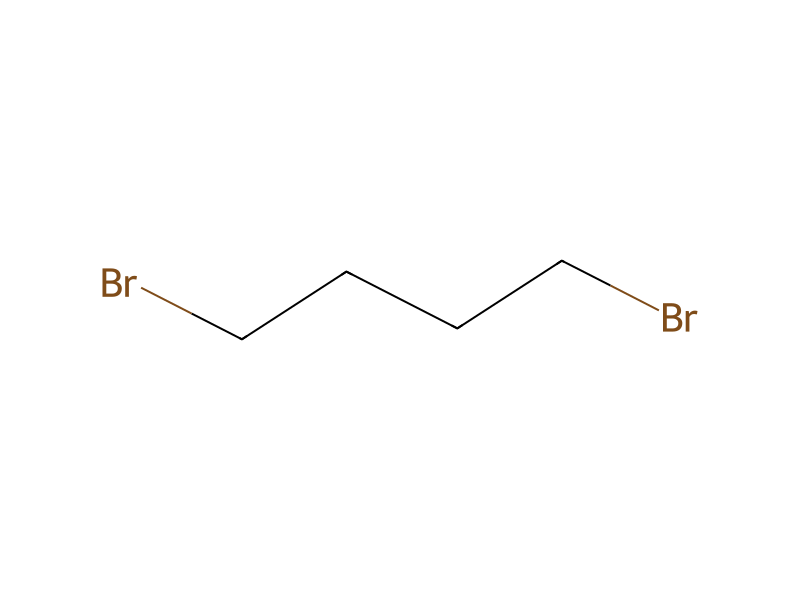
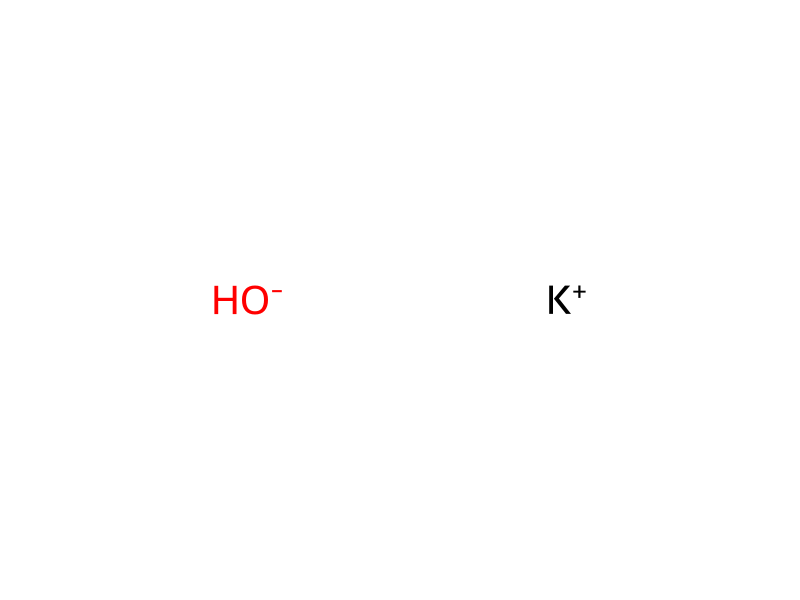
Product 1

Reagents, catalysts & solvents 1
Procedure
A five neck five liter round bottom flask equipped with a mechanical stirrer, two condensers, and a dropping funnel was purged with nitrogen then charged under a nitrogen blanket with 1.5 kg (13.6 moles) resorcinol, 120 grams deionized water, and 138.75 grams (0.64 moles) 1,4-dibromobutane. The reaction slurry was slowly heated with stirring to reflux under a slow nitrogen purge; then a solution of 109 grams (1.64 moles) 85 percent KOH pellets in 109 grams water was added dropwise under a nitrogen blanket over a two hour period. After an additional hour of refluxing, the reaction mixture was allowed to cool enough to pour the contents into 10 liters deionized water. The water slurry was acidified with 30 percent sulfuric acid and allowed to stand at room temperature overnight before filtering under reduced pressure and washing with several portions of warm water. The residue, 80 grams of yellow amorphous solid, was then extracted with large quantities of boiling water to remove oils. After cooling to room temperature, the water extracts (14 liters) yield 28 grams of white, shiny platelets. HPLC analysis revealed 92 percent purity by peak area. Recrystallization from acetone yielded product of >98 percent purity by HPLC analysis with a melting point of 103° C.-106° C. (literature melting point, 105° C.-108° C.) for use in examples 10, 18 and 20. Both 1H and 13C NMR spectra were consistent with the proposed structure.
Workup
- customA five neck five liter round bottom flask equipped with a mechanical stirrer
- customtwo condensers, and a dropping funnel was purged with nitrogen
- temperatureThe reaction slurry was slowly heated
- temperatureto reflux under a slow nitrogen
- custompurge
- temperatureAfter an additional hour of refluxing
- temperatureto cool enough
- additionto pour the contents into 10 liters
- filtrationbefore filtering under reduced pressure
- washwashing with several portions of warm water
- extractionThe residue, 80 grams of yellow amorphous solid, was then extracted with large quantities of boiling water
- customto remove oils
- customRecrystallization from acetone yielded product of >98 percent purity by HPLC analysis with a melting point of 103° C.-106° C. (literature melting point, 105° C.-108° C.) for use in examples 10, 18 and 20
Sources & evidence
- ORD record
- ord-59dff729265044ef9429b88c38620648
- Source dataset
- uspto-grants-1992_09
- Patent number
- US05147905
Reaction notes
Loading…